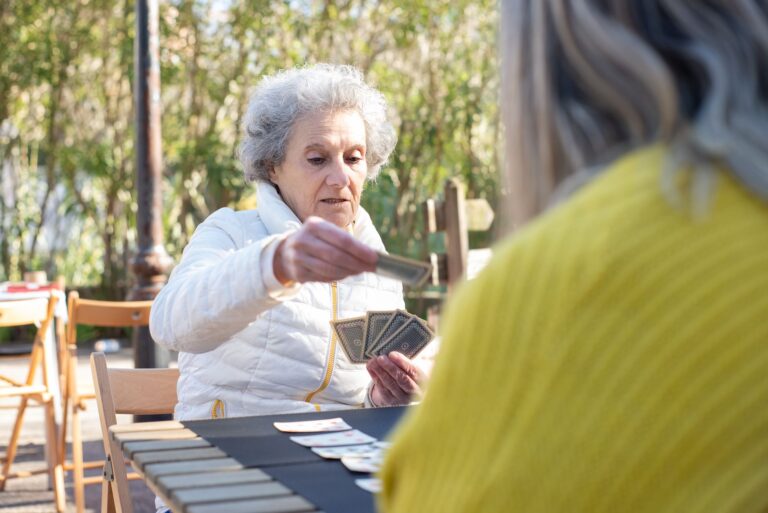
The questions that work best give a yes-or-no answer, offer two clear choices, or present one idea at a time. Gentle prompts about earlier life work better than tests of recent memory or wide-open questions.
Reminiscence here means talking together about earlier life. Family game night works when the goal is shared enjoyment, not right answers. Small teams, familiar photos, and favorite songs keep everyone involved.
Medical information disclaimer: This article is for general educational purposes only and does not provide medical advice, diagnosis, or treatment. Always consult a physician or other qualified health professional about symptoms, medications, tests, or treatment decisions.
Table of Contents
- Make each question easy to answer
- Start with earlier life
- Match the game to the person
- What music and photos can add
Make each question easy to answer
The National Institute on Aging advises yes-or-no questions, two options, and one idea at a time, explained in its communication guidance. It suggests avoiding broad openers like How do you feel.
Say the question once, show one photo or object, and wait for an answer. If attention fades, simplify further or switch roles so the person can judge, clap, or pick the next card.
- Did you sing this song at home?
- Do you prefer tea or lemonade right now?
- Is this photo from summer or winter?
Start with earlier life
The Alzheimer's Society UK notes that family photos, memorabilia, music, old movies, and family trees help explore earlier life. Long-term memories often stay longer than recent memory.
The same Alzheimer's Society UK guide asks caregivers to use open reminiscence prompts without putting the person on the spot. It treats repeated stories as important and warns against correcting or testing recent memory.
Match the game to the person
The Alzheimer's Association Daily Care Plan says to fit activities to current abilities, interests, and past enjoyments, detailed in its daily care plan. It stresses enjoyment over correct answers and changing the activity as needs change.
Keep rounds short and let teams answer together. Use large print, familiar categories, and flexible rules so no one gets stuck.
What music and photos can add
The Alzheimer's Association says music and art support self-expression even after dementia has progressed. Its resources note studies linking music with less agitation and fewer behavioral issues in middle-stage disease. A 2018 Cochrane review covered 22 randomized trials with 1,972 people with dementia, summarized in its Cochrane evidence summary.
It found reminiscence talk with photos or music had some positive effects on quality of life, cognition, communication, and possibly mood. The UCL Discovery record of the review notes effects were inconsistent, often small, and varied by setting and format, found in the UCL review record. Widest benefits were in care homes, with no evidence it treats or slows dementia.