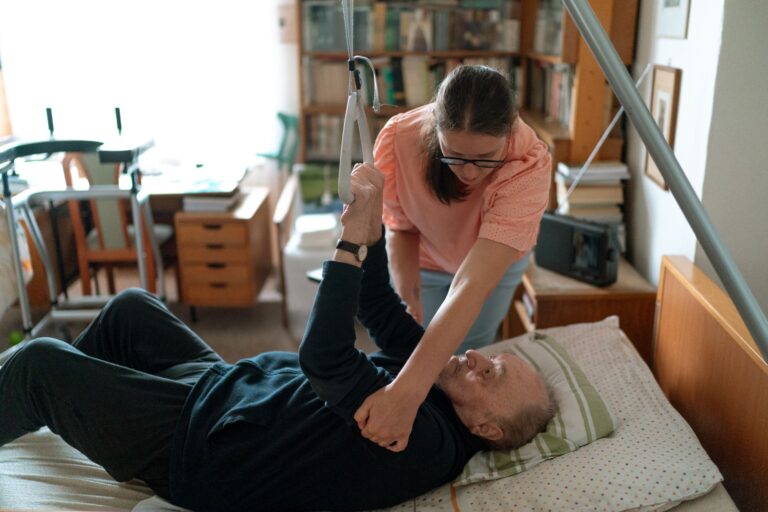
Hospital Bed, Wheelchair, Lift: When Is It Time in Dementia Care?

See clear timing signs for a bed, wheelchair, or lift, plus safety fixes and Medicare coverage steps.
See clear timing signs for a bed, wheelchair, or lift, plus safety fixes and Medicare coverage steps.

Learn how to word a reassuring note, place it well, and know when comfort matters more than facts.

Fix brakes, seating, and daily routines to stop repeat wheelchair slides, tips, and unsafe standing attempts.

Learn where to place bed mats and cameras, cut night wake-ups, and respond fast when your husband gets up.

Door alarms only work if they reach someone fast — here's how home sensors and facility-grade hardware actually differ.

A caregiver's guide to how automated pill dispensers catch missed doses and alert someone before they become a missed day.

A clear comparison of which sundowning cues — light, routine, or orientation clocks — have real backing, and which are still unproven.

The MoCA catches mild cognitive impairment the MMSE misses, but its cutoffs read differently depending on a person's education and background.

Compare device fees, monthly plans, and fall-detection add-ons to pick safe dementia tracking.
A practical guide to choosing between pillboxes, printed worksheets and automatic dispensers — and what the research does and does not prove.
HelpDementia.com
Dementia, Alzheimer's, Caregiving & Healthy Aging Guidance
© 2026 HelpDementia.com. All rights reserved.
Educational information only. It is not medical advice and does not replace care from a qualified clinician.