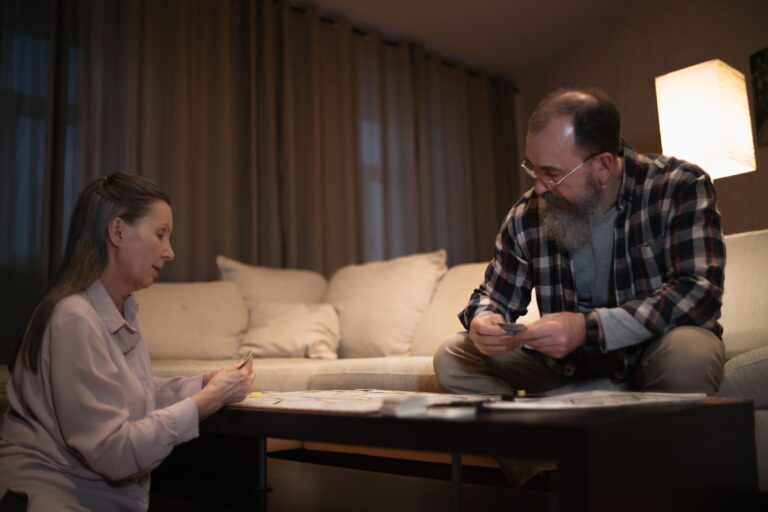
Go Fish, War, Matching Pairs and conversation prompt cards suit memory care residents playing with one other person. Each needs only two players and stays enjoyable with simple rules or low pressure. Memory care here means residential care for people living with dementia.
The National Institute on Aging advises older adults to play cards or other games with friends for mental stimulation. It says more variety is better and links such leisure to possible memory benefit, noted on its healthy-aging activities page. The Alzheimer's Association includes playing cards in its daily-care checklist and urges caregivers to adapt familiar pastimes as abilities change.
Medical information disclaimer: This article is for general educational purposes only and does not provide medical advice, diagnosis, or treatment. Always consult a physician or other qualified health professional about symptoms, medications, tests, or treatment decisions.
Table of Contents
- Which games fit mild memory loss?
- What works when thinking skills have declined?
- What if connection matters more than winning?
- How do you keep play calm and successful?
Which games fit mild memory loss?
Go Fish works well when a resident can still ask, listen and remember requests. DailyCaring describes Go Fish as needing only two people and a standard deck, with simple ask-and-match rules, detailed in its easy card games guide. Play exercises memory, attention and decision-making while keeping stress low. Matching Pairs, also called Concentration, directly practices visual recognition and short-term recall.
Ryman Healthcare describes players turning over two cards to seek matches. A partner can simplify it with fewer pairs, large cards or picture cards. Start with short rounds and familiar faces, animals or suits. Keep the matched pairs visible so progress feels clear. Let the resident handle, shuffle and turn cards when able.
What works when thinking skills have declined?
War suits later-stage dementia because play needs only card comparison. A Place for Mom recommends War for two players when strategy has become too hard, explained in its dementia card-game guide. Each person flips a top card at the same time and the higher card takes both. No hand must be remembered and no choice affects the result.
Rounds can last five minutes or continue through the whole deck. The partner can set pace, name cards aloud and celebrate each win. This game fits days when focus is short or words are few. It keeps hands busy and offers contact without correction. Switch to watching cards together if flipping becomes tiring.
What if connection matters more than winning?
Life's Tapestry is a prompt-card game made for two people and meaningful conversation. The UW Medicine Memory and Brain Wellness Center designed it for someone with early-stage dementia and a friend or caregiver. Players answer gentle life prompts instead of competing for points. Shared stories can ease pressure when recall of rules fades.
A Neurology study of 488 dementia-free adults ages 75 to 85 found frequent reading, writing, puzzles, card and board games, discussion and music were linked with later start of rapid memory decline after dementia diagnosis, as reported by the American Academy of Neurology. The link shows association in daily life, not proof that games change the disease course. Creative Activities, summarizing Alzheimer's Association guidance, notes no card or memory game has been shown to treat, slow or prevent dementia, stated in its memory-games summary. The same guidance favors enjoyment and adaptation over achievement or competition. Choose laughter, talk and comfort as the real goals.
How do you keep play calm and successful?
Match the game to today's energy, not yesterday's best game. Offer one clear choice between two easy games.
Sit with good light, low noise and the cards in easy reach. Watch for tired eyes, restlessness or frustration. Stop while play is still pleasant and keep the same deck nearby for tomorrow.
- Pick Go Fish or Matching Pairs for mild loss, War for greater loss, prompts for talk
- Use fewer cards, large print, picture decks and short rounds
- Give one step at a time, show the move and allow extra time
- Praise effort, ignore mistakes and avoid scorekeeping