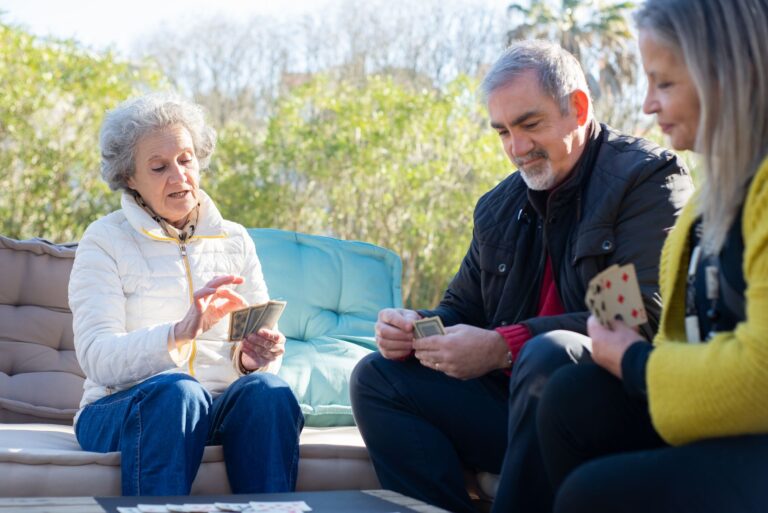
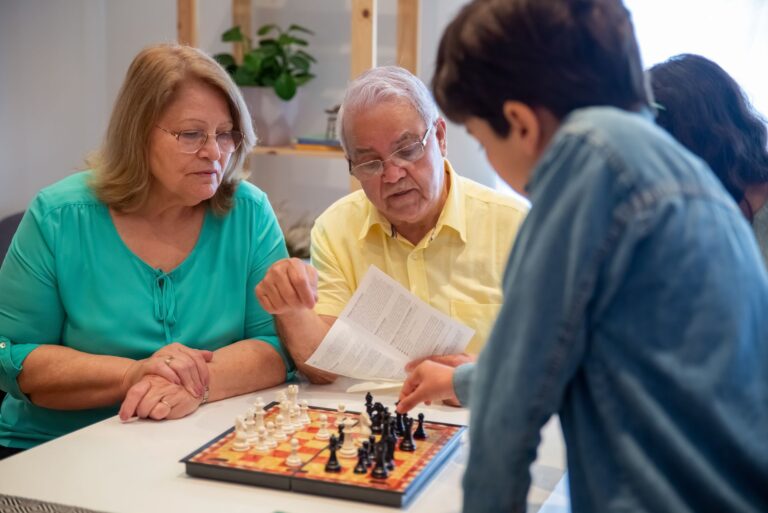
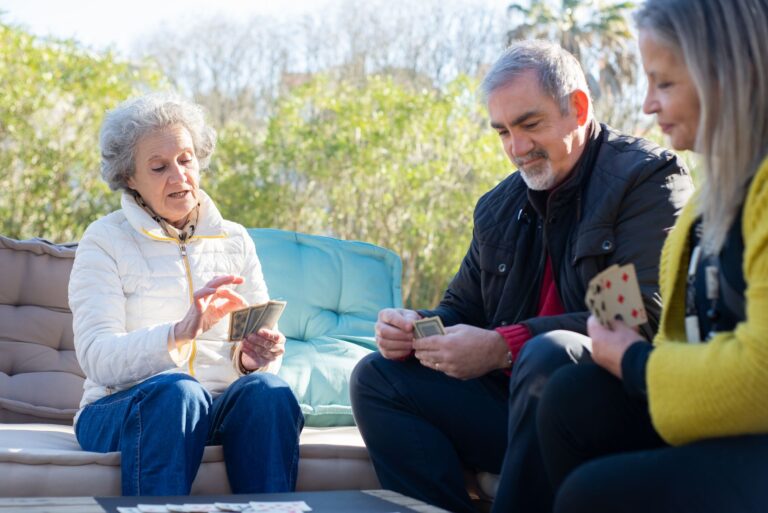
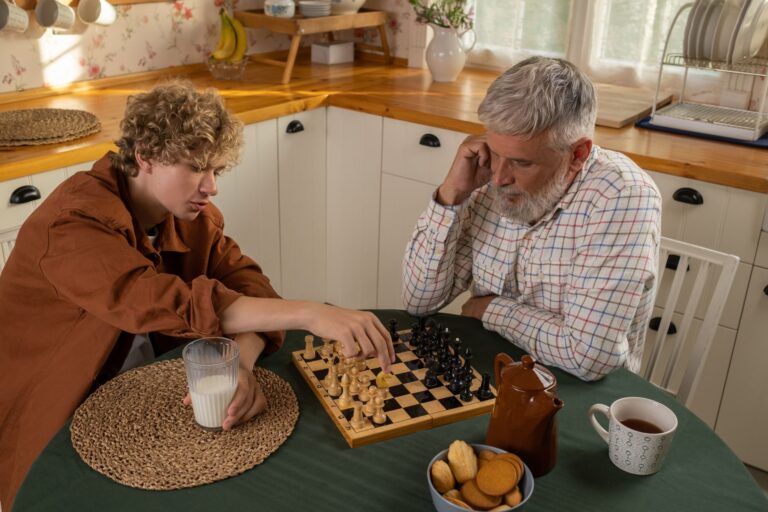
The two-person card games that suit memory care residents best are Go Fish, Crazy Eights, War, one-on-one Memory Match, card sorting, high-card-wins, Uno, and Old Maid. Memory care is residential care for people living with dementia, and these options fit because they use asking, matching, or flipping one card at a time. Familiar play keeps attention on social time rather than new rules. Smaller hands, fewer ranks, and cooperative goals make participation easier on low-energy days.
Medical information disclaimer: This article is for general educational purposes only and does not provide medical advice, diagnosis, or treatment. Always consult a physician or other qualified health professional about symptoms, medications, tests, or treatment decisions.
Table of Contents
- Which familiar matching games work for two?
- What fits greater memory loss?
- How do you set up Memory Match for two?
- How do you keep play calm and connected?
Which familiar matching games work for two?
Go Fish suits two people because each player asks for a rank to complete a numbered set. Cascade Living Group describes simplifying it with smaller hands and fewer ranks in Cascade Living Group's guide to card games for seniors with dementia. Crazy Eights works for two because each person matches the top card by suit or number.
HoviCare explains that eights are wild to change the suit, which practices visual recognition and turn-taking, in HoviCare's list of simple card games for seniors. Uno and Old Maid also help, HelpDementia notes, because color, number, and picture matching support participation without learning new rules. Familiar games such as Go Fish, Old Maid, rummy, and Uno reduce confusion because recognition matters more than instruction for residents with recall difficulty.
What fits greater memory loss?
War fits two players with greater memory loss because the pair simply flip top cards. HelpDementia notes that the higher rank takes both cards, with suits ignored and ace high, so no strategy is needed. Sorting cards by color or suit gives another no-math option for later-stage dementia.
High-card-wins works the same way, Estrella Gardens notes, with each person flipping one card and the higher card winning. These choices suit low-energy days because every turn looks the same. Keep the pace slow, name each card aloud, and let the resident handle the cards when possible.
How do you set up Memory Match for two?
Memory Match played one-on-one suits memory care when reduced to 6-8 large-print pairs. Estrella Gardens Memory Care recommends removing timed or competitive play in favor of cooperative pairing by color, suit, or picture in Estrella Gardens' guide to card games for dementia patients.
Use a clear table, good light, and cards face down in straight rows. Pair together rather than keeping score.
- Choose 6 pairs first, then add more only if play stays relaxed
- Use large-print cards with bold colors or pictures
- Match by color or picture before matching by suit or number
- Take turns flipping two cards and leave found pairs face up
How do you keep play calm and connected?
Choose the game that matches present energy, not past skill. Use a known favorite when attention is short, and switch to sorting or high-card-wins when decisions feel hard.
Card and memory games offer engagement, mood support, and gentle cognitive activity, Creative Activities LLC notes, but they have not been shown to treat, slow, or stop dementia, so success means calm connection rather than score, as explained in Creative Activities' guide to memory games. Praise effort, allow extra time, and end the round when attention fades.