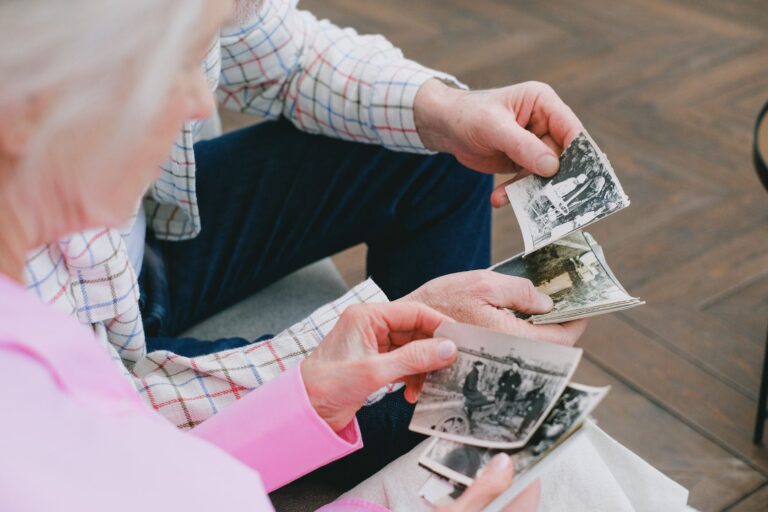
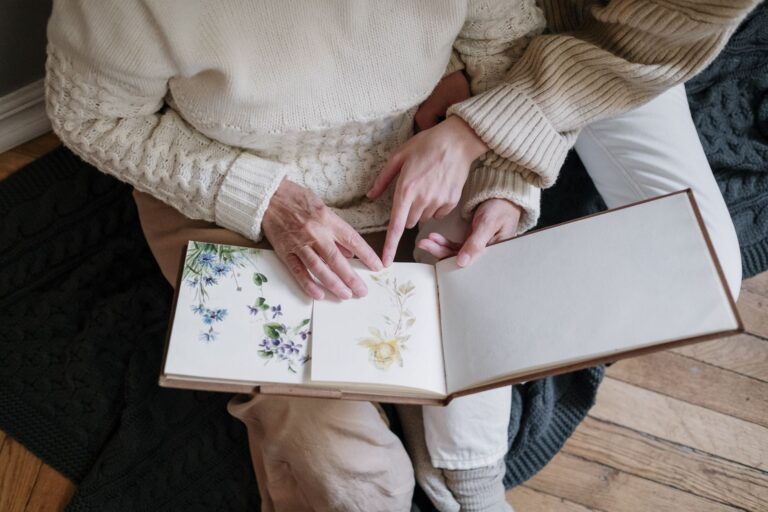
Offer reminiscence conversations soon after an early-stage dementia diagnosis, while the person can still talk, choose topics, and help build a life-story record. Hold brief 30–60 minute sessions once or twice a week, for at least six sessions over four weeks and ideally 12–16 sessions. Reminiscence conversations are guided talks that use photos, music, objects, or stories to recall past experiences. They work as one tailored wellbeing activity among others, not as a cure or required treatment.
Medical information disclaimer: This article is for general educational purposes only and does not provide medical advice, diagnosis, or treatment. Always consult a physician or other qualified health professional about symptoms, medications, tests, or treatment decisions.
Table of Contents
Why start early
Early dementia is the practical window because short-term memory fades first. Long-term autobiographical memory stays more reachable, so older memories can still spark talk.
That access lets the person pick themes and shape the record. A daughter might follow her mother's lead toward wedding songs rather than school days. Choice keeps the exchange willing and calm.
How often should sessions run
Studied programs generally lasted at least four weeks or six sessions, typically 30–60 minutes once or twice weekly. A 2025 dose analysis in Aging Clinical and Experimental Research found no significant cognition gain at eight sessions, with the largest gain at 12–16 sessions. NICE guideline NG97 recommends clinicians consider group reminiscence therapy for mild to moderate dementia, in the NICE dementia guideline.
"Consider" is weaker than its "offer" advice for group cognitive stimulation. Expect small, setting-dependent benefits rather than a large overall effect. The 2018 Cochrane review summarized by Bangor University pooled 22 randomized trials with 1,972 people and reached the same careful view. Plan a short weekly run, review response, then extend toward 12–16 sessions when sessions go well.
What helps a session work
Use tangible prompts that match the person's life. General cues suit groups, while person-specific cues suit one-to-one talks.
In that evidence base, individual work was linked to better cognition and mood. Group work was linked to better communication, and quality-of-life gains looked most promising for care-home residents.
- Photographs, letters, favourite possessions, and themed memory boxes
- Music, videos, familiar foods, and scents
- Questions tied to roles, places, holidays, work, or celebrations
When to adjust, pause, or stop
Treat reminiscence as one choice among walks, music, art, social visits, and cognitive stimulation. Keep sessions brief and weekly, and watch mood during and after. Difficult memories can surface. Pause, offer comfort, change the prompt, or end early when upset, tears, agitation, or withdrawal appear.
Restart only when the person seems settled and willing. One caution comes from the large REMCARE trial of joint reminiscence groups. It found no overall quality-of-life or cost-effectiveness benefit, with possible gains only in regular attenders and more caregiving stress in carers who attended more sessions. Keep attendance steady but light, and redirect when distress occurs.