Simplify reminiscence conversations by asking one short, simple question at a time and offering yes-or-no choices. Reminiscence conversations are relaxed chats about pleasant past events, kept clear by speaking slowly in a calm tone with one topic per chat. They work best when you reduce distractions, allow extra response time, and stop if fatigue or distress appears. The goal is connection and comfort, not testing memory or getting facts right.
Medical information disclaimer: This article is for general educational purposes only and does not provide medical advice, diagnosis, or treatment. Always consult a physician or other qualified health professional about symptoms, medications, tests, or treatment decisions.
Table of Contents
- What should you actually say?
- When should you talk, and when should you stop?
- Which memories and objects spark stories?
- How should you respond in the moment?
- What can these chats realistically do?
What should you actually say?
Ask one brief question, then wait. Use simple words, short sentences, and yes-or-no options such as, "Did you enjoy baking bread?" Speak slowly in a calm, warm tone.
Get eye contact first and cut background noise before you start. According to the U.S. National Institute on Aging guidance on communicating with someone who has Alzheimer's, caregivers improve understanding by allowing extra response time and rephrasing rather than repeating when the person does not understand.
When should you talk, and when should you stop?
Keep home chats brief and stick to one topic at a time. Pick the person's best time of day, often mid-morning after rest and food.
The Alzheimer Society of Canada's ways to help advises stopping if fatigue or distress appears. Watch for these signs: End on a kind note and try again later. A short pleasant chat beats a long strained one.
- Rubbing eyes, yawning, looking away, or going quiet
- Frowning, pacing, tearfulness, or agitation
- Short answers after earlier interest
Which memories and objects spark stories?
Target durable long-term memories such as childhood home, work, holidays, music, or photos. Dementia Support Australia suggests avoiding recent-recall quizzes and avoiding "Do you remember?" as a test. Use concrete triggers rather than abstract questions alone.
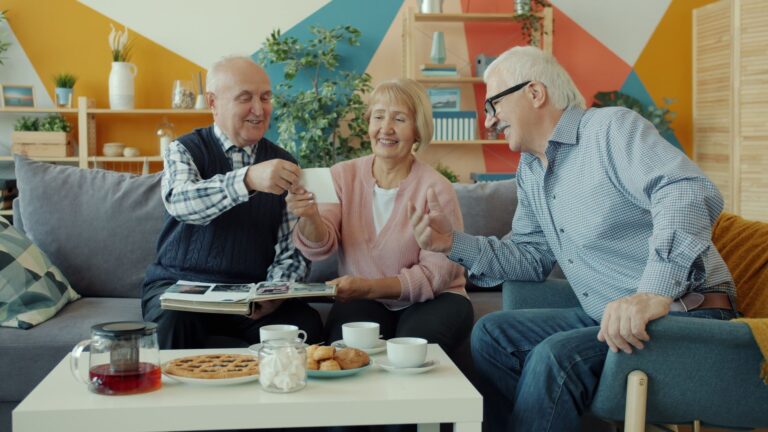
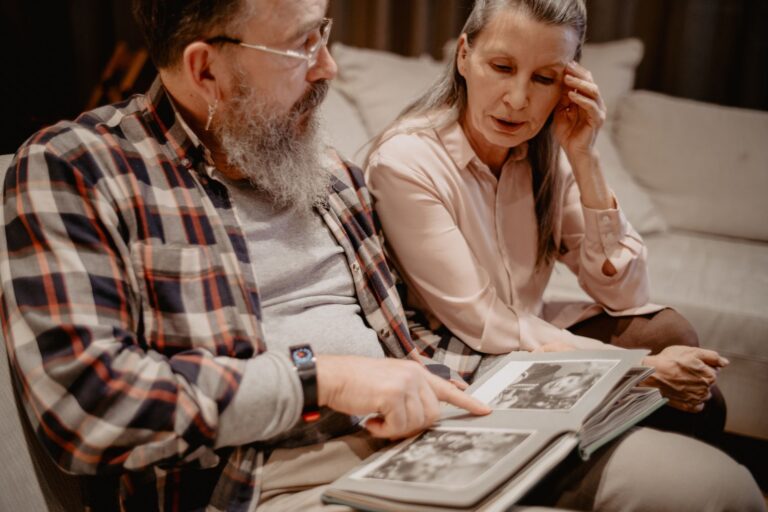
Try a family photo, a memory-box object, a familiar song, a spice scent, or a soft sweater. Say, "Tell me about this wedding photo," instead of, "What did you do last week?" The U.S. National Institute on Aging notes that adapted activities with familiar sights, sounds, and textures prompt sharing more easily. Let one object lead the chat and follow where it goes.
How should you respond in the moment?
Follow the person's lead and listen patiently without rushing. Validate feelings with lines such as, "That sounds joyful," or, "That must have mattered to you." Do not correct wrong words, dates, or details. Alzheimer's Society UK advises that connection matters more than factual accuracy in dementia communication.
Stay present, nod, smile, and let the story continue. If words stall, offer a gentle choice or sensory cue. Say, "Did it smell like fresh bread or soup?" rather than pressing for the exact name.
What can these chats realistically do?
Expect comfort, engagement, and moments of connection rather than major memory gains. A Cochrane review pooled 22 randomized trials with 1,972 people with dementia and found only small, inconsistent benefits for quality of life, cognition, communication, and possibly mood.
The U.K. National Institute for Health and Care Excellence guideline NG97, published 20 June 2018, says to consider group reminiscence therapy for people living with mild to moderate dementia. The NICE guideline NG97 frames it as a low-risk wellbeing option, not a dementia treatment.