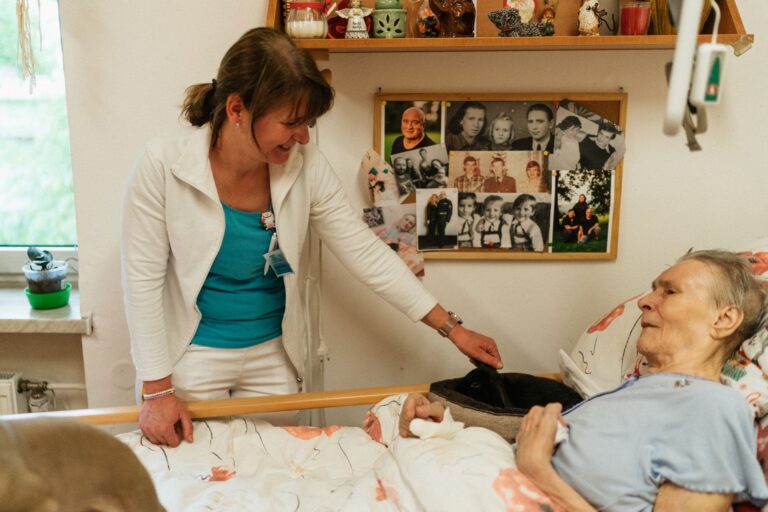
Offer one structured reminiscence conversation per week when the person is alert, usually in the morning. For middle-stage dementia, keep each session to about 30–40 minutes, with brief informal chats between sessions.
Reminiscence means talking through past experiences with prompts like photos, music, or familiar objects. According to NICE dementia guidance, clinicians should consider group reminiscence therapy for mild to moderate dementia. That advice covers the middle stage, when structured prompts often work better than open-ended recall.
Medical information disclaimer: This article is for general educational purposes only and does not provide medical advice, diagnosis, or treatment. Always consult a physician or other qualified health professional about symptoms, medications, tests, or treatment decisions.
Table of Contents
- How often and for how long?
- What time of day works best?
- How do you keep the talk comfortable?
- What can these talks do?
How often and for how long?
A common tested pattern is one structured session each week for eight weeks. The journal record for one Alzheimer trial reports groups of six meeting for about 60 minutes with better cognition, depression, and quality-of-life scores. For moderate dementia, the Porchlight evidence guide points to shorter structured sessions of 30–40 minutes.
It also advises stopping if the person seems overwhelmed and adding brief informal reminiscence between weekly sessions. The Cochrane dementia review pooled 22 randomized trials with 1,972 participants, mostly with mild or moderate dementia. Those programs lasted at least four weeks or six sessions, which supports a weekly rhythm rather than daily quizzing.
What time of day works best?
Choose a time when the person is rested and alert, and avoid late afternoon and evening. According to the National Institute on Aging sundowning guide, fading daylight and tiredness can bring restlessness, agitation, and confusion.
Morning often works well because attention is fresher and the home is calmer. Watch the person across days and keep the slot that brings the most ease and response.
How do you keep the talk comfortable?
The Alzheimer's Association advises one-to-one talk in a quiet space with few distractions for middle-stage conversations. It also advises asking one question at a time and giving extra time to answer.
Use recognition, not recall. The Alzheimer's Society UK recommends prompts and choices over memory tests.
- Show one photo, song, or object at a time
- Offer two clear choices, such as "beach or garden?"
- Invite stories instead of asking for names and dates
- Pause or stop if sadness, fear, or distress appears
What can these talks do?
The Cochrane Dementia Group found only small, format-specific effects, not restored memory. Probable gains included quality of life in care homes, mood from one-to-one sessions, and communication from group sessions.
Treat the goal as connection, mood, and participation in the moment. Keep notes on what prompts help, what time works, and when to end. Pause the talk, switch to listening, and try again another day if distress appears.