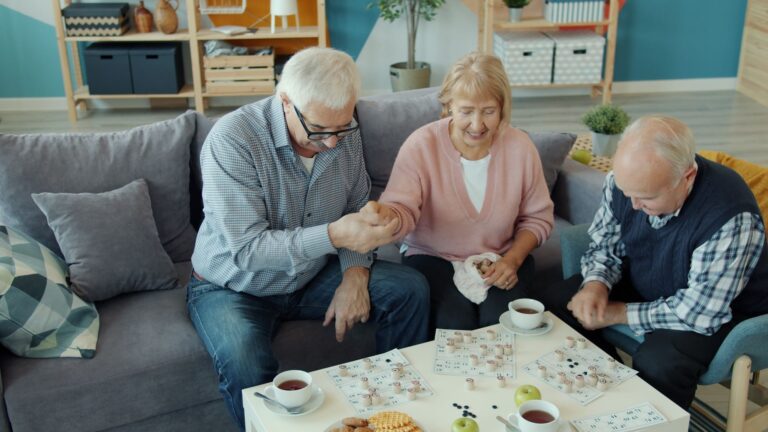
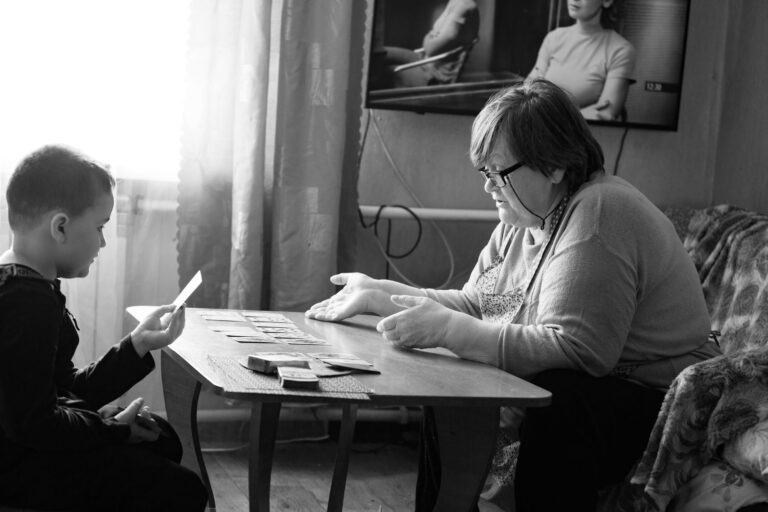
The best card games for someone with memory loss are familiar, low-strategy games such as Go Fish, Crazy Eights, War, Gin Rummy, Blackjack and Solitaire. They support recall, matching, concentration and turn-taking without complex rules. Memory loss here means ongoing trouble remembering recent information, which makes new rules hard to learn. Staying with known games keeps play calm, social and successful.
Medical information disclaimer: This article is for general educational purposes only and does not provide medical advice, diagnosis, or treatment. Always consult a physician or other qualified health professional about symptoms, medications, tests, or treatment decisions.
Table of Contents
- Which games fit early memory loss best?
- How do Go Fish and Crazy Eights work?
- How should cards change as needs increase?
- What can card play reasonably offer?
Which games fit early memory loss best?
Assisting Hands Home Care Cincinnati advises familiar, low-strategy games for early-stage dementia, including Go Fish, Crazy Eights, War, Gin Rummy, Blackjack and Solitaire, according to caregiver guidance on dementia-friendly games. These games exercise recall, matching, concentration and turn-taking. Players can join quickly because most adults already know the basic moves.
Familiar play lowers stress because no new system must be memorized. Short turns hold attention and give repeated practice with faces, numbers and suits. A partner can cue the next step without taking over the turn.
How do Go Fish and Crazy Eights work?
Crazy Eights deals five cards to each player and asks players to match the discard by rank or suit, with eights wild. Go Fish asks players to request ranks from others to form pairs. Practical guides from A Place for Mom describe both formats as support for pattern recognition and conversation, in simple card-game instructions for dementia care.
Keep the table clear and play one rule at a time. Speak each card aloud, keep discards visible and pause between turns. End while play still feels pleasant.
How should cards change as needs increase?
For late-stage dementia, Assisting Hands Home Care Cincinnati says shuffling cards or sorting by color or suit can still give engagement. Large-print cards, a card holder and fewer cards reduce visual clutter and hand strain.
Relish offers Animal Snap, a dementia-designed set with large, thick easy-grip cards and bold animal images for mid-stage dementia. It includes three graded association games for two to four players. Useful setups include:.
- fewer cards in hand to avoid overwhelm
- large-print decks and a tabletop holder
- sorting or matching instead of scored play
What can card play reasonably offer?
University of Wisconsin-Madison researchers found older adults who played cognitive games such as cards had higher brain volume in specific regions than peers who played less. A prospective cohort study of Chinese older adults linked more frequent cards or mahjong play with lower risk of new dementia, plausibly through cognitive stimulation and hippocampal-frontal connectivity, reported in the Frontiers in Aging Neuroscience study.
These links do not prove prevention. Oregon Health and Science University researchers tested a FreeCell-style game in only nine regular computer users, average age 80, with three having mild impairment over six months. Pick one familiar game, keep sessions short and simplify further if frustration appears.