Games provide structured cognitive stimulation in a daily memory care routine, alongside meals, movement, and rest. A memory care routine is a predictable daily plan that supports thinking, comfort, and function as abilities change. Cognitive stimulation means planned mental activity that engages memory, attention, and problem-solving. According to the Alzheimer's Association, caregivers should build a flexible daily plan around these activities and adapt it over time through its daily care plan.
Medical information disclaimer: This article is for general educational purposes only and does not provide medical advice, diagnosis, or treatment. Always consult a physician or other qualified health professional about symptoms, medications, tests, or treatment decisions.
Table of Contents
- What benefits are linked to regular play?
- Which kinds of games fit the day?
- How long do the gains last?
- How should caregivers schedule games?
What benefits are linked to regular play?
Later-life reading, games, computer use, and crafts were tied to lower memory risk in observational research. In Mayo Clinic Study of Aging reporting by AARP, weekly computer use was linked to 42% lower likelihood of memory problems, while varied engagement with cards, board games, reading, and social contact was linked to 23% lower likelihood in adults age 70 and older in this report on social activities and memory. Reviews of dementia care link board, video, and virtual-reality games in early- and middle-stage dementia with better short-term memory, reaction time, problem-solving, communication, and reasoning.
Healthy older adults playing a 3-D video game about 30 minutes daily for four weeks also improved hippocampal-based memory, with gains persisting up to four weeks after training. These findings describe associations and short-term training effects, not cures. Games work best as one repeated part of care, not as a one-time treatment.
Which kinds of games fit the day?
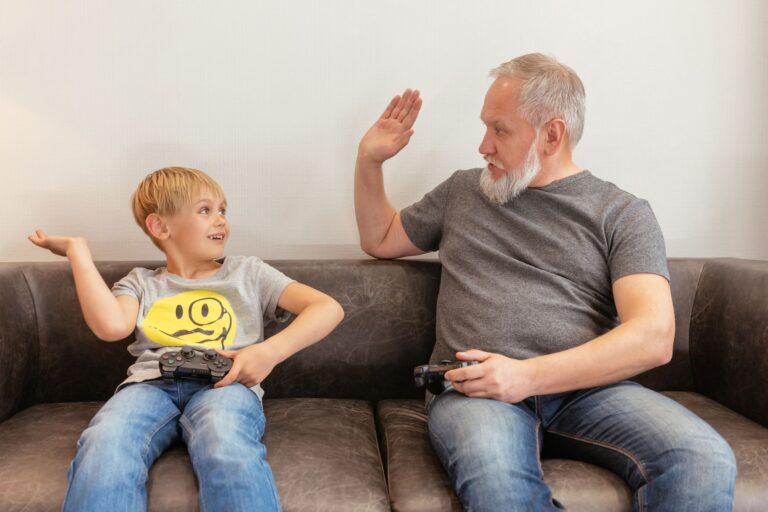
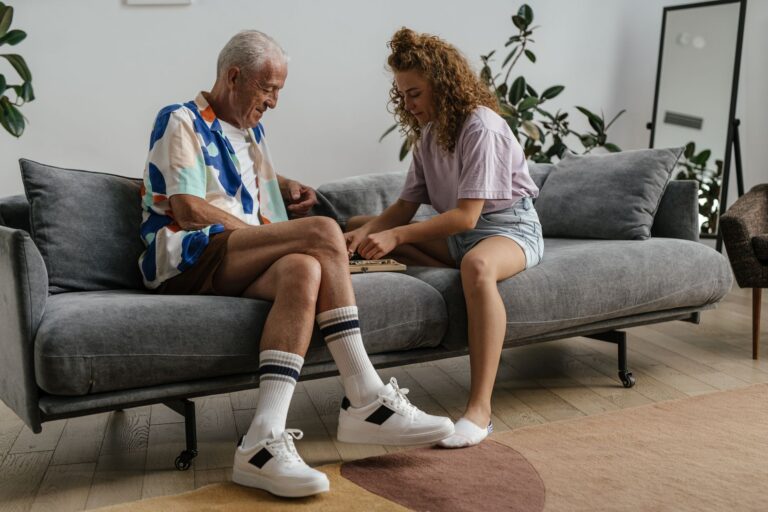
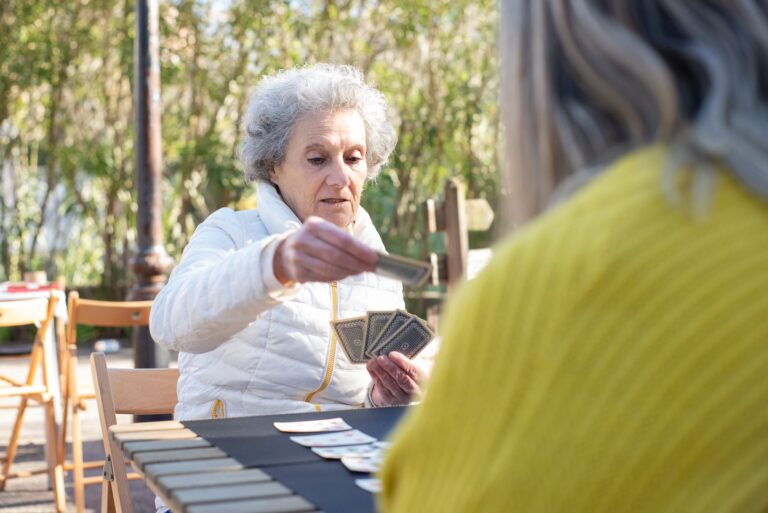
Familiar table games often fit well because rules are clear and play is social. Examples include matching games, simple card games, dominoes, bingo, word puzzles, and large-piece jigsaws. Digital options add variety for people comfortable with screens.
Examples include brain-training apps, bowling or sports video games, music and rhythm games, and guided virtual-reality scenes with simple controls. Choice should follow current ability, vision, hearing, dexterity, and interest. Short sessions with clear endings help the person stop with success rather than fatigue.
How long do the gains last?
Continued practice matters because many short-term gains fade without play. In one randomized trial of non-action video games, attention, processing speed, and memory improved right after training, but most gains vanished after three months without play, as reported in this trial on training durability. Longer programs with follow-up practice show more durable links.
In the 20-year ACTIVE trial follow-up of about 2,800 adults ages 65-94, adaptive speed-of-processing training plus boosters totaling about 18-22 hours was linked to 25% lower dementia diagnoses, 40% versus 49% in controls, according to the University of Florida in this decades-later brain-training report. The practical lesson is repetition over intensity. Brief, regular play across weeks supports skills better than occasional long sessions.
How should caregivers schedule games?
Schedule games at the person's best time of day and keep the order predictable. Predictable routines can reduce anxiety and agitation, while rest between activities helps avoid overstimulation.
Keep materials ready, lighting even, and noise low. If frustration rises, switch to an easier game, music, movement, or a snack break.
- Offer play when alert, often mid-morning.
- Favor satisfying tasks over frustrating ones.
- Keep instructions to one step at a time.
- Stop before fatigue, then allow quiet rest.
- Adjust difficulty as abilities change.