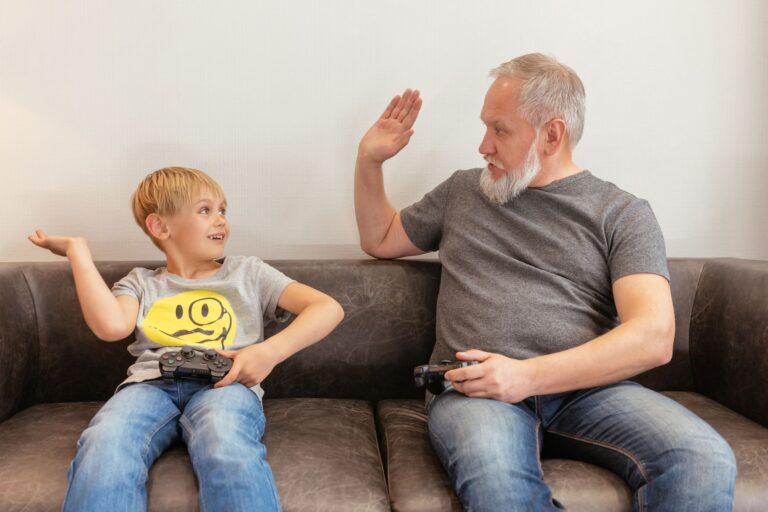
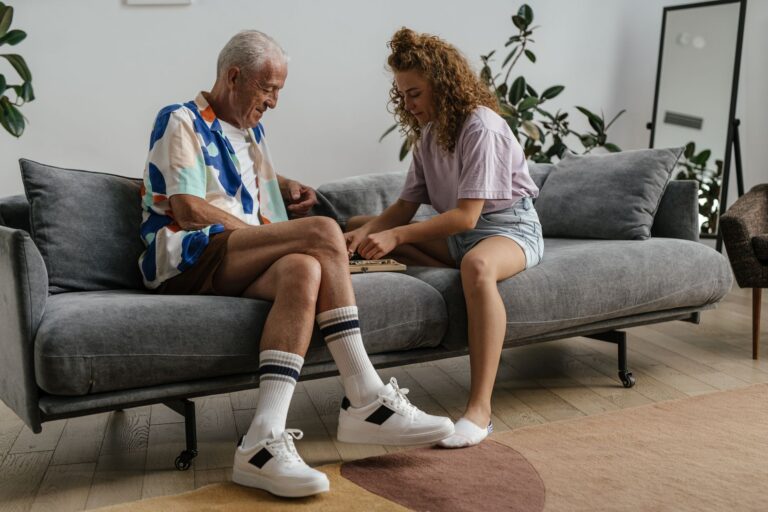
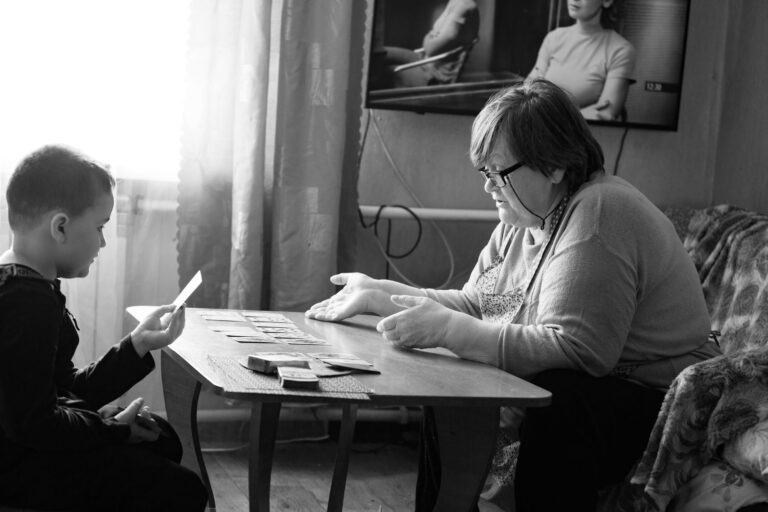
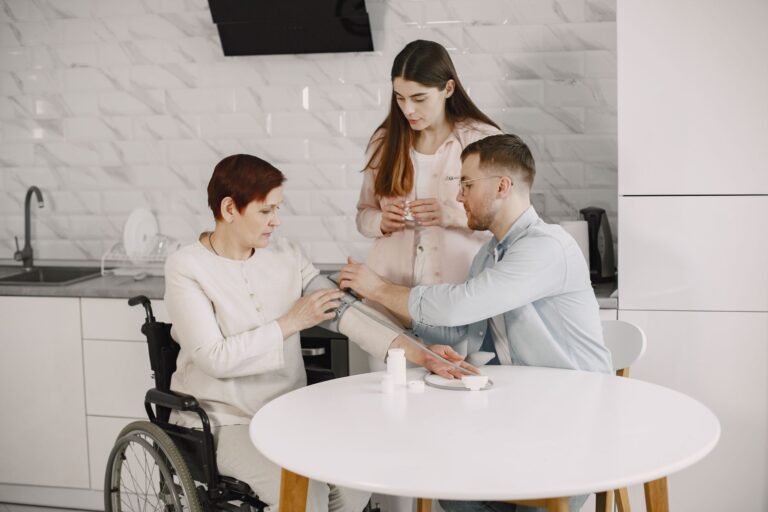
Safe games for someone with advanced memory loss are simple, sensory, and failure-free. They focus on touch, rhythm, movement, and familiar sights and sounds instead of memory, rules, or winning. Advanced memory loss means later-stage dementia, when short-term memory, reasoning, and speech are severely limited. The person can still take part when tasks are simplified and sensory-focused, according to the NHS in its guidance on dementia activities.
Medical information disclaimer: This article is for general educational purposes only and does not provide medical advice, diagnosis, or treatment. Always consult a physician or other qualified health professional about symptoms, medications, tests, or treatment decisions.
Table of Contents
- Why do simple sensory games work best?
- Which music games still create connection?
- What hands-on play is safe and calming?
- What should you avoid or adapt?
- How can daily routines become play?
Why do simple sensory games work best?
Complex games demand recall, sequencing, and quick thinking. Those demands fade in reach during advanced dementia. Sensory play asks for a different response.
Touch, rhythm, and familiar cues still invite attention and pleasure. A soft ball, a familiar song, or a family photo can prompt a smile, a tap, or eye contact. Success comes from taking part, not from getting an answer right.
Which music games still create connection?
Music often reaches people after words become hard. Even in late-stage Alzheimer's, a person may tap a beat or sing childhood lyrics, according to the Alzheimer's Association in its guide to art and music in daily care.
Try clapping together, swaying, humming, or tapping a tambourine. Keep sessions short and use songs from youth or family life. Studies cited by the Alzheimer's Association found music may reduce agitation and improve common middle-stage behavioral issues such as outbursts, as noted in the same caregiving guide.
What hands-on play is safe and calming?
Choose repetitive tasks with large, safe objects. Supervised play such as folding towels, matching socks, or sorting large safe objects by color offers tactile success without complex rules, according to WebMD in its guide to therapeutic activities for Alzheimer's.
Reminiscence play also helps. Looking through family photos, holding familiar objects, and watching short video and music clips helps people with dementia share stories and stay engaged. Let the person lead, follow their pace, and praise each small action.
What should you avoid or adapt?
Avoid complex, multi-step, competitive, or frustrating puzzles. They can trigger confusion, withdrawal, or distress. Choose easy movement instead, such as dancing to familiar music or taking a short guided walk.
Allow extra time and remove distractions. Turn off the television, sit close, make eye contact, and demonstrate each step. Do the activity jointly because shared play improves wellbeing for both patient and caregiver.
How can daily routines become play?
Pair care routines with familiar music. For late-stage Alzheimer's, the Alzheimer's Foundation of America recommends simple sensory stimulation and pairing routines such as hand-washing with familiar music, described in its stage-by-stage activity guide.
Use a warm towel, scented soap, gentle hand massage, or brushing hair. Speak slowly, sing softly, and watch for tiredness. Stop when attention fades and return to the same pleasant routine later.