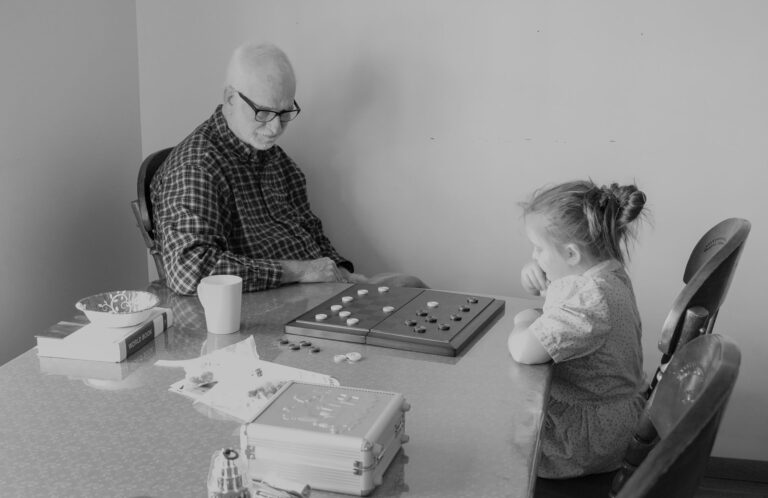
Familiar board games, cards, mahjong, Go, and Klondike Solitaire help caregivers spot early cognitive decline. Cognitive decline means a gradual slip in memory and thinking that makes daily tasks harder.
These games do not diagnose dementia. They make repeated mistakes visible during play caregivers already know. Caregivers can use those patterns to seek timely testing.
Medical information disclaimer: This article is for general educational purposes only and does not provide medical advice, diagnosis, or treatment. Always consult a physician or other qualified health professional about symptoms, medications, tests, or treatment decisions.
Table of Contents
- What changes matter most at the game table?
- Do regular players show slower decline?
- How do solitaire and memory-card tasks reveal risk?
- What should caregivers do next?
- Frequently Asked Questions
What changes matter most at the game table?
Texas health officials, citing the Alzheimer's Association, list forgetting the rules of a favorite game and struggling to complete familiar tasks as early warning signs in older adults Texas warning signs. That frame gives caregivers a clear baseline. Know how the person used to play, then watch for loss.
Look for change that repeats across sessions, not one bad night. Useful signals include rule loss, scoring errors, and slowed strategy. Log date, game, and exact error. A short written record shows pattern better than memory.
- Forgets rules of a favorite game
- Struggles to finish a familiar turn or full game
- Makes repeated scoring or counting errors
- Plays far slower or with weaker strategy
Do regular players show slower decline?
A French population-based cohort with long follow-up found older adults who regularly played board games showed slower cognitive decline and lower risk of dementia and depression than non-players, according to Univ. Bordeaux researchers reporting in BMJ Open French cohort findings. The benefit appeared in everyday play, not training software. Familiar games count because caregivers can judge change. A prospective cohort of Chinese older adults found almost-daily cards or mahjong play was associated with 37 percent lower incident dementia risk versus rarely or never playing, according to Central South University researchers Chinese cohort findings. The reported hazard ratio was 0.63.
Frequency mattered more than occasional play. A systematic review and meta-analysis from the Univ. of Milano-Bicocca team in the Journal of Alzheimer's Disease found traditional board games improved global cognition on MoCA and MMSE. In that review, mahjong improved executive function and Go improved attention plus higher BDNF. Executive function means planning and shifting steps. Attention means staying focused on the right move.
How do solitaire and memory-card tasks reveal risk?
Three MCI health professionals mapped 22 Klondike Solitaire actions to 10 cognitive functions, according to the ACM Symposium on Computer-Human Interaction in Play. They found attention, executive function, object recognition, abstraction, and memory can be monitored through gameplay errors and speed. Klondike Solitaire means the familiar single-player card game with seven piles. A wrong pile, missed suit sequence, or long pause can signal trouble with recognition or planning. Repeated hints, undo moves, and slow completion add weight.
Single errors mean little. Rising error counts and slower times across weeks mean more. In 969 cognitively normal adults averaging age 69, a four-card Free and Cued Selective Reminding Test with SOMI staging predicted later impairment, according to the American Academy of Neurology in Neurology. Over follow-up, 234 developed impairment, and stages 1 through 4 carried two to three times higher risk over 10 years. SOMI means Stages of Objective Memory Impairment. It grades retrieval failure from mild to severe.
What should caregivers do next?
Game changes do not diagnose dementia. The National Institute on Aging warns commercial brain-game claims lack clinical-trial evidence, so caregivers should log repeated rule loss, scoring errors and slowed strategy and seek primary-care cognitive testing NIA prevention guidance. A game log supports the visit.
It does not replace it. Bring the log, medication list, and examples of daily-task trouble to the appointment. Ask for cognitive testing.
- Play the same familiar game weekly
- Note rules forgotten, help needed, and time taken
- Save two or three score sheets as examples
- Call primary care when errors persist for weeks
Frequently Asked Questions
How long should a caregiver watch before calling the doctor?
Watch the same game for several weeks and call when rule loss, scoring errors, or slower strategy repeat despite rest and good hearing and vision.
Are phone brain-training scores as useful as a favorite table game?
A known table game is more useful for spotting change because the caregiver knows the prior skill level and can log exact errors.