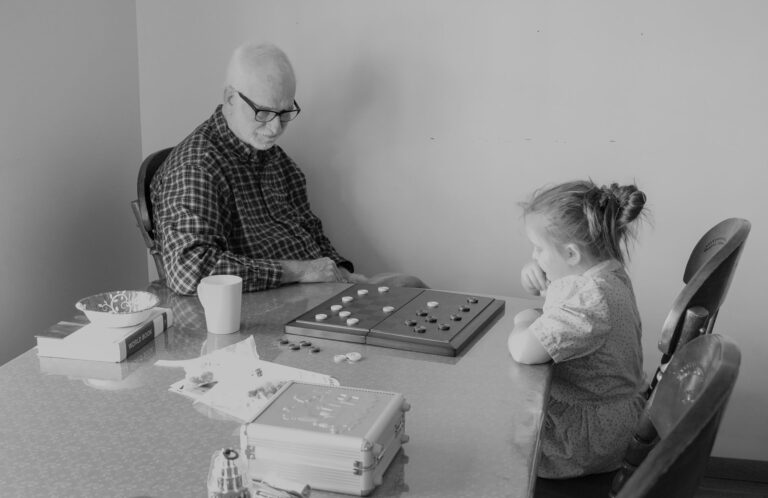
Yes, in a modest and specific way. Trivia games belong to the family of active mental activities that large studies link to lower dementia risk in older adults, and they reliably sharpen the skill they exercise — fast, accurate recall of stored knowledge.
What they do not do is guarantee protection against dementia, and the strongest evidence for lasting benefit comes from a different kind of training altogether. Brain health in later life is shaped by many things at once: blood pressure, hearing, sleep, physical activity, and mental engagement. Trivia sits in that last category as a cheap, enjoyable, low-risk addition — worth doing on its own merits, and worth understanding accurately before anyone treats it as a prevention plan.
Medical information disclaimer: This article is for general educational purposes only and does not provide medical advice, diagnosis, or treatment. Always consult a physician or other qualified health professional about symptoms, medications, tests, or treatment decisions.
Table of Contents
- What the population evidence actually shows
- Why speed training, not quizzing, produced the headline result
- Trivia, crosswords, and apps are not interchangeable
- Be wary of the marketing claims
- How to use trivia sensibly
- Frequently Asked Questions
What the population evidence actually shows
The clearest number comes from a large Australian cohort. In a 2023 JAMA Network Open study of 10,318 adults aged 70 and over, people who frequently played games, cards, chess, crosswords and puzzles had a 9% lower rate of dementia over roughly ten years (adjusted hazard ratio 0.91, 95% CI 0.87–0.95). Trivia falls squarely inside that activity category. The same analysis found something instructive about *why*.
Adult literacy activities — writing, using a computer, taking classes — were associated with an 11% lower risk, while social activities and outings showed no association at all. The mental content of the activity carried the signal, not the company around a trivia night. That design cannot prove cause, and the limitation matters more than it might sound. People in the earliest, undiagnosed stages of decline play fewer games, which makes game-playing look more protective than it is. The study's authors adjusted for education, socioeconomic status and health conditions, but an observational cohort still shows association only.
Why speed training, not quizzing, produced the headline result
The strongest causal evidence in this field comes from the NIA-funded ACTIVE trial, which randomly assigned 2,832 older adults (mean age 73.6) to memory, reasoning, or speed-of-processing training. At the ten-year mark, reasoning and speed gains persisted — effect sizes of 0.23 and 0.66 — while the memory-trained group no longer differed from controls. The twenty-year follow-up is the part worth knowing. Participants who received speed-of-processing training *plus at least one booster session* had a lower rate of diagnosed dementia (hazard ratio 0.75; 40% of 264 diagnosed versus 49% of 491 controls). The same training without boosters showed no effect at all (HR 1.01), and memory and reasoning training showed none.
Johns Hopkins, announcing the finding, described it as the first cognitive-training intervention linked to lower dementia incidence across two decades. Two caveats travel with it: diagnoses came from insurance claims rather than clinical confirmation, and about three-quarters of participants died during the follow-up period. Speed-of-processing training is not trivia. It is a repetitive, timed visual task — spotting and identifying briefly flashed objects — delivered in structured sessions with refreshers. Recall of facts is a different skill.
Trivia, crosswords, and apps are not interchangeable
A head-to-head trial in adults with mild cognitive impairment (MCI) — measurable memory or thinking problems that do not yet interfere with daily independence — compared two formats directly. Over 78 weeks, 107 participants did either home crossword training or computerized cognitive games. Crosswords won.
On the ADAS-Cog scale, where lower scores mean better cognition, the crossword group improved from 9.59 to 8.61 while the games group worsened from 9.53 to 9.93, and the crossword arm showed less hippocampal volume loss on imaging. Trivia resembles crosswords more than it resembles a reflex game: both draw on language, general knowledge and effortful retrieval. The commercial category deserves more skepticism. The National Institute on Aging says plainly that evidence for a lasting beneficial cognitive effect of mentally stimulating activities is not definitive, and that there is not enough evidence that brain-training apps reproduce the structured training effects ACTIVE achieved.
Be wary of the marketing claims
Overclaiming in this market has already drawn regulatory action. In January 2016 the Federal Trade Commission settled with Lumos Labs over Lumosity advertising that promised improved everyday, school, work and athletic performance and delayed age-related cognitive decline. The settlement imposed a $50 million judgment, suspended on payment of $2 million.
The useful rule of thumb comes from how training effects transfer. Gains move reliably only to near tasks — practice at retrieving facts makes you better at retrieving facts, not at managing medications or navigating a new city. Claims of broad, life-wide improvement from a single game are the signal to walk away. Questions worth asking of any paid program:.
- Does it cite a randomized trial, or only user testimonials and "brain science" language?
- Does it claim to prevent or delay dementia? No app has demonstrated that.
- Is the benefit described specifically, or as general "brain fitness"?
- Would the same money buy a hearing aid check, a gym membership, or a class instead?
How to use trivia sensibly
Treat trivia as one strand of engagement rather than a treatment. The NIA's prevention guidance cites research in nearly 2,000 cognitively normal adults aged 70 and over in which game-playing was associated with lower MCI risk — which makes it a reasonable, low-risk addition, not a proven preventive. Practical ways to get more out of it: A word for family caregivers: if someone who used to enjoy quizzes starts avoiding them, that withdrawal can itself be an early sign rather than a cause of decline, and it is worth mentioning to a clinician instead of pushing harder on the games.
- Favor effortful recall over multiple choice. Trying to retrieve an answer before seeing options does more work than recognizing one.
- Rotate categories. Novelty and difficulty matter more than volume in a familiar subject.
- Add a literacy-type activity alongside it — writing, a class, a new piece of software — since those showed the larger association in the ASPREE cohort.
- Keep the habit regular rather than intensive. Frequency, not marathon sessions, is what the cohort studies measured.
- Do not drop the things with stronger evidence: blood-pressure control, physical activity, hearing correction, and sleep.
Frequently Asked Questions
Will playing trivia every day prevent dementia?
No. The cohort evidence links frequent mental games to a 9% lower dementia rate but cannot establish cause, and the NIA says the evidence for lasting cognitive benefit from such activities is not definitive.
Is a trivia app as good as the training used in the ACTIVE trial?
There is no evidence it is. ACTIVE's dementia-linked result came from speed-of-processing training with booster sessions, and the NIA notes there is not enough evidence that commercial apps reproduce those structured effects.
My parent has mild cognitive impairment. Is trivia still worthwhile?
It is reasonable. The closest comparison, a 78-week trial in MCI, found word-based crossword training outperformed computerized games on cognitive testing and brain imaging.