Group games can help, but only indirectly and only as part of a supervised group program that gets the caregiver hours away from caregiving. No trial has tested group games against caregiver burnout, and the best-designed study of structured group support for dementia caregivers found no effect on depression, anxiety, or burden at all.
Winter raises the stakes because darkness, illness season, and holiday logistics compress a caregiver's margin. The practical question is not whether a board game is therapeutic, but whether the program built around it reliably buys you respite, contact with other caregivers, and a few predictable hours each week. That is where the evidence is mixed, and it is worth knowing which side your situation falls on before you commit a season to it.
Medical information disclaimer: This article is for general educational purposes only and does not provide medical advice, diagnosis, or treatment. Always consult a physician or other qualified health professional about symptoms, medications, tests, or treatment decisions.
Table of Contents
- What "group games" actually means in dementia care
- Where the evidence is genuinely encouraging
- The result that should temper expectations
- Who this affects, and how common it is
- Is winter the real variable?
- How to judge a program before committing a season
- Frequently Asked Questions
What "group games" actually means in dementia care
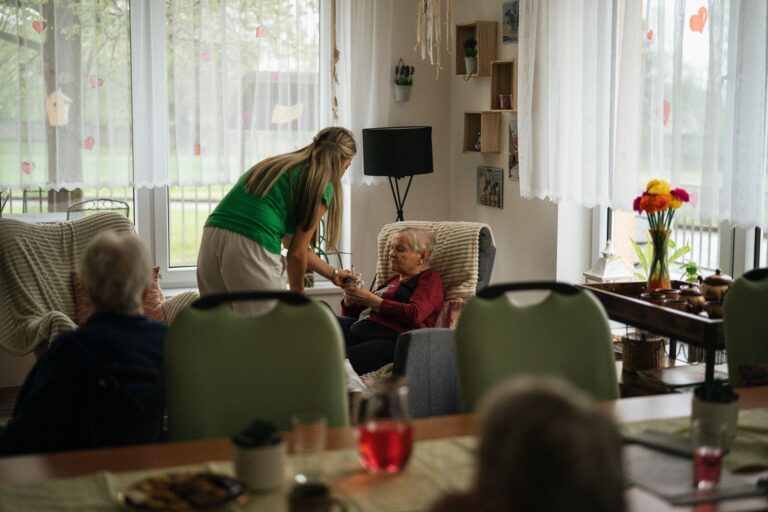
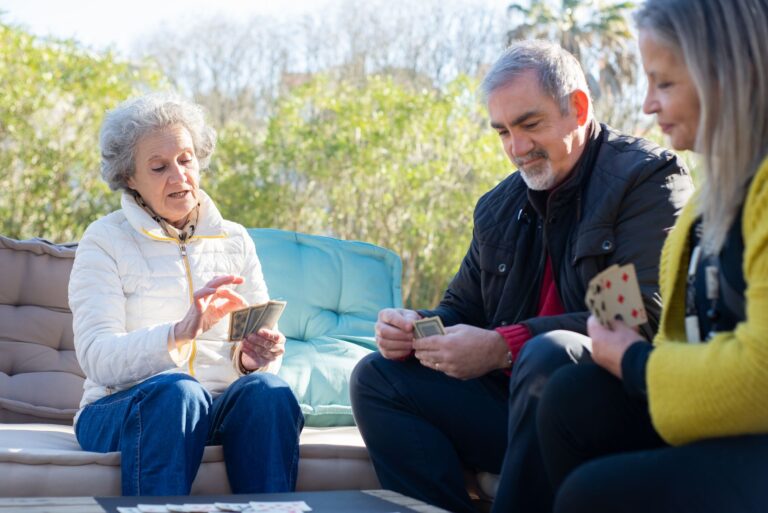
In dementia care, group games almost never arrive as a standalone activity. They are the content of a group respite program — what the Alzheimer's Association, in its guide to respite care, describes as supervised, structured social activities for the person with dementia, held in churches, community centers, and similar local spaces. The games are the hook that holds attention. The relief comes from the hours. That distinction matters for deciding anything.
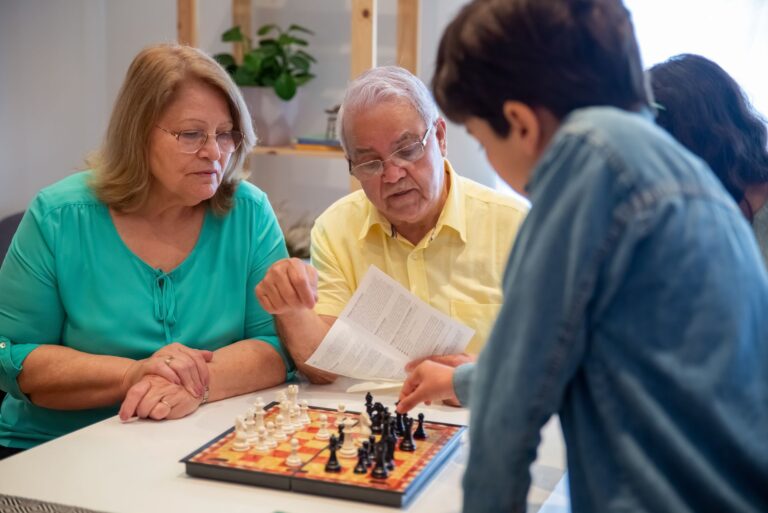
If a program runs two hours on Tuesday mornings, the caregiver's benefit is two predictable hours, repeated — not the specific merits of bingo over dominoes. A program with great activities and no reliable schedule delivers very little; a dull program that runs every week without fail can reshape a caregiver's month. Research on the games themselves is thin and points the other direction. A 2025 preliminary study of board games as a group non-pharmacological intervention measured cognitive stimulation and psychological well-being in the people with dementia — not caregiver burnout. No published trial yet tests group games against caregiver burnout outcomes.
Where the evidence is genuinely encouraging
The strongest support is for time away, not for activities. In a study of 158 dementia family caregivers using adult day services, published in The Gerontologist, caregivers reported significantly fewer care-related stressors and more positive experiences on service days, and the authors concluded that use improved caregivers' cortisol regulation — a stress-hormone measure. The design was observational with self-selected participants, so it shows a pattern rather than proving the program caused it. Structured group education has one solid positive result behind it.
A three-year randomized trial of a group psychoeducational program — seven weekly two-hour sessions with 94 primary caregivers and their families, reported in The Gerontologist — reduced caregivers' negative reactions to disruptive behaviors and reduced caregiver burden over time. Read together, these suggest the mechanism is substitution and skill, not recreation. Someone else supervises for a defined block, and the caregiver learns to interpret difficult behavior differently. A game night that provides neither will not move burnout.
The result that should temper expectations
A randomized multicenter trial of 192 dementia caregivers tested structured family meetings against usual care, and the results in PLoS ONE were null. There was no preventive effect on mental health: 72 of the 192 developed a depressive or anxiety disorder within 12 months, and the intervention did not reduce caregiver burden or health-related quality of life. A companion economic evaluation of the same trial, recorded at Vrije Universiteit Amsterdam, concluded the program could not be considered cost-effective compared with usual care.
So a well-run structured group program's value to caregivers is not automatic — some deliver, some do not. The honest summary: group programs are a reasonable thing to try, with a real chance of helping and a documented chance of changing nothing. That is a different claim from "group games reduce burnout," and it should change how much you invest before you see results.
Who this affects, and how common it is
Caregiving is not a niche situation. The CDC's National Center for Health Statistics reports in Data Brief No. 576 that 18.3% of U.S. adults were caregivers in 2025 — providing regular care in the past 30 days to a friend or family member with a health problem or disability. Women were more likely than men to be caregivers, and rates did not vary by family income.
The strain is measured too. AARP and the National Alliance for Caregiving's *Caregiving in the US 2025*, summarized in AARP's July 2025 release, counts about 63 million family caregivers — roughly 1 in 4 adults, a 45% increase over the decade — with 64% reporting moderate-to-high emotional stress and 45% moderate-to-high physical strain. Isolation is the specific target group activity is meant to hit. The American Psychiatric Association, summarizing that report, notes that about one in four family caregivers feel isolated and alone, and nearly one in four say caregiving makes it hard to care for their own health. If isolation is your main problem, a group setting addresses it directly. If your main problem is physical strain, hours of relief matter more than company.
Is winter the real variable?
Winter strain and seasonal affective disorder are not the same thing, and conflating them leads to the wrong fix. The National Institute of Mental Health, in its guide to seasonal affective disorder, ties the condition to reduced daylight rather than the calendar, notes it is more common farther north, describes symptoms lasting about four to five months a year, and explicitly distinguishes it from holiday- or schedule-related stress. So there are two separate winter problems. One is a daylight-linked mood disorder that calls for clinical assessment.
The other is logistical: shorter days, holiday obligations, visiting relatives, illness closing programs, and a care recipient who may be harder to transport in bad weather. Group games touch only the second, and even then mainly by holding a slot in your week. If you suspect the first, a weekly activity group is not the intervention. Symptoms that return each winter, last months, and lift in spring are worth raising with a clinician rather than scheduling around.
How to judge a program before committing a season
Evaluate the structure, not the brochure. The things that predict relief are boring and checkable: Then measure your own outcome, not the program's. Pick one marker before you start — hours of sleep, a missed medical appointment of your own rescheduled, or how often the week feels unmanageable — and check it after six to eight weeks.
Both the day-services finding and the psychoeducation trial ran on repeated exposure over time, not one visit. If the marker has not moved by then, the null trial is your permission to stop. Switching to a program with more hours, or spending that time on a medical appointment you have been postponing, is a defensible choice rather than a failure.
- Fixed schedule and duration — how many hours, which days, and how often the program actually cancels.
- Supervision level — who stays with your person, their training, and the staff-to-participant ratio.
- Fit for your person's stage, including continence, wandering, and behavior that other programs have declined to manage.
- Transport and winter contingency — whether the program closes for weather or illness, and what you do that day.
- Cost per hour and whether any of it is covered.
Frequently Asked Questions
Do the games need to be cognitively challenging to help the caregiver?
No. The caregiver's benefit comes from supervised hours away, so reliability and staffing matter more than the activity's difficulty. Cognitive benefit to the person with dementia is a separate question, and the 2025 board-game study on that was preliminary.
Is one session a month enough?
Unlikely to change burnout. The day-services study measured differences on service days, and the psychoeducation trial ran seven weekly sessions — both depend on frequency. A monthly program is better treated as a break than as a burnout intervention.
My relative refuses to go. Is it worth pushing?
Weigh the cost of the fight against the hours gained. If each session takes an hour of conflict to achieve, in-home respite may deliver the same relief without it, though it gives up the caregiver-to-caregiver contact that addresses isolation.