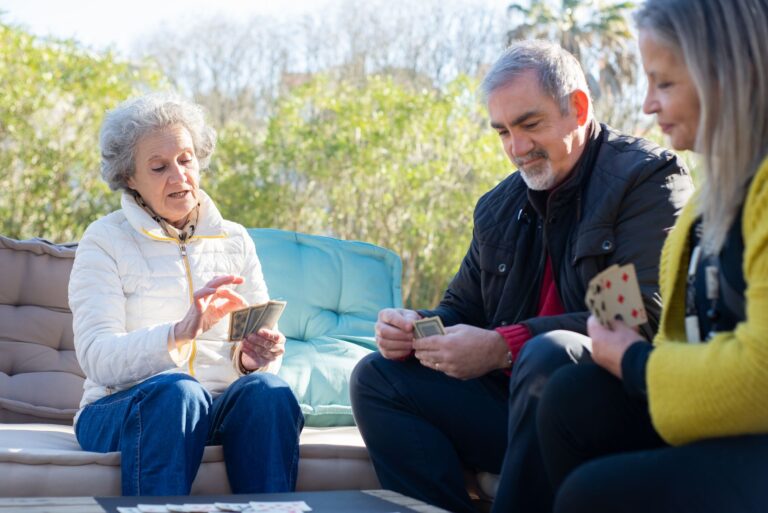
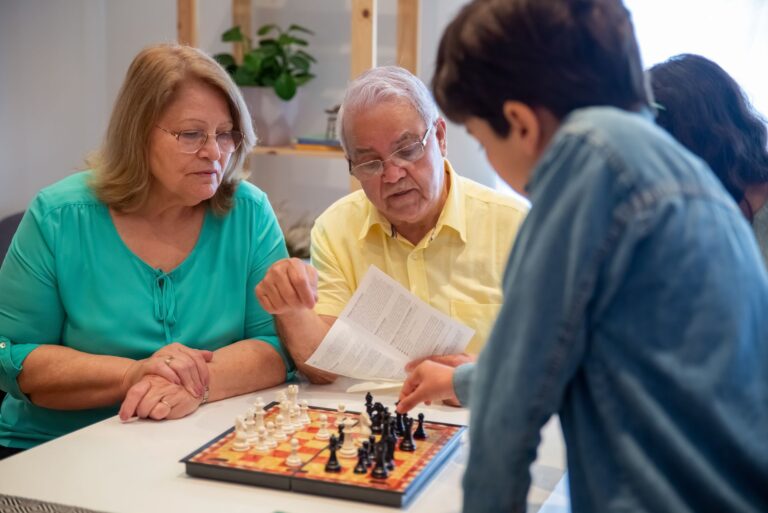
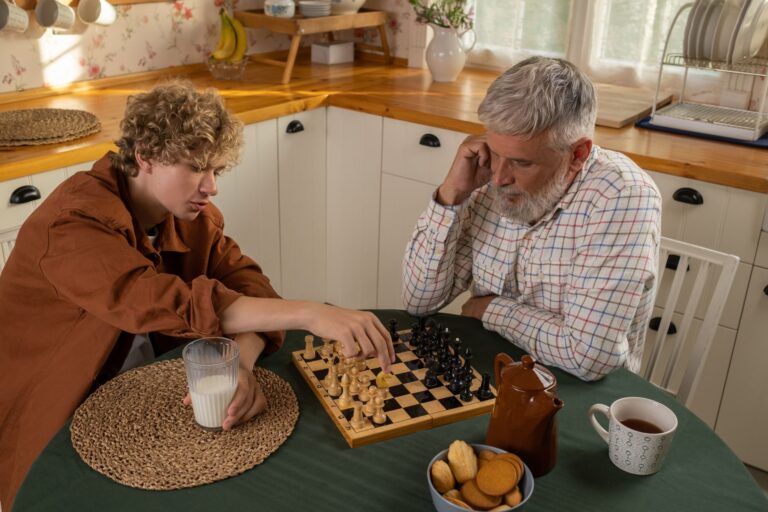
Nursing homes choose games for dementia care from each resident's documented assessment, not from a seasonal activity calendar. Federal rules require the activity program to be built on every resident's comprehensive assessment and care plan, and winter adds one more filter: respiratory virus precautions that push play from the big dining-room group toward small units and bedside sessions. In practice, three things decide what a resident plays in January: a recorded preference interview, a staff judgment about which skills the game demands, and the facility's current infection-control posture. Understanding those three lets a family member ask precise questions instead of general ones.
Medical information disclaimer: This article is for general educational purposes only and does not provide medical advice, diagnosis, or treatment. Always consult a physician or other qualified health professional about symptoms, medications, tests, or treatment decisions.
Table of Contents
- The assessment comes before the game
- What inspectors actually look at
- Where the game menu comes from
- How respiratory season changes the format
- Questions to ask when a resident stops joining in
- Frequently Asked Questions
The assessment comes before the game
Under federal requirements, each facility's activity program must be ongoing and based on every resident's comprehensive assessment and care plan. CMS's State Operations Manual guidance for tag F679 requires three strands at once: facility-sponsored group activities, individual activities such as one-to-one bedside programs, and support for residents who pursue leisure on their own. That three-strand rule is why a well-run dementia unit never has only one option running.
A resident who declines the group table is supposed to have something else available, chosen from their own profile. The profile itself comes from a standardized interview. MDS 3.0 Section F records daily routine preferences at item F0400 and activity preferences at F0500, asked of the resident directly. Item F0800 is a staff assessment used only when the resident cannot be interviewed, and a family member may answer on the resident's behalf — so relatives have a documented route into what gets offered.
What inspectors actually look at
State surveyors check these choices in person rather than on paper alone. CMS's Activities Critical Element Pathway, form CMS-20065, directs surveyors to observe whether activities match each resident's physical and mental abilities, whether residents are told what is on the schedule, and how staff respond when someone refuses. The refusal piece matters most in winter, when schedules thin out.
Guidance on the same requirement, summarized in Long-Term Care Survey Alert's F679 coverage, states that inviting a resident who dislikes group games to bingo and then charting the refusal does not satisfy the rule. Staff are expected to offer an alternative that matches the resident's stated interests. For a family, that converts into a concrete request: ask to see which individual options are listed in the care plan beside the group ones.
Where the game menu comes from
The research base behind structured game programs is cognitive stimulation therapy, or CST — themed group sessions of light mental and social activity, run on a regular schedule. The Cochrane review published 31 January 2023 pooled 37 studies covering 2,766 people with mild-to-moderate dementia and found a 1.99-point advantage on the MMSE cognitive test across 25 trials and 1,893 participants. The reviewers rated that moderate-certainty evidence and reported no harms.
CST sessions are built around one themed main activity, and activity guidance from the Royal College of Occupational Therapists draws it from a fixed menu: word and number games, physical games, team quizzes, sounds, food, and creative tasks. Most dementia-unit game schedules are a copy of that list, which is why the same six shapes recur across facilities. The same guidance adds the matching rule staff are supposed to apply. Match the skills a game demands to the resident's abilities, and avoid word or number games with residents who have poor literacy or numeracy — otherwise the game itself becomes a source of embarrassment rather than stimulation.
How respiratory season changes the format
Winter is the one season when infection control, not preference, sets the room. The CDC's respiratory virus toolkit for long-term care facilities recommends limiting group activities and communal dining during periods of transmission and keeping affected units from mixing with others. AHCA/NCAL repeated that advice in an October 2025 season brief for infection preventionists. So the same resident with the same documented preferences may get a 12-person quiz in September and a bedside activity in January.
The game is often downsized rather than cancelled: a team quiz becomes a two-person quiz, a group cooking task becomes a food-themed sensory tray. That shift carries a real evidence cost worth knowing. The Cochrane reviewers noted high inconsistency between studies, only slight benefits for quality of life and mood, and that just 8 of the 37 trials tested individual one-to-one stimulation. Facilities therefore have much weaker evidence for the winter bedside session than for the group one — a reason to ask whether a resident is still getting small-group contact when precautions allow it.
Questions to ask when a resident stops joining in
Disengagement in winter is frequently read as the activity being wrong, when mood may be the cause. A 2024 nursing-home study in Frontiers in Neurology found cognitive stimulation produced larger cognitive gains in residents with a lower baseline cognitive level, and that treating co-existing depression was decisive for a good outcome.
Two things follow. Residents who look least able to take part are not the ones to write off, and a mood screen belongs ahead of a change in games. A short list to work through with activity staff:.
- Ask which activity preferences are recorded at MDS items F0400 and F0500, and whether a family member supplied them.
- Ask what individual option is charted beside each group activity.
- Ask whether word or number games are being offered to a resident whose literacy or numeracy makes them a poor fit.
- Ask whether current precautions have moved the resident from group to one-to-one, and when group play resumes.
- Ask whether depression has been screened recently if participation dropped.
Frequently Asked Questions
Can a facility simply chart that a resident refused bingo and move on?
No. CMS guidance on tag F679 treats that as insufficient; staff must offer an alternative matching the resident's recorded interests.
Does one-to-one bedside play work as well as a group game?
The evidence is thinner. Only 8 of the 37 trials in the 2023 Cochrane review tested individual stimulation, versus 25 contributing the cognitive benefit estimate.
Who can supply activity preferences if the resident cannot answer?
A family member may answer on the resident's behalf under MDS Section F; the staff assessment at F0800 is used only when the resident cannot be interviewed.