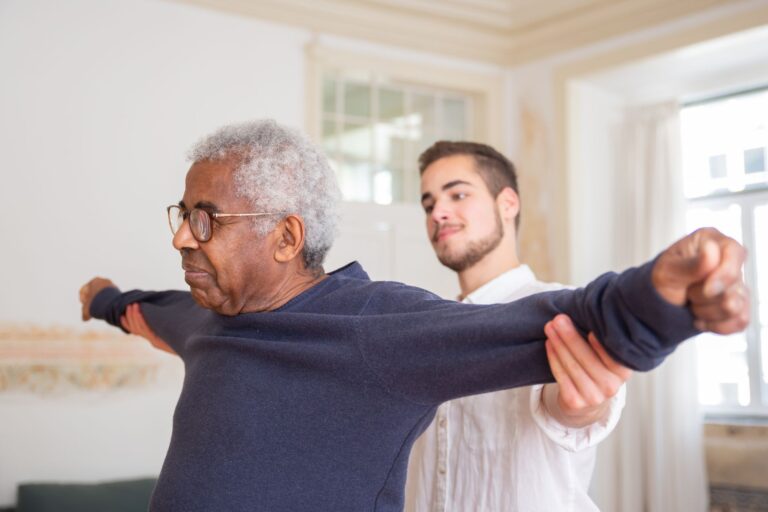
Caregiver burnout during the holiday season shows up first as denial, anger, and withdrawal — not as exhaustion. The Alzheimer's Association puts denial at the top of its warning-sign list: refusing to accept the disease and its effect on the person diagnosed, voiced as statements like "I know Mom is going to get better." Anger at the person with dementia and pulling away from friends and activities that used to feel good follow close behind. The holidays intensify these signs because they break the routine that dementia care depends on. Nothing in the published evidence measures burnout month by month, so the seasonal link rests on two documented things: holiday routine disruption, and caregiver stress levels that are already high all year.
Medical information disclaimer: This article is for general educational purposes only and does not provide medical advice, diagnosis, or treatment. Always consult a physician or other qualified health professional about symptoms, medications, tests, or treatment decisions.
Table of Contents
- The warning signs, in the order they usually appear
- How common is this?
- Why the holidays add pressure
- Adjustments that reduce the strain
- When a symptom is about your health, not your stress
- Respite care, and what it does and does not solve
- Frequently Asked Questions
The warning signs, in the order they usually appear
The Alzheimer's Association's caregiver stress page names denial first, then anger, then social withdrawal. Those three are worth knowing in order, because they are the ones a caregiver is least likely to recognize in themselves. Exhaustion feels like a problem; snapping at a parent who asked the same question six times feels like a personal failing.
The Association's own caregiver stress tip sheet extends the list: Several of these are easy to explain away in December. Short sleep, a short temper, and a full calendar all look like normal holiday pressure. The distinction that matters is whether they lift after the season ends or carry on into January.
- Anxiety about what the future holds
- Depression
- Exhaustion that makes it hard to finish daily tasks
- Sleeplessness caused by worrying
- Irritability
How common is this?
High stress is the norm, not the exception. In the 2026 Alzheimer's Disease Facts and Figures report, 59% of family caregivers of people with Alzheimer's or another dementia rated the emotional stress of caregiving as high or very high, and 38% said the same of the physical stress. The exposed population is large.
That same report counts 12.7 million family and other unpaid caregivers of people with dementia in 2025, providing an estimated 19.6 billion hours of unpaid help. Caregiving overall is broader still. AARP and the National Alliance for Caregiving's *Caregiving in the US 2025*, released July 24, 2025, found 63 million US adults are family caregivers — roughly 1 in 4 adults, and a nearly 50% increase since 2015. Nearly 1 in 4 provide 40 or more hours of care a week.
Why the holidays add pressure
Holiday events and extended family time can overwhelm a person with dementia because they break up the regular routine. When the person being cared for becomes more confused or agitated, the caregiver's workload rises in the same week their own schedule is fullest.
Money is the second pressure. The 2025 AARP and National Alliance for Caregiving survey found nearly half of family caregivers reported at least one negative financial impact, such as going into debt or using up short-term savings. Travel and gift spending land on top of that.
Adjustments that reduce the strain
The Association's holiday guidance is specific, and most of it costs nothing: That last point is the one caregivers skip. The Association treats the fatigue after the season as predictable enough to schedule around.
- Build on familiar traditions rather than creating new ones
- Break one large gathering into smaller visits
- Keep a quiet room available for the person to retreat to
- Move holiday dinner to lunchtime, since some people with dementia become more confused or agitated in the evening
- Skip candy and artificial food decorations that can be mistaken for real food
When a symptom is about your health, not your stress
One warning sign deserves separate attention. CDC analysis of BRFSS survey data, published in MMWR, found that one in eight unpaid caregivers aged 45 and older reported subjective cognitive decline themselves.
That changes how to read your own memory lapses and confusion. In a caregiver, those are easy to file under tiredness — but they are also a health signal in their own right, and worth raising with a clinician rather than waiting out.
Respite care, and what it does and does not solve
The relief the Alzheimer's Association recommends is respite care: a temporary break during which the person continues to receive care in a safe environment. It is the one intervention aimed directly at the cause, which is unbroken time on duty.
Respite does not address the financial strain, and arranging it takes lead time that a caregiver in December may not have. If the holidays are already underway, the smaller-visit and lunchtime-dinner adjustments are available this week; respite is worth setting up for the stretch after the season, when the post-holiday fatigue arrives.
Frequently Asked Questions
Is caregiver burnout actually worse in November and December?
No published source measures burnout by month. The holiday link rests on documented routine disruption for the person with dementia and on year-round caregiver stress levels, not on a seasonal statistic.
What separates holiday tiredness from burnout?
Duration and reach. Irritability and short sleep during a busy week are ordinary; the same symptoms plus withdrawal from people you enjoy, trouble concentrating on familiar tasks, or new physical health problems point to caregiver stress.
Should I cancel the holiday gathering?
Not necessarily. The Association suggests breaking a large gathering into smaller visits and keeping a quiet room available, which preserves the tradition while lowering the load on both of you.