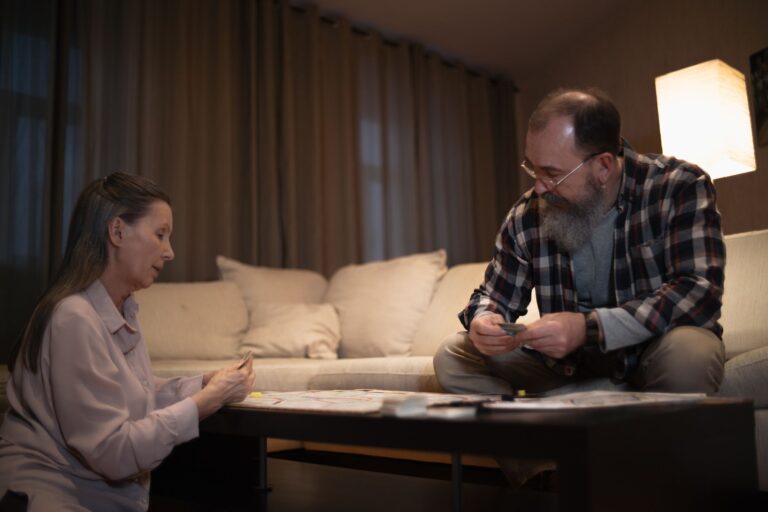
Yes. Regular board-game play, including checkers, is linked to slower cognitive decline and lower dementia risk.
Cognitive decline means a gradual loss of memory, thinking speed, and everyday problem-solving. The benefit is support, not cure. Games give the brain active practice and give people social contact and enjoyment during care.
Medical information disclaimer: This article is for general educational purposes only and does not provide medical advice, diagnosis, or treatment. Always consult a physician or other qualified health professional about symptoms, medications, tests, or treatment decisions.
Table of Contents
- What long-term studies show
- How thinking and mood change with play
- What brain scans add to the picture
- How to use checkers in dementia care
- What long-term studies show
- How thinking and mood change with play
- What brain scans add to the picture
- How to use checkers in dementia care
What long-term studies show
Adults who played board games regularly had 15% lower dementia risk than non-players over 20 years. That finding comes from the French Paquid cohort of 3,675 adults age 65 and older, as reported in the 20-year French cohort analysis published in BMJ Open.
A Bronx study of 469 adults over 75 found the same pattern. Board games were among leisure activities linked to lower dementia risk, with each point on a cognitive-activity score tied to 7% lower risk, according to the Bronx aging study report in the New England Journal of Medicine.
How thinking and mood change with play
Regular players in the French cohort showed slower decline on Mini-Mental State Examination scores. The same players also had less new depression, which researchers proposed as part of the protection.
A 2023 review of traditional games including chess, Go, mahjong, and Ska found better global thinking scores. Players improved on both MoCA and MMSE tests, according to the 2023 board-games meta-analysis in the Journal of Alzheimer's Disease.
What brain scans add to the picture
In 329 middle-aged adults at risk for Alzheimer's, more frequent play of cards, checkers, crosswords, or puzzles was tied to larger brain volumes. The difference included the hippocampus, a memory center, plus higher test scores.
The report came from the Alzheimer's Association meeting AAIC 2014. It studied cognitively normal adults, so it speaks to brain health before severe decline rather than reversal after diagnosis.
How to use checkers in dementia care
The Alzheimer's Association advises challenging the brain with strategy games such as bridge, plus puzzles and art. The goal is engagement and social connection rather than a cure. For daily care, keep play short, calm, and social: Choose the game the person already enjoys, then make winning easy through company and play.INTRODUCTION: Yes.
Regular board-game play, including checkers, is linked to slower cognitive decline and lower dementia risk. Cognitive decline means a gradual loss of memory, thinking speed, and everyday problem-solving. The benefit is support, not cure. Games give the brain active practice and give people social contact and enjoyment during care.
- Pick familiar games such as checkers, dominoes, or simple card games.
- Play one-on-one or in a small group at a quiet table.
- Shorten rules, use large pieces, and praise effort.
- Stop when the person tires and repeat favorite games often.
What long-term studies show
Adults who played board games regularly had 15% lower dementia risk than non-players over 20 years. That finding comes from the French Paquid cohort of 3,675 adults age 65 and older, as reported in the 20-year French cohort analysis published in BMJ Open.
A Bronx study of 469 adults over 75 found the same pattern. Board games were among leisure activities linked to lower dementia risk, with each point on a cognitive-activity score tied to 7% lower risk, according to the Bronx aging study report in the New England Journal of Medicine.
How thinking and mood change with play
Regular players in the French cohort showed slower decline on Mini-Mental State Examination scores. The same players also had less new depression, which researchers proposed as part of the protection.
A 2023 review of traditional games including chess, Go, mahjong, and Ska found better global thinking scores. Players improved on both MoCA and MMSE tests, according to the 2023 board-games meta-analysis in the Journal of Alzheimer's Disease.
What brain scans add to the picture
In 329 middle-aged adults at risk for Alzheimer's, more frequent play of cards, checkers, crosswords, or puzzles was tied to larger brain volumes. The difference included the hippocampus, a memory center, plus higher test scores.
The report came from the Alzheimer's Association meeting AAIC 2014. It studied cognitively normal adults, so it speaks to brain health before severe decline rather than reversal after diagnosis.
How to use checkers in dementia care
The Alzheimer's Association advises challenging the brain with strategy games such as bridge, plus puzzles and art. The goal is engagement and social connection rather than a cure. For daily care, keep play short, calm, and social: Choose the game the person already enjoys, then make winning easy through company and play.
- Pick familiar games such as checkers, dominoes, or simple card games.
- Play one-on-one or in a small group at a quiet table.
- Shorten rules, use large pieces, and praise effort.
- Stop when the person tires and repeat favorite games often.