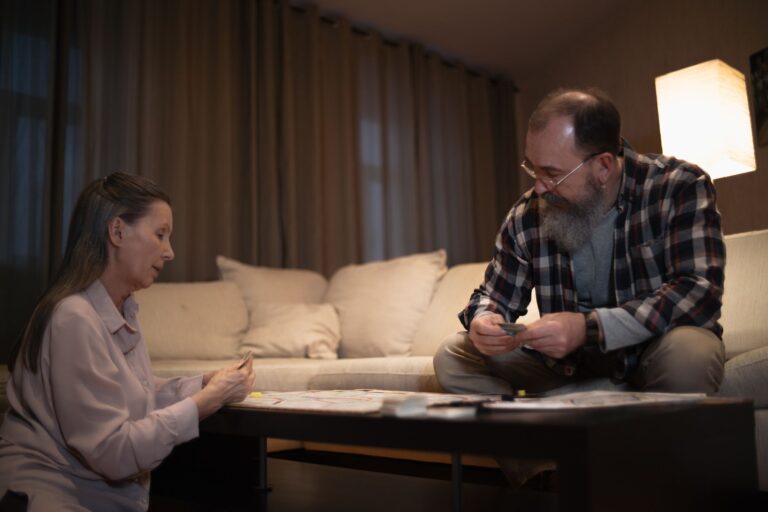
The best Christmas party games for memory care residents are seated team games with one-sentence rules, no elimination, and a prize for everyone. Picture bingo, name-that-carol, pass-the-gift, and gentle toss games fit because they use familiar images, music, and movement from chairs.
Memory care means residential care for people living with dementia. According to ActivityBuilder, small familiar groups of about 6-10 reduce confusion and fatigue at holiday parties holiday party guide for seniors. Team play keeps residents involved without pressure to remember steps or compete alone.
Medical information disclaimer: This article is for general educational purposes only and does not provide medical advice, diagnosis, or treatment. Always consult a physician or other qualified health professional about symptoms, medications, tests, or treatment decisions.
Table of Contents
- How should you set up the game area?
- Which games work without reading or complex rules?
- How can music include even late-stage residents?
- How do you add movement without fall risk?
- How do you keep the party calm?
How should you set up the game area?
Keep the group small, seated, and familiar. Use a quiet daytime room with chairs in a circle or around tables so everyone can see and hear. Offer one game at a time with one-sentence rules.
Give every player a role and a prize. Teaming stronger and weaker players helps residents stay engaged without embarrassment. No one sits out after a mistake.
- Seat 6-10 residents together
- Explain each game in one short sentence
- Play in teams with no elimination
- Give a small prize to every resident
Which games work without reading or complex rules?
Holiday picture bingo works well for vision loss and dementia. According to ActivityBuilder, cards use large images of snowmen, bells, candy canes, and reindeer, called slowly and held up visually holiday party guide for seniors. Residents match pictures, not numbers.
Left-right gift passes also need little memory. One person reads a Christmas story and players pass a gift left or right when they hear those words. Pass-the-gift with music works the same way and ends with everyone holding something.
How can music include even late-stage residents?
Play the first seconds of a carol or a 1950s-1970s hit, then sing the chorus together. Residents can hum, clap, or join on the familiar chorus without following rules. Preserved long-term musical memory makes this possible even when thinking skills are weak.
Caregiver-led singing may do more than lift mood. Medical News Today, reporting a University of Helsinki study in the Journal of Alzheimer's Disease, found caregiver-led singing improved working memory, executive function, and orientation, especially in mild dementia and adults under 80 report on singing and dementia study. Music listening mainly supported mood in that study.
How do you add movement without fall risk?
Keep all movement seated. Snowball toss with soft pom-poms into buckets gives a target without standing or racing. Seated beach-ball volleyball lets players bat a light ball across a table or circle.
Pass-the-gift adds reaching and passing from chairs. According to ActivityBuilder, these formats provide gentle movement without standing, racing, or fall risk holiday party guide for seniors. Stop before residents tire.
How do you keep the party calm?
Build on familiar traditions and involve residents in simple prep. The Alzheimer's Association advises keeping gatherings small, building on familiar memories, and preparing a quiet rest room away from noise holiday gathering guidance for caregivers. Familiar songs, foods, and faces lower anxiety.
Schedule a short daytime party around 90 minutes and offer a calm opt-out space. Large, loud, late-day parties can trigger confusion, anxiety, and sundowning. Match snacks to diet orders.