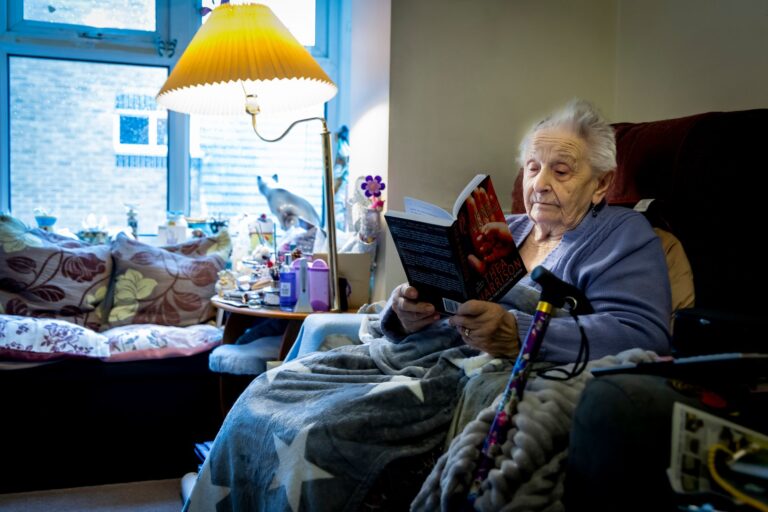
For families facing dementia—cognitive loss severe enough to disrupt daily life—a music box can preserve comfort, identity, and connection. Its value comes from what familiar music means to one person, not from the object alone. Dementia is not normal aging, and Alzheimer's disease is its most common form, according to the National Institute on Aging. A familiar melody may give relatives a simple way to share a pleasant moment when conversation becomes difficult.
Medical information disclaimer: This article is for general educational purposes only and does not provide medical advice, diagnosis, or treatment. Always consult a physician or other qualified health professional about symptoms, medications, tests, or treatment decisions.
Table of Contents
- Why can a small object carry so much meaning?
- What does the evidence actually show?
- A music box is not necessarily music therapy
- How to choose and use music thoughtfully
- Keep the emotional value separate from medical claims
Why can a small object carry so much meaning?
A music box can connect sound with a person, place, ritual, or relationship. The meaningful element might be a wedding song, a lullaby, a hymn, or music once played during family celebrations. It also gives family members something concrete to do.
They can sit nearby, play the tune, and watch for recognition, relaxation, pleasure, singing, or discomfort. Even without a clear verbal response, the experience may create a shared focus. That matters in care that depends heavily on human time and attention. The CDC estimates that caregivers provided about 18.4 billion hours of dementia care in 2023, illustrating why small, repeatable ways to connect can feel so important.
What does the evidence actually show?
Research supports cautious hope, not certainty. A 2024 randomized trial involving 976 nursing-home residents found that preferred music increased observed pleasure and reduced verbal agitation. It did not reduce physical agitation or improve several measured mood outcomes, according to the peer-reviewed study. The word "preferred" matters.
A tune chosen because of the individual's history may have a different effect from background music selected by someone else. Families can test that idea by comparing responses to familiar and unfamiliar songs. Results also vary. A previous randomized trial with 59 participants found no statistically significant differences, and broader reviews have not established durable benefits. A song that helps today may have little effect tomorrow—or may become upsetting.
A music box is not necessarily music therapy
Playing a favorite melody at home is a music-based activity. Music therapy usually refers to a structured therapeutic intervention, often delivered through repeated sessions rather than through a keepsake alone. That distinction prevents families from expecting too much.
A Cochrane review found that at least five music-based therapy sessions probably improve depressive symptoms and may improve overall behavioral problems at the end of treatment. However, it found no evidence of long-term effects, and adverse events were reported inconsistently in the included research, as explained in the Cochrane evidence review. A music box should therefore be treated as a person-centered comfort and connection tool. It is not a cure, a diagnostic test, or a substitute for clinical assessment.
How to choose and use music thoughtfully
Begin with the person rather than the device. A basic music box, familiar recording, or simple player may be enough if it is easy to operate and plays meaningful music.
Avoid assuming that nostalgia is always pleasant. A familiar song can carry grief, fear, or an unwanted memory. Distress, louder agitation, attempts to leave, or requests to stop are reasons to end the session.
- Ask relatives and friends which songs mattered at different periods of the person's life.
- Start at a comfortable volume in a calm setting.
- Play one short selection and observe facial expression, speech, movement, and breathing.
- Note whether the person appears pleased, engaged, indifferent, restless, or distressed.
- Repeat music that brings comfort, but stop or switch songs when it does not.
Keep the emotional value separate from medical claims
A music box may become priceless to a family because it helps them express affection or recognize part of the person they remember. That emotional meaning is real, but it cannot be measured as a universal clinical benefit. No music box has been identified as an FDA-approved dementia treatment.
The relevant FDA approval notice concerns prescription medication for agitation associated with dementia due to Alzheimer's disease—not music. Families considering personalized music can also review the original nursing-home trial registry. At home, the most useful test remains the individual's response: continue when the music brings visible comfort or pleasure, and stop when it causes distress.