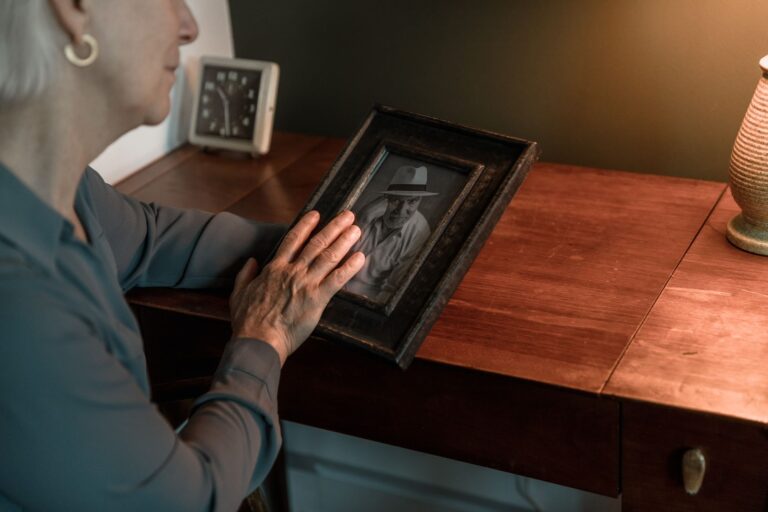
Looking through a family album together can carry real emotional weight during a family's dementia journey because it offers connection as memory and conversation change. It may bring pleasure, tenderness, grief, or distress, and its value lies in the shared moment—not in proving what someone remembers. Family-album sharing is a form of informal reminiscence: using photographs and past experiences to invite conversation. It is not automatically clinical reminiscence therapy, which follows a more structured approach.
Medical information disclaimer: This article is for general educational purposes only and does not provide medical advice, diagnosis, or treatment. Always consult a physician or other qualified health professional about symptoms, medications, tests, or treatment decisions.
Table of Contents
- Why can the feeling outlast the memory?
- What benefits does the evidence support?
- How can families keep album time low-pressure?
- What if a photograph causes distress?
- What does the album mean for the family?
Why can the feeling outlast the memory?
A person with dementia may forget a name, story, or conversation while retaining some of the feeling associated with the experience. This possibility makes the tone of album time as important as the facts discussed. In a small study involving 17 people with probable Alzheimer's disease and 17 control participants, the Alzheimer's group retained induced happiness or sadness after forgetting much of the film content.
The University of Iowa researchers' study involved films rather than family photographs, so it does not prove that albums produce the same result. Still, it offers a useful principle: forgetting an interaction does not necessarily make that interaction emotionally meaningless. A calm voice, patient attention, or tense correction may matter even if the person cannot later describe the exchange.
What benefits does the evidence support?
Research on structured reminiscence therapy suggests modest possibilities, not guaranteed improvement. A Cochrane review of 22 trials involving 1,972 participants found small, setting-dependent benefits in areas such as communication, cognition, mood, or quality of life. The results varied between care homes and community settings and between individual and group formats.
Cognition improved only slightly immediately after treatment and not at longer follow-up. Casually viewing an album is less structured than the interventions studied in those trials. Families can reasonably use it as a supportive activity, but not as a treatment expected to slow or reverse dementia.
How can families keep album time low-pressure?
Begin with connection rather than recall. The Alzheimer's Association advises using photos and keepsakes without testing memory and following the person's lead. Avoid questions such as, "Don't you remember who that is?" A person can enjoy a face, color, place, or story without identifying it correctly.
- Choose a quiet time and start with only a few photographs.
- Offer an observation: "You look happy here."
- Ask open invitations such as, "What catches your eye?"
- Accept silence, gestures, laughter, or a change of subject as participation.
- Share what you know without demanding agreement.
What if a photograph causes distress?
Albums can evoke painful memories as well as pleasure. Images connected with bereavement, conflict, trauma, or an uncertain identity may produce sadness or confusion rather than comfort. Watch the person's response instead of assuming that a familiar photograph is welcome.
If they appear distressed, close the album, change the subject, or move to a neutral activity. The Alzheimer's Association California Central Coast guidance specifically advises choosing images thoughtfully, redirecting when distress appears, and not correcting memory errors. A mistaken name or altered story rarely needs correction during reminiscence. Protecting dignity and emotional safety is usually more important than establishing an exact account of the photograph.
What does the album mean for the family?
The album may affect relatives differently from the person with dementia. One family member may feel close and grateful, while another experiences grief, frustration, or the pressure to create a meaningful response. Success does not require recognition, a complete story, or visible happiness.
A brief moment of attention may be enough; on another day, declining the activity may be the better outcome. Before opening the album, choose one aim: spend a few calm minutes together. If either person becomes overwhelmed, close it without treating the moment as a failure.