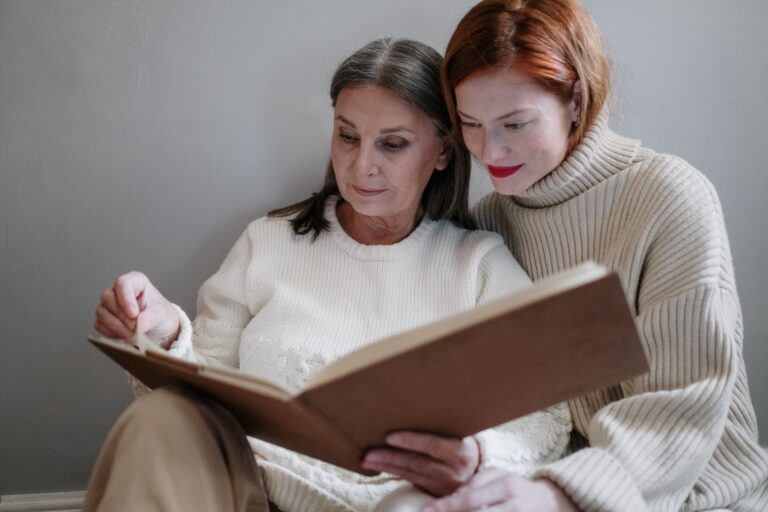
Families preserve a loved one's sketchbooks and doodles by doing two things at once: protecting the physical originals with archival storage, and creating high-quality digital scans before the drawings — and the stories behind them — are lost. The most effective approach pairs simple conservation steps recommended by the Library of Congress with a recorded conversation, while the artist can still explain what each drawing meant.
The urgency is real. According to the Alzheimer's Association's 2025 Facts and Figures report, an estimated 7.2 million Americans aged 65 and older are living with Alzheimer's dementia, and nearly 12 million family members and friends provide their unpaid care. For those families, a parent's sketchbook is often one of the few records of personality that outlasts spoken memory.
Medical information disclaimer: This article is for general educational purposes only and does not provide medical advice, diagnosis, or treatment. Always consult a physician or other qualified health professional about symptoms, medications, tests, or treatment decisions.
Table of Contents
- Why drawings matter more as words fade
- Protecting the physical originals
- Making digital copies that will actually last
- Turning the archive into a memory book the artist can use
- What preservation can and cannot do
- Frequently Asked Questions
Why drawings matter more as words fade
Artwork made by a person with dementia is not just a keepsake — it is often their clearest remaining channel of expression. Memories in the Making, a watercolor program introduced in 1988 and described by Alzheimer's Orange County, pairs people with dementia and trained facilitators so participants can express themselves nonverbally through painting. families keep the finished watercolors, which frequently reveal moods and memories the artist can no longer put into words. The engagement is measurable.
A peer-reviewed evaluation of the program, summarized by the Fisher Center for Alzheimer's Research Foundation, found that more than 80% of participants stayed focused through 30–45 minute art sessions, with most smiling, laughing, and showing enjoyment. That is a strong argument for treating both old sketchbooks and new doodles as documents worth saving, not clutter. One honest caveat: there is no single landmark study on preserving sketchbooks specifically. The case rests on a combination of art-program research, reminiscence-therapy evidence, and standard archival practice — which is exactly the toolkit families can borrow.
Protecting the physical originals
Paper is fragile, and the sketchbooks most worth saving are often decades old. The Library of Congress Preservation Directorate advises storing paper artwork and scrapbooks flat in archival boxes or folders, at roughly 65°F and 35–50% relative humidity, and away from light. That usually rules out attics, garages, and sunny shelves.
The same Library of Congress guidance includes a warning families routinely violate: never repair drawings with self-stick tape, even tape sold as "archival." Tape adhesives stain and embrittle paper over time. For torn, mold-damaged, or potentially valuable pieces, the recommendation is to consult a professional paper conservator rather than attempt repairs. Practical steps that cost little:.
- Move sketchbooks out of basements and attics into a closet in the living space, where temperature and humidity are more stable.
- Store loose drawings flat in acid-free folders or boxes rather than rolled or stacked under weight.
- Keep originals out of direct sunlight and away from radiators and exterior walls.
- Leave damaged pages alone until a conservator has looked at them.
Making digital copies that will actually last
Phone snapshots are better than nothing, but a real archive needs consistent, high-resolution scans. The Federal Agencies Digital Guidelines Initiative — the scanning standard mandatory for federal records transfers since July 2024 — recommends digitizing color material at 300 to 400 pixels per inch, with 400 preferred, in its published technical guidelines. A flatbed scanner at 400 ppi gives families archive-quality files good enough to reprint the artwork later.
Capture context, not just images. Digitization guidance from the preservation service Heirloom recommends photographing whole pages — layouts, margin notes, handwriting, and attached memorabilia — because the arrangement itself carries the story. A grocery-list doodle next to a dated diary entry says more together than either does cropped apart. Then protect the files the way you protected the paper: keep at least two copies in different places, such as a hard drive plus a cloud account, and name files with dates and the artist's name so relatives can find them decades from now.
Turning the archive into a memory book the artist can use
Preserved artwork does double duty: it can go back to the person who made it. Caregiver guidance summarized by Medical News Today reports that memory books built from a person's own photos and artwork help stimulate long-term memory and preserve identity, and that people in early-to-middle stages of dementia show pride and emotional recognition when reviewing them even as verbal communication declines. Build the book while the artist can still narrate it.
Sit together with the sketchbook, record the conversation on a phone, and write captions in the artist's own words: where they were, who they drew, why it mattered. Those captions become the difference between an anonymous drawing and a family document. Keep sessions short and pressure-free. The art-program research suggests 30–45 minutes is a realistic window of focused engagement; stop while the experience is still pleasant.
What preservation can and cannot do
Families should be clear-eyed about the benefits. The 2018 Cochrane review of reminiscence therapy — 22 randomized trials with 1,972 participants — found small improvements in quality of life, cognition, communication, and mood, with individual sessions that often produce a life-story book linked to better cognition and mood. But the Cochrane authors note the effects were modest and inconsistent across settings.
Preserving artwork will not restore memory or slow the disease. What it reliably does is different: it protects evidence of who the person is, gives them a nonverbal way to keep expressing themselves, and leaves the family something concrete when conversation is gone. If a loved one still enjoys drawing, keep supplying paper and pencils — every new doodle is another page the disease cannot take back once it is scanned, boxed, and captioned.
Frequently Asked Questions
Should we laminate or tape fragile drawings to protect them?
No. Library of Congress guidance says never to use self-stick tape, even "archival" tape, and to consult a paper conservator for damaged or valuable pieces.
Is a phone photo good enough for archiving sketchbooks?
It works as a stopgap, but the FADGI federal digitization standard recommends scanning color material at 300–400 ppi, with 400 preferred, for archive-quality copies.
Can reviewing old artwork improve my parent's memory?
Only modestly. The 2018 Cochrane review found small, inconsistent gains in mood and cognition from reminiscence activities — worthwhile, but not memory-restoring.