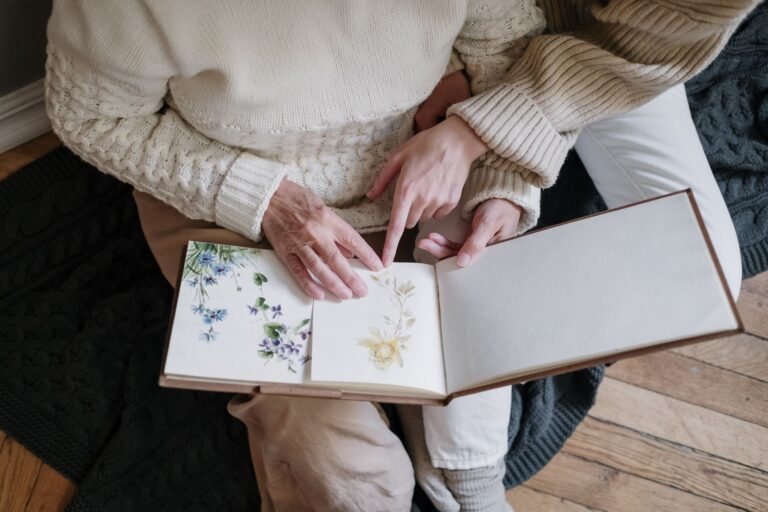
Families preserve handwritten recipe collections by digitizing them during the early stages of Alzheimer's, when the person can still participate and share the stories behind the dishes. This captures not just the written recipes but the autobiographical memories—the family history, intuitive cooking knowledge, and sensory details—that Alzheimer's will eventually erase. Families typically have a substantial window to act: cognitive changes can appear up to eight years before an Alzheimer's diagnosis, creating time to document handwritten cookbooks while the person with early symptoms can still explain the origins and personal significance of the recipes. Without this documentation, the stories, adjustments, and family meaning embedded in recipe margins and practice disappear along with memory.
Medical information disclaimer: This article is for general educational purposes only and does not provide medical advice, diagnosis, or treatment. Always consult a physician or other qualified health professional about symptoms, medications, tests, or treatment decisions.
Table of Contents
- Why the timing matters
- What handwritten cookbooks contain that formal recipes don't
- How to digitize for long-term preservation
- Cooking memories persist even as other memory fades
- Practical preservation steps
- Frequently Asked Questions
Why the timing matters
Early Alzheimer's specifically damages autobiographical memory—the ability to recall personal experiences, family history, and the origins of familiar practices. A handwritten recipe card with a note like "Grandma's technique, simmer until the kitchen smells like Sunday" loses its meaning once autobiographical memory fades. The recipe itself remains, but the person and the reasons it mattered become inaccessible.
Acting early matters because the person with cognitive decline can actively participate in the preservation process. They can explain why flour is added "until the dough feels like an earlobe," share which recipes belonged to which family members, and clarify which annotations represent experiments that worked or failures to avoid. This lived knowledge, captured during early stages, cannot be reconstructed later from the physical recipe alone.
What handwritten cookbooks contain that formal recipes don't
Handwritten recipe notes preserve intuitive cooking knowledge that published recipes miss. Margin notes, flour-dusted stains, crossed-out measurements, and personal adjustments document actual use rather than idealized instructions.
These imperfections carry irreplaceable genealogical and personal value—they show how the person adapted recipes to their kitchen, their time constraints, their family's preferences. Digitization, rather than laminating or "restoring" the originals, is the safe option. Physical restoration causes irreversible chemical damage to fragile paper and ink, whereas digital preservation creates multiple backup layers that protect the authentic record for future generations.
How to digitize for long-term preservation
Proper digitization follows a three-layer approach: preserve the original scan, create a text transcription, and generate a usable modern version together. Archivists recommend scanning at 600 dots per inch (DPI) resolution and saving in uncompressed TIFF format rather than compressed JPEG, because TIFF retains far more data and resists degradation over decades.
This technical standard ensures the handwritten notes, stains, and marginalia remain readable for future family members. Keep the scans backed up in multiple locations—cloud storage, an external hard drive, and ideally a shared family account. The text transcription makes recipes searchable by ingredient or dish name, while the modern version allows younger family members to actually cook from the family recipes without risk to the originals.
Cooking memories persist even as other memory fades
Despite Alzheimer's progression, procedural memory—the brain's ability to remember how to perform familiar tasks—remains relatively intact longer than other memory systems. Individuals with advancing Alzheimer's often can still engage in cooking activities and recipe preparation even when they cannot recall the recipe's origin or personal history. Additionally, sensory food experiences—familiar aromas, tastes, and textures—trigger specific memories and emotional responses in people with advanced dementia.
Documented family recipes become valuable tools for connection and identity in middle and late-stage dementia. A familiar dish, guided by a preserved family recipe, can reconnect a person with pleasurable memories and their sense of self, even when they cannot articulate those memories explicitly. The cookbook becomes both a historical record and a practical tool for care and engagement.
Practical preservation steps
Start by gathering all handwritten recipe sources—loose cards in boxes, pages in bound cookbooks, notes on napkins or margins of published recipes. Involve the person with early-stage cognitive changes in the process so they can explain context and significance.
Scan each item at minimum 600 DPI in TIFF format, create a spreadsheet that cross-references each recipe with the family member who created it or favored it, and ask for brief written explanations of special techniques or family stories. Store the files with clear file names that include the recipe name, originating family member, and date. Choose a cloud backup service that allows shared family access so siblings and children can search and use the recipes.
Frequently Asked Questions
Can people with Alzheimer's still cook after diagnosis?
Yes. Procedural memory for cooking remains intact longer than other memory types, so individuals with advancing Alzheimer's can often still prepare familiar recipes even when they cannot recall the recipe's origin or the personal history behind it.
What format is best for scanning family recipes?
Scan at 600 DPI and save as uncompressed TIFF files rather than JPEGs. TIFF format retains substantially more data and resists degradation over decades, making it the archival standard for long-term preservation.
Will documenting recipes now help someone with advanced dementia?
Yes. Familiar food aromas, tastes, and recipes trigger specific memories and emotional responses even in advanced dementia, and preserved family recipes become valuable tools for connection, engagement, and identity when other forms of memory have faded.