Families preserve baby books before Alzheimer's progresses by proactively digitizing memories, documenting irreplaceable details, and organizing them for reminiscence therapy while the person with dementia can still access and recognize their own story. Because memory loss appears first in Alzheimer's and most diagnoses are delayed by an average of 17.3 weeks, the window to capture these details is narrower than many families realize—yet critical for preserving identity and supporting emotional connection during cognitive decline. Early memories from childhood and young adulthood tend to survive longer than recent ones in Alzheimer's disease. This neurological fact shapes how families approach preservation: the goal is to capture and organize those older, durable memories—first words, developmental milestones, family stories—in formats accessible to someone whose short-term memory is already fading.
Medical information disclaimer: This article is for general educational purposes only and does not provide medical advice, diagnosis, or treatment. Always consult a physician or other qualified health professional about symptoms, medications, tests, or treatment decisions.
Table of Contents
- Understanding the Memory Loss Timeline
- What Baby Books Preserve That Memory Alone Cannot
- Hybrid Preservation—Digital and Physical Together
- Using Baby Books for Reminiscence Therapy
- Digital Platforms and Tools for Organization
- Frequently Asked Questions
Understanding the Memory Loss Timeline
Short-term memory loss prompts first physician evaluation in 83% of Alzheimer's patients, but the path from symptom onset to diagnosis is long. Most people and their families interpret initial forgetfulness as normal aging rather than cause for medical attention, delaying professional evaluation by months. During this gap—between first memory problems and formal diagnosis—the person can still recognize themselves, respond to familiar stories, and form new short-term memories, even as the disease progresses silently.
This pre-diagnosis or early-diagnosis window is when baby books matter most. Once moderate memory loss sets in, even cherished childhood photographs may need context that only digitally organized baby books can provide. Starting preservation early means the documented memories exist in accessible formats before they're needed therapeutically.
What Baby Books Preserve That Memory Alone Cannot
Baby books capture irreplaceable details—phonetically spelled first words, exact developmental dates, and emotional context—that adult memory cannot reconstruct after cognitive decline begins. A parent with Alzheimer's may lose the ability to recall *when* a child spoke first words or *how* they sounded, but a preserved baby book holds that detail forever. These books also document family narratives and identity markers: family jokes, personality quirks, significant dates, and the emotional texture of early life. For people with Alzheimer's, older memories from late childhood and early adulthood tend to survive longer than recent memories, making well-organized baby books a direct tool for accessing the parts of memory most likely to endure.
Hybrid Preservation—Digital and Physical Together
The most effective approach combines digitization with thoughtful physical preservation. Digitizing baby books—via scanning, photography, or cloud backup—protects against physical deterioration while ensuring multiple people in the family can access the same memories. Keeping the original physical book satisfies the need for a tangible keepsake, while digital copies serve as the working archive.
For families with limited space or resources, prioritize photographs and handwritten notes over bulky physical books. Scan the most meaningful pages, organize them chronologically or by theme, and store them in cloud backup alongside labeled copies. Archival-quality materials—acid-free paper and protective sleeves—prevent yellowing and deterioration if the original book is kept, giving families time to decide later what to do with the original.
Using Baby Books for Reminiscence Therapy
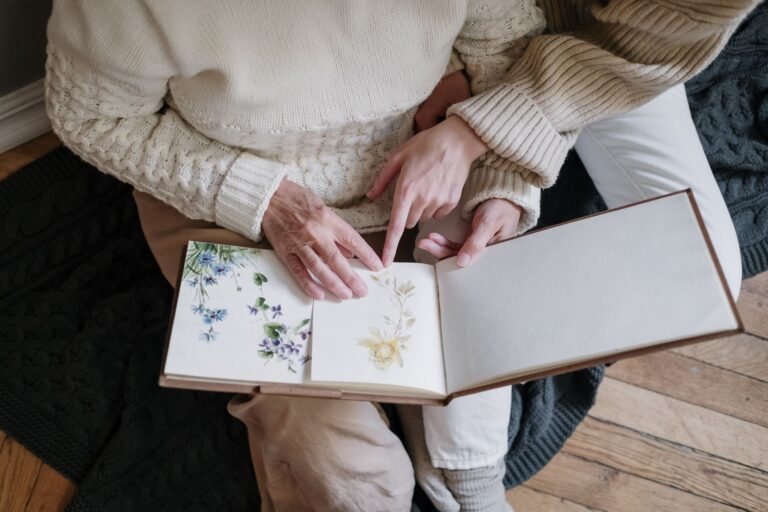
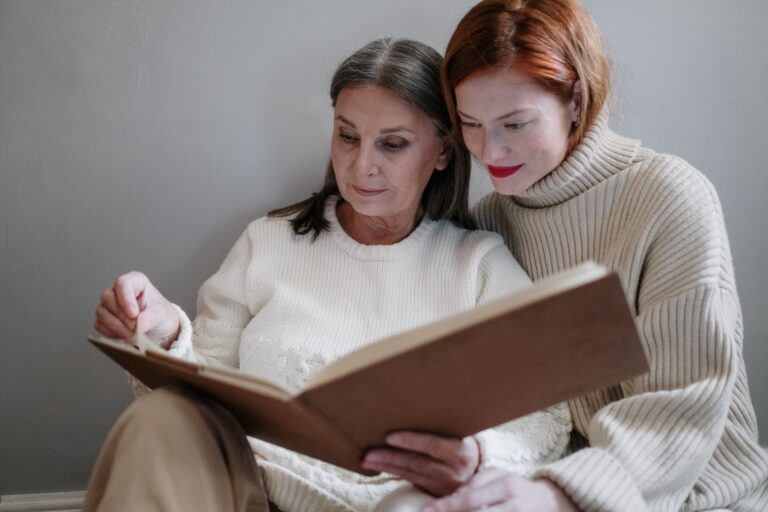
Families use reminiscence therapy—revisiting photos, keepsakes, music, and recorded stories from childhood—to access preserved autobiographical memories and maintain identity before cognitive decline progresses. For a person with early-to-moderate Alzheimer's, sitting with a well-organized baby book is not just nostalgia; it is a documented pathway to memories that might otherwise become inaccessible. Reminiscence therapy reduces pre-death grief for family caregivers and supports the person with dementia in feeling recognized and valued.
A baby book is the physical anchor for these conversations. Recordings of family members reading the book aloud, or simple captions added to digital scans, turn a static archive into an interactive tool that family can revisit over time.
Digital Platforms and Tools for Organization
Online baby-book platforms, photo-archive services, and specialized apps reduce burden and preserve access by organizing childhood documentation in formats accessible to people with mild-to-moderate dementia. Tools like Living Memory Home and traditional photo services (Google Photos, Dropbox, specialized genealogy platforms) allow families to curate and share baby-book content without managing multiple physical albums. When choosing a tool, prioritize simplicity and accessibility: interfaces should be navigable for someone with early memory loss, search functions should work with simple keywords, and the platform should support both individual viewing and group sharing. Many families benefit from having one designated caregiver or family member manage the digital archive while others contribute photos and stories.
Frequently Asked Questions
When should we start preserving baby books if there's no Alzheimer's diagnosis yet?
If a family member is experiencing noticeable memory loss—forgetting recent events, asking repeated questions, misplacing items—start documenting and digitizing now. Since most diagnoses are delayed, proactive preservation during the pre-diagnosis window is your most valuable window. Even if no diagnosis ever comes, organized family memories are never wasted.
Can we use baby books with someone in moderate-to-late stage Alzheimer's?
Yes, but the goal shifts. In moderate stages, the person may not remember the events documented, but familiar faces and voices in photos can prompt emotional recognition and comfort. In late stages, the book becomes primarily a tool for family caregivers to maintain connection and process their own grief—a valid purpose in itself.
What if the original baby book is falling apart?
Prioritize digitization immediately. Photograph or scan every meaningful page, organize files with clear dates and labels, and store backups in multiple places (cloud, external drive, family member's device). You can decide later whether to repair or discard the physical original once the digital archive is secure.