Yes, hearing a mother's favorite saying can provide genuine connection and hope during Alzheimer's progression, even when she no longer recognizes your face or recalls your name. This works because familiar family sayings and phrases maintain identity and belonging even as cognitive decline progresses (Frontiers in Neurology), activating emotional and memory systems that persist long after factual recognition fades.
As Alzheimer's advances, caregivers often watch cognitive abilities disappear and assume connection disappears with them. This assumption misses a crucial truth: the brain's emotional and sensory pathways remain intact far longer than the systems that store facts and faces. Hearing a familiar voice say "I'm proud of you" or whatever your mother loved to say taps into those preserved pathways, offering both of you a bridge across the disease.
Medical information disclaimer: This article is for general educational purposes only and does not provide medical advice, diagnosis, or treatment. Always consult a physician or other qualified health professional about symptoms, medications, tests, or treatment decisions.
Table of Contents
- How Emotional Memory Outlasts Factual Memory
- Why Voice Matters More Than Faces in Later Stages
- Memory Loss in Alzheimer's: The Real Pattern
- Practical Ways to Use Familiar Sayings and Phrases
- How Recognition Shifts From Faces to Emotions
- Why This Matters for Your Hope and Well-Being
- Frequently Asked Questions
How Emotional Memory Outlasts Factual Memory
Emotional memory is preserved in Alzheimer's patients even when factual details are lost (National Center for Biotechnology Information). Your mother may not remember the day she first said her favorite phrase or the exact circumstances around it, yet she retains the feeling—comfort, reassurance, love—attached to hearing those words.
This happens because different brain regions store emotional meaning and factual context. The disease can destroy the hippocampus, which files away facts and sequences of events, while leaving the amygdala and other emotional centers relatively intact until very late stages. So a mother who cannot recall her own birthday can still smile and relax when she hears her favorite saying, because the emotional imprint survives.
Why Voice Matters More Than Faces in Later Stages
Voice recognition outlasts face recognition in Alzheimer's disease; patients often fail to recognize family members visually but immediately know who is speaking when hearing their voice (Alzheimers.net). This difference is neurological, not emotional—voice activates different memory systems than facial recognition.
When you speak your mother's favorite saying aloud, you activate multiple pathways at once: the sound of your voice, the rhythm of the words, and the emotional weight she attached to that phrase over decades. Even if she cannot name you, the combination signals safety and familiarity. This is why familiar phrases are encoded in multiple memory systems beyond factual recall (Care.com Resources).
Memory Loss in Alzheimer's: The Real Pattern
Alzheimer's disease progresses in stages from mild to severe, with memory loss beginning with recent events but eventually affecting recognition of family and friends in late stages (Alzheimer's Association). Early on, your mother forgets a conversation from yesterday but recalls childhood. Later, recent and distant memories blur together.
Finally, she struggles to recognize even close family. Despite this progression, emotional responses remain accessible. A person in advanced Alzheimer's may not know your face or speak coherently, yet she responds to touch, tone of voice, and familiar sounds with calm or engagement. Her favorite saying, delivered with warmth, becomes a non-verbal communication—a signal that she is safe and loved.
Practical Ways to Use Familiar Sayings and Phrases
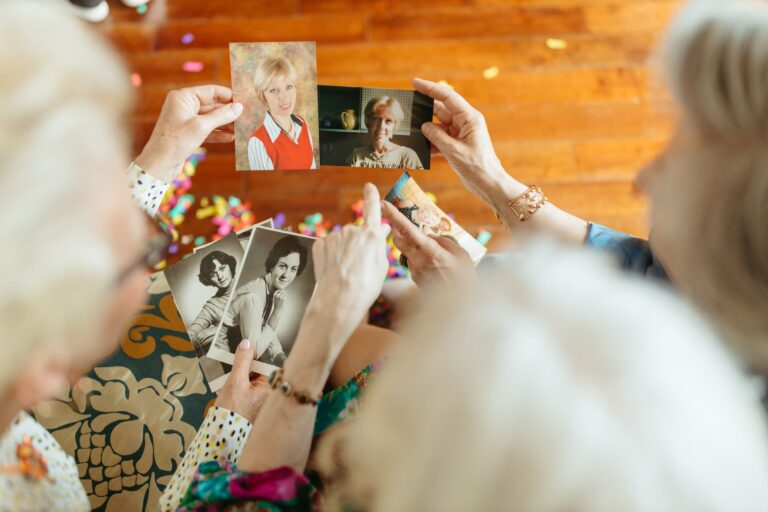
Incorporate your mother's favorite saying into daily moments: during morning care, at meals, or when she seems agitated or withdrawn. Speak it calmly and clearly, allowing time for her to respond emotionally rather than mentally. Reminiscence therapy—using photographs, familiar songs, and personal objects to trigger memories—reduces anxiety and agitation in Alzheimer's patients by focusing attention on positive past experiences (Alzheimer's Association), and familiar phrases operate on the same principle.
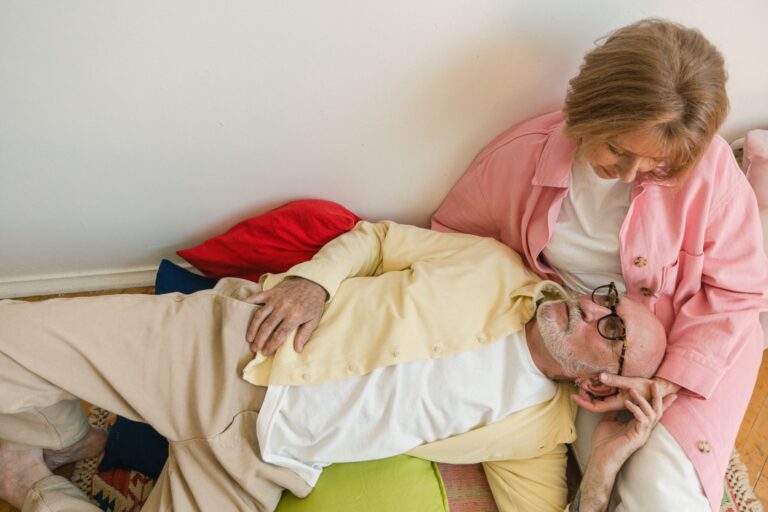
If your mother is nonverbal or largely withdrawn, emotional responses—gentle touch, smiling, music, hand-holding—become the primary communication pathway (Alzheimer's Association). Saying her favorite phrase while holding her hand or making eye contact conveys what words alone cannot. The goal is emotional connection and comfort, not memory accuracy or a specific response.
How Recognition Shifts From Faces to Emotions
In mid- and late-stage Alzheimer's, your mother may respond to your presence without consciously knowing who you are. This is not rejection or loss of relationship—it is a shift in how the brain processes connection.
She no longer relies on the mental filing system that matches your face to your name, but she still registers your tone, your touch, and the familiar phrases you repeat. Caregivers who recognize that Alzheimer's shifts communication from fact-based to emotion-based can maintain meaningful connection and hope by emphasizing emotional intimacy, shared history, and familiar voices (National Center for Biotechnology Information). When you release the expectation that she will remember you and instead focus on the presence you create, both of you experience less frustration and more moments of peace.
Why This Matters for Your Hope and Well-Being
Caregivers who maintain hope and positive attitudes report significantly higher quality of life (Baylor University). Recognizing that your mother can still respond to her favorite saying—that connection persists in a different form—protects you from the despair that can come from expecting recognition that the disease no longer allows.
Each time you hear your mother smile, relax, or show a flicker of response to her familiar phrase, you witness proof that relationship continues. It is not the relationship you had when she could name you and recall shared history. It is something quieter and more resilient: connection through emotion, voice, and the accumulated meaning of words she loved to say.
Frequently Asked Questions
What if my mother doesn't respond at all to her favorite saying?
Response styles vary widely. Some patients show no visible reaction but may still register emotional calm internally. Others respond inconsistently depending on time of day, medication schedule, or how advanced the disease is. The absence of an obvious response does not mean the phrase has no effect—continue offering it as part of your routine care, and note whether anxiety or agitation decreases over time.
Is it wrong to say her favorite phrase when she doesn't remember saying it herself?
No. The phrase belongs to your shared history regardless of her current memory. You are using it as a tool for her comfort and as a way to maintain your connection, not to test her memory. The emotional truth of the phrase—whatever love, humor, or reassurance it carried—remains valid even when the original context is lost.
Can I combine her favorite saying with music or photos?
Yes. Combining familiar phrases with music, hand-holding, or photographs creates multiple sensory pathways to the same emotional meaning. This layered approach often works more effectively than any single technique alone.