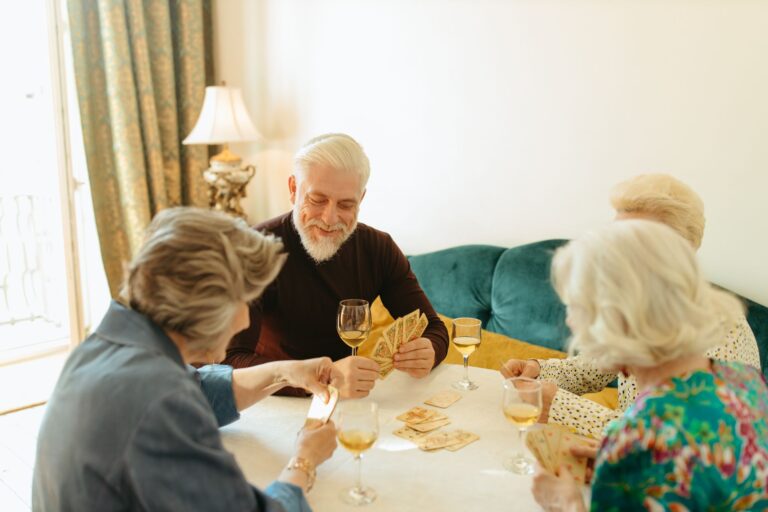
Board games support caregivers during winter visits by providing a calm, structured shared activity that lowers distress and sustains social contact. They also give caregivers a way to share feelings, ease loneliness, and keep holiday time together low-pressure. Cooperative games, in which players work together toward a shared goal, fit this purpose well.
Colder months make older adults and caregivers more likely to withdraw from social activities. The New York State Office for the Aging flags winter withdrawal as a seasonal isolation priority. A planned game gives the visit a clear focus when energy is low.
Medical information disclaimer: This article is for general educational purposes only and does not provide medical advice, diagnosis, or treatment. Always consult a physician or other qualified health professional about symptoms, medications, tests, or treatment decisions.
Table of Contents
- Why does winter contact matter?
- What does shared play do during dementia visits?
- How do games ease loneliness and role stress?
- How can caregivers keep holiday games low-pressure?
Why does winter contact matter?
AARP reports nearly 7 in 10 family caregivers feel emotional strain through the holidays. About 80% say understanding talk and help with tasks or meals would help. A short game fills quiet gaps without forcing heavy conversation.
According to the New York State Office for the Aging, social isolation is linked to higher health risks, described in its seasonal isolation resources. Those include about 50% higher dementia risk, 29% higher heart-disease risk, and 32% higher stroke risk. A regular game offers a reason to return and stay connected.
What does shared play do during dementia visits?
Structured board-game play produced higher observed well-being than discomfort in people with dementia. Frontiers in Psychology reported this result in 2025 in its 2025 study of play and well-being. For caregivers, that means a calmer visit with less distress.
Attention stays on turns, pieces, and small choices. Use familiar rules and short rounds. Match the pace to the person with dementia. End while the mood is good, not when the game ends.
How do games ease loneliness and role stress?
The Journal of Visualized Experiments describes a randomized experiment with 20 older adults using a reminiscence-based hybrid board game. Reminiscence here means using memories, photos, or life stories as part of play. Three sessions over 12 days significantly reduced anxiety and loneliness scores.
Another board game, Giving Voice to Caregivers, helped family caregivers express feelings and communicate problems openly. Researchers in Revista da Escola de Enfermagem da USP found it helped build new family narratives while shifting into the caregiver role. That open talk supports clearer asks for help.
How can caregivers keep holiday games low-pressure?
Evidence remains limited for thinking benefits. The Lift & Shift Foundation notes a 2019 review found only a few small trials of chess, Go, and shogi for thinking and mood.
A 20-year study of about 3,700 players cannot prove games caused less decline, as explained in its practical guide to board games and aging. Treat games as support for contact, not treatment. For caregiver visits, the same source advises short cooperative play fitted to the youngest or most tired player:.
- Pick cooperative games lasting 30-45 minutes.
- Banish phones during play.
- Let the loser pick next time.