Caregivers adapt classic games for winter memory care activities by matching each game to current abilities and simplifying rules and choices. They use large-print, high-contrast cards and large, easy-grip pieces to keep play failure-free and calm.
Memory care activities here mean structured indoor play designed for people living with Alzheimer's or dementia. Winter can isolate people with Alzheimer's or dementia, so indoor games offer connection and mental stimulation. SIU School of Medicine Aspects recommends in its winter activity guidance game nights with dominoes, cards, puzzles and bingo for indoor brain stimulation.
Medical information disclaimer: This article is for general educational purposes only and does not provide medical advice, diagnosis, or treatment. Always consult a physician or other qualified health professional about symptoms, medications, tests, or treatment decisions.
Table of Contents
- Start with what still fits
- How should bingo change?
- How do you keep play calm and failure-free?
- How can winter memories join the game?
Start with what still fits
The Alzheimer's Association advises in its daily care activities guidance that caregivers stick with long-enjoyed activities and adjust them to current skills. The goal is enjoyment, not achievement, as dementia progresses.
UK care-home guidance from Care Home Magazine favors familiarity and repetition during tabletop play. Recognizing suits or matching colors works better than short-term recall or competition.
How should bingo change?
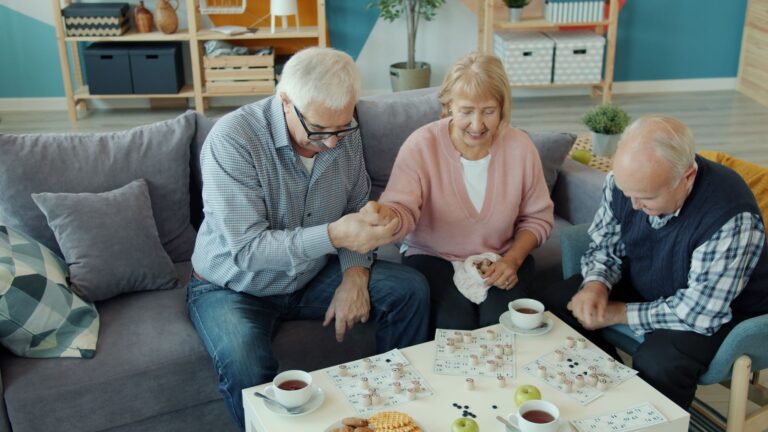
PokoWeb recommends in its three tips for memory-care bingo bold, large cards with added colors or symbols and relaxed win patterns. Lively pacing and short breaks between rounds sustain attention without pressure.
Pick one change at a time and watch the response. Short rounds reduce fatigue and keep players willing to join again.
- Use bold, large cards with color or symbol cues
- Allow simpler win patterns
- Pause briefly between rounds
How do you keep play calm and failure-free?
HelpDementia.com describes matching the game to present abilities, cutting extra choices, and using large-print, high-contrast materials. Large, easy-grip pieces reduce frustration and support steady hands.
Remove timers, complex scoring, and elimination rules. Let players take turns at their own pace and treat every finished turn as success.
How can winter memories join the game?
A winter caregiver guide from Senior Helpers pairs indoor board and card games with storytelling about past holidays and snowy events. Familiar music and simple dance add movement and memory cues.
PokoWeb also suggests pairing players in teams or buddies, linking called numbers to life stories, and playing music bingo with favorite songs. Mississippi State researchers report that reminiscence therapy encourages recall of positive lifespan memories, including holidays, with reviews linking it to better quality of life, communication and mood. End the round with a favorite song and a short stretch before starting again.