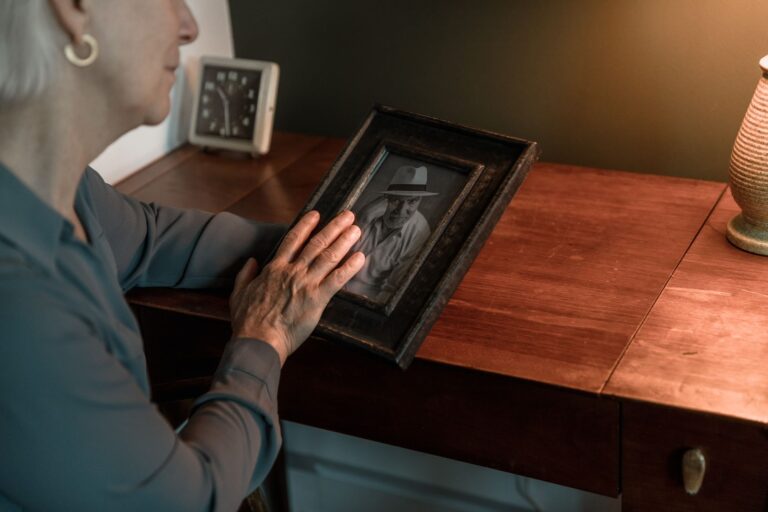
Opening a box of family keepsakes can bring comfort, grief, uncertainty, and connection during dementia, the loss of abilities severe enough to disrupt daily life. Its emotional weight comes from making a person's history feel close while also making present changes more visible. This is not a memory test or medical treatment. It is a shared moment whose value depends on the person's response and the family's willingness to follow that response.
Medical information disclaimer: This article is for general educational purposes only and does not provide medical advice, diagnosis, or treatment. Always consult a physician or other qualified health professional about symptoms, medications, tests, or treatment decisions.
Table of Contents
- Why can the moment feel so intense?
- What can keepsakes realistically do?
- What should go in the box?
- How should a family open the box?
- Supporting the family after the box closes
Why can the moment feel so intense?
A photograph, song, or familiar object may represent life before dementia changed family roles. For relatives, the same item can hold affection, responsibility, and a sense of ongoing loss. Researchers call some of this experience pre-death grief: grieving changes while the person is still alive.
A review of 55 studies found greater grief among caregivers facing higher burden, depression, spousal caregiving, or advanced dementia, according to International Psychogeriatrics. Family members may react differently to the same box. One person may find it comforting, while another feels sadness or exhaustion. Neither response determines how much that person cares.
What can keepsakes realistically do?
Using photographs, keepsakes, music, scents, or familiar places to invite past-focused conversation is an informal form of reminiscence. The Alzheimer's Association describes reminiscence as a possible route to conversation and connection. The evidence does not show that keepsakes slow, reverse, or cure dementia. A Cochrane review of 22 trials involving 1,972 participants found, at most, small and context-dependent effects on cognition, communication, mood, or quality of life.
It found no clear overall benefit for agitation, daily functioning, or relationships. No clinical evidence predicts what opening one particular box will do. It may invite conversation, cause distress, or draw little visible response. A quiet reaction does not prove that the objects lack meaning.
What should go in the box?
Choose items for familiarity and connection, not to create a complete family archive. Consider objects that offer several gentle ways to engage: Keep irreplaceable originals, jewelry, legal papers, and fragile objects elsewhere.
People with Alzheimer's may misplace or hide items, so photographs or inexpensive copies can provide the prompt without risking the original. Do not include an object only because relatives believe it should produce a happy memory. If its history is uncertain or emotionally complicated, introduce it cautiously or leave it out.
- Copies of family photographs
- Postcards, recipes, or letters
- A small familiar household object
- Music associated with a person, place, or occasion
- A safe, familiar scent
How should a family open the box?
Begin without demanding recognition. Sit beside the person, introduce one item at a time, and allow silence. Useful prompts include: Avoid questions such as "Don't you remember?" or repeated requests to name people and dates. Those questions can turn connection into a performance with right and wrong answers.
Follow the person's lead. If interest fades, change the subject. If distress rises, remove the item, pause the activity, or close the box. Completing the box is never more important than the person's comfort.
- "What do you notice about this?"
- "Would you like to hold it?"
- "This looks familiar to me. What do you think?"
- "Would you like to hear this song?"
Supporting the family after the box closes
Caregivers may need time to process their own reactions. If the activity feels overwhelming, another relative can handle the objects, or the family can wait for a different day.
Note which items seemed welcome and which created discomfort before trying again. Families needing broader help with communication, behavior changes, daily care, and caregiver wellbeing can consult the NIH/NIA guide Caring for a Person With Alzheimer's Disease. Before storing the box, separate every irreplaceable original and replace it with a clearly labeled copy.
You Might Also Like
- Looking Through a Family Album Together: Understanding Its Emotional Weight in a Family’s Dementia Journey
- Laughing at a Familiar Family Joke: Understanding Its Emotional Weight in a Family’s Dementia Journey
- Repeating a Family Blessing: Understanding Its Emotional Weight in a Family’s Dementia Journey