Wedding-day photographs can matter deeply because they give families a personal focus for connection when dementia makes conversation difficult. Their value lies in the moments they may help people share, not in proving that someone remembers every face or detail. Dementia is cognitive decline severe enough to interfere with daily life, not a normal part of aging. It may affect memory, language, judgment, recognition, and behavior, according to the National Institute on Aging.
Medical information disclaimer: This article is for general educational purposes only and does not provide medical advice, diagnosis, or treatment. Always consult a physician or other qualified health professional about symptoms, medications, tests, or treatment decisions.
Table of Contents
- What makes wedding photographs useful?
- Why the album matters to the whole family
- How to share photographs without creating a test
- What does the evidence actually show?
What makes wedding photographs useful?
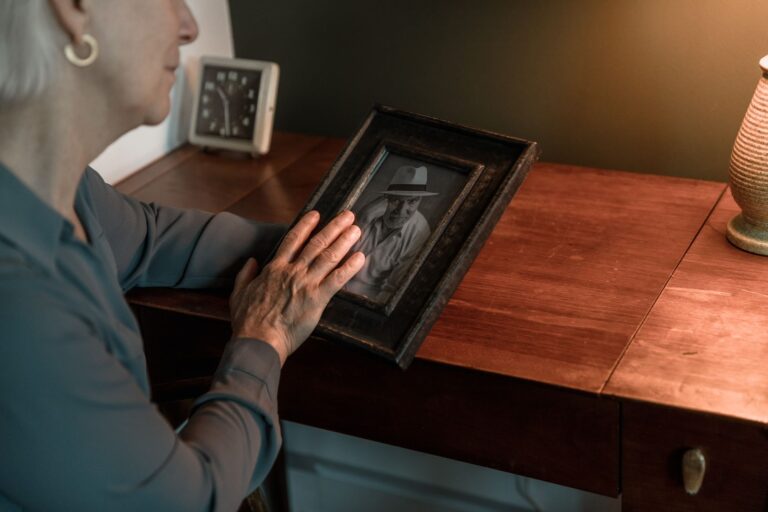
A wedding album contains concrete details that people can notice together: clothing, flowers, expressions, relatives, and places. These details can support conversation without requiring the person with dementia to reconstruct the entire event. A photograph may prompt a story, but it can also support a simpler exchange.
Someone might admire a dress, point to a familiar face, or enjoy hearing a relative describe the celebration. The photograph still has value if no memory surfaces. Meaning can come from sharing attention, affection, or curiosity rather than producing a correct name or date.
Why the album matters to the whole family
Dementia care often unfolds within families. About 80% of adults with Alzheimer's disease or a related dementia receive care at home, while more than 11 million U.S. adults provide unpaid dementia care, according to the Centers for Disease Control and Prevention.
A wedding album gives relatives a shared subject when open-ended conversation feels hard. One person can describe the setting, another can identify relatives, and the person with dementia can participate at any comfortable level. Families may also value different parts of the exchange. A spouse may welcome a familiar ritual, while an adult child may appreciate a peaceful activity that does not center on caregiving tasks.
How to share photographs without creating a test
Treat the album as an invitation, not a memory examination. The National Institute on Aging advises addressing the person directly, using simple wording, presenting one idea at a time, and avoiding judgment of their responses when cognitive impairment affects communication in its guidance for care encounters.
A low-pressure approach can look like this: Responses may vary from one occasion to another. A photograph that encourages conversation today may draw no interest later, so let the person's reaction guide the length and pace.
- Begin with a few clear photographs rather than the entire album.
- Offer an observation, such as, "The flowers are bright."
- Ask gentle questions such as, "What do you notice?"
- Avoid repeated demands to identify people or supply dates.
- Accept a changed subject instead of correcting every detail.
What does the evidence actually show?
Structured discussion of past experiences using photographs, music, or personal objects is called reminiscence therapy. A wedding album can serve as such a prompt, although an informal family conversation is not automatically a clinical therapy session. A Cochrane review of 22 randomized trials involving 1,972 participants found small, inconsistent benefits in areas including quality of life, cognition, communication, and possibly mood. Results varied according to the setting and the way reminiscence activities were delivered.
The evidence does not show that photographs restore lost memories, prevent dementia, or work reliably for everyone. They should not replace medical assessment, treatment, or other needed support. Judge the activity by the person's comfort and engagement, not by the number of facts recalled. If the album causes distress or holds no interest, put it away and try another familiar photograph, song, or object at a different time.