Reviewed by the Help Dementia Editorial Team — our editors review every article for accuracy against guidance from the National Institute on Aging, the Alzheimer’s Association, and peer-reviewed sources.
Recent medical breakthroughs suggest that waiting for symptoms to appear may no longer be necessary—a fundamental shift in how we approach brain health and cognitive decline. New research, particularly focused on Alzheimer’s disease detection, shows that blood biomarkers can now identify the earliest signs of neurodegeneration years before memory loss becomes noticeable. A p-tau217 blood test can predict symptom onset within 3 to 4 years before cognitive decline appears, offering a window of time that was previously unavailable to patients and their families. This isn’t theoretical promise.
Researchers at Harvard and Mass General Brigham have demonstrated that p-tau217 detected years earlier than amyloid PET scan abnormalities, and through dried blood spot analysis, this screening can be scaled across entire populations. For a disease like Alzheimer’s that currently claims over 120,000 lives annually in the U.S. and affects millions more, the ability to intervene before irreversible damage occurs represents one of medicine’s most significant advances. Yet widespread adoption remains limited, and many patients don’t know these tests exist.
Table of Contents
- Why Are We Missing Early Signs of Cognitive Disease?
- How Blood Biomarkers Are Changing Disease Detection
- Alzheimer’s Detection: From Symptom Recognition to Prevention
- How Early Detection Changes What Patients and Families Can Do
- The Limitations of Early Detection Tests
- Learning from Cancer Detection Innovations
- The Future of Predictive Brain Health
- Conclusion
Why Are We Missing Early Signs of Cognitive Disease?
For decades, Alzheimer’s disease has been diagnosed only after symptoms—forgetfulness, confusion, difficulty with language—became obvious enough that families sought medical attention. By that time, the underlying pathology has been advancing silently for years, often decades. Brain imaging shows that amyloid and tau proteins begin accumulating 15 to 20 years before anyone notices cognitive problems. This asymptomatic phase represents a critical period when intervention might have the greatest impact, yet it remains largely invisible to traditional medicine. The fundamental problem is that we’ve relied on symptom recognition as our detection trigger. When someone finally schedules a doctor’s appointment about memory concerns, they’re already in the middle or later stages of the disease process.
This explains why even our best cognitive therapies and medications show modest benefits—we’re treating an illness that’s already entrenched. The emergence of blood biomarkers changes this calculation entirely. Rather than waiting for the brain to fail, we can now measure its declining chemistry before function deteriorates. This shift in detection capability is happening across multiple diseases simultaneously, not just Alzheimer’s. Cancer researchers have achieved similar breakthroughs: a new multi-cancer early detection test presented at the American Association for Cancer Research Annual Meeting in April 2026 identified cancers with only 2.6% false positive results. For pancreatic cancer specifically, a four-marker blood test reaches 91.9% detection accuracy across all cancer stages. The pattern is clear—we’re entering an era where earlier detection is becoming medically possible.

How Blood Biomarkers Are Changing Disease Detection
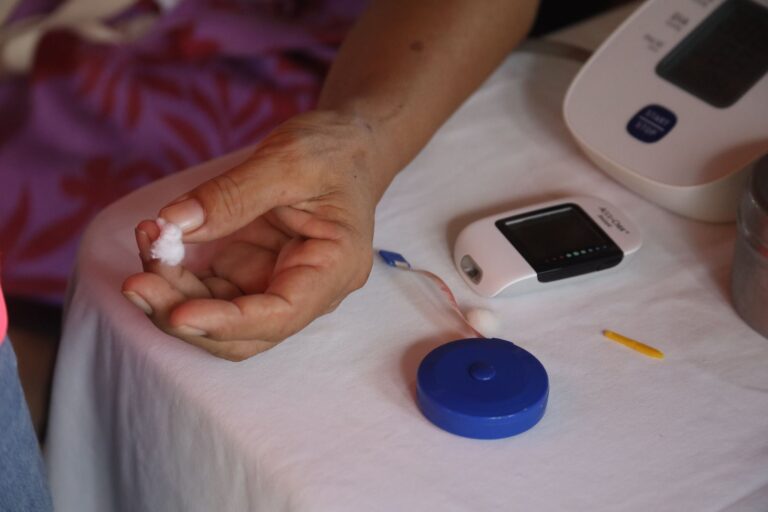
The science underlying these advances centers on proteins and molecules that appear in blood long before symptoms manifest. For Alzheimer’s, the p-tau217 biomarker doesn’t just indicate disease presence; it can predict cognitive decline with sufficient accuracy to change medical strategy. Unlike PET scans that require expensive imaging centers and radiation exposure, dried blood spot analysis is minimally invasive. A patient can have blood collected at a doctor’s office, a clinic, or even at home, then mailed to a laboratory. This accessibility is crucial for population-based screening—testing becomes practical for millions of people, not just those already concerned enough to seek advanced imaging.
The multi-cancer detection approach demonstrates how biomarkers work in combination. Abbott’s Cancerguard test combines methylation patterns with protein biomarkers, with 47.1% of cancer signals coming from methylation alone, 7.4% from protein-only findings, and 45.5% from the combination of both. This redundancy actually strengthens accuracy; false positives are rare because a result must align across multiple biological signals. However, a significant limitation exists: early detection capability doesn’t automatically translate to available treatments. For pancreatic cancer, even with detection at early stages, only about 10% of patients survive 5 or more years after diagnosis. Earlier detection gives more time to treat, but it doesn’t cure a disease that remains difficult to manage.
Alzheimer’s Detection: From Symptom Recognition to Prevention
The p-tau217 blood test represents a transformation in Alzheimer’s medicine because it provides something oncology lacks at this scale—a clear opportunity for prevention-focused intervention. When a patient tests positive for p-tau217 elevation but remains cognitively normal, they enter a new category: preclinical Alzheimer’s disease. Within 3 to 4 years, many will develop symptoms unless interventions slow or halt the process. This window allows for lifestyle modifications, monitoring of cardiovascular health, cognitive stimulation, sleep optimization, and emerging pharmaceutical options that might prevent or delay symptom onset. Clinical trials are already testing whether early intervention works. Studies show that patients who receive treatment during this preclinical phase experience different trajectories than those identified only after symptoms appear. Some remain stable for years; others progress despite treatment. But the consistency is clear: identifying disease 5 years before symptoms offers more options than identifying it after memory loss begins.
The Alzheimer’s Association has called this shift “a new era of early detection and prevention,” acknowledging that the ability to detect before decline is a watershed moment in the field. The practical reality, however, requires navigation. A positive p-tau217 test doesn’t mean dementia is inevitable. Some people with elevated biomarkers remain cognitively normal for decades. Others decline relatively quickly. The test provides probability, not certainty. Patients receiving results must understand this uncertainty while also taking the finding seriously enough to pursue appropriate monitoring and preventive measures. Family history, age, cardiovascular health, cognitive reserve, and other factors all influence individual outcomes.

How Early Detection Changes What Patients and Families Can Do
With early detection capability comes the possibility of truly preventive action. For someone identified with preclinical Alzheimer’s disease through blood testing, the conversation with their doctor shifts from “let’s monitor your memory” to “let’s slow or stop this process.” Interventions documented to support brain health—regular aerobic exercise, quality sleep, cognitive engagement, Mediterranean-style diet, management of hypertension and diabetes, hearing correction, and social connection—take on new urgency and clearer purpose. Rather than vague recommendations, these become targeted strategies to address a known pathological process. This represents a trade-off compared to traditional disease management.
A person identified by blood test may need to make significant lifestyle changes for years—potentially decades—before knowing whether they’ve successfully prevented symptom onset. Others face difficult decisions about medication options that exist for symptomatic disease but aren’t yet formally approved for preclinical stages. The psychological burden of knowing you’re in early-stage disease but feeling completely normal is real and shouldn’t be minimized. Conversely, the alternative is continuing current practice: waiting for irreversible damage before acting, then hoping for treatments that modify an already-advanced disease.
The Limitations of Early Detection Tests
Early detection breakthroughs come with important caveats that patients and families should understand clearly. First, elevated biomarkers don’t guarantee disease development. Some people with abnormal p-tau217 levels never develop Alzheimer’s symptoms. The test identifies risk, not destiny. Second, detection capability has outpaced treatment capability—we can now identify disease years before we can treat it effectively. Blood tests generate information, but information alone doesn’t change brain pathology. Third, the tests themselves create new challenges: false positives cause unnecessary anxiety, while false negatives provide false reassurance. The cost and access question looms large.
Advanced blood biomarker testing remains expensive and often isn’t covered by insurance for asymptomatic people. This creates a two-tier system where those with resources can access early detection while others must wait for symptoms. Furthermore, research populations that generated these biomarker findings tend to be predominantly white and educated—demographic groups that may not fully represent the broader population. The accuracy and applicability across diverse populations remains incompletely understood. Psychological harm from early detection testing deserves serious consideration. A person might receive results indicating preclinical Alzheimer’s disease, only to remain cognitively normal for 20 years or never develop symptoms. That knowledge—living with the label of early-stage disease while feeling healthy—carries a burden that clinicians are still learning to manage. This is why early detection requires not just a blood test, but comprehensive counseling about what results mean and what steps make sense for an individual’s specific situation.

Learning from Cancer Detection Innovations
The rapid advancement in cancer detection provides both inspiration and caution for dementia research. Pancreatic cancer detection improved dramatically through identification of new biomarkers—ANPEP and PIGR proteins identified in 2026 research combined with existing markers like CA19-9 and THBS2 to achieve dramatically improved accuracy. An AI-powered platform called PanMETAI achieved up to 94% diagnostic accuracy using metabolic fingerprinting, demonstrating that sophisticated analysis of blood chemistry can identify disease with remarkable precision.
Yet pancreatic cancer remains deadly: only about 10% of patients survive 5 or more years after diagnosis, even when caught early. This sobering statistic reveals that early detection, while valuable, isn’t equivalent to cure. The benefit of earlier detection exists—patients identified at stage I or II have better treatment options and survival rates than those identified at advanced stages—but it’s measured in months or a few years of extended survival, not fundamental transformation of the disease. This pattern suggests that early Alzheimer’s detection, while truly valuable, should be understood as an opportunity to slow decline, not to eliminate it.
The Future of Predictive Brain Health
The convergence of multiple advances—better biomarkers, more accessible testing, AI-powered analysis, and emerging prevention strategies—points toward a future where cognitive decline becomes less about waiting for irreversible damage and more about proactive management. Within the next 5 to 10 years, comprehensive brain health screening via blood test may become as routine as cholesterol screening for cardiovascular disease. Dried blood spot collection enables testing at home, in primary care clinics, or during community health events.
The infrastructure for population-based early detection is becoming feasible. This future requires investment in both testing and in interventions. Identifying millions of people with preclinical cognitive disease is only valuable if society simultaneously develops and funds the preventive strategies—lifestyle supports, cognitive programs, cardiovascular management, and pharmaceutical interventions—that can meaningfully alter trajectories. The blood test is one tool; changing outcomes requires addressing the full ecosystem of brain health.
Conclusion
The evidence is clear: earlier detection of cognitive decline is now possible through blood biomarkers like p-tau217, offering a 3- to 4-year window before symptoms appear. This capability represents a genuine opportunity to intervene before irreversible brain changes progress too far. However, opportunity doesn’t equal obligation. Every person identified through early detection testing deserves thorough counseling about what the result means, what it doesn’t mean, and what reasonable next steps might look like.
If you or a family member has concerns about cognitive health, the conversation to have with your doctor has changed. Ask about early detection biomarker testing, understand your risk factors, and discuss what preventive strategies make sense for your individual situation. The era of waiting for problems to become obvious is ending. The era of measurable, actionable early detection has begun.