Reviewed by the Help Dementia Editorial Team — our editors review every article for accuracy against guidance from the National Institute on Aging, the Alzheimer’s Association, and peer-reviewed sources.
New research reveals that detecting stress early—rather than waiting until it becomes chronic—may be one of the most important steps we can take for long-term brain health. Studies show that approximately 40% of employees worldwide report experiencing significant daily stress, according to Gallup’s State of the Global Workplace 2026 report, yet most people don’t recognize the warning signs until damage has already accumulated in their neural systems. For dementia prevention, this matters profoundly: chronic stress accelerates cognitive decline, increases inflammation in the brain, and elevates cortisol levels that are directly linked to memory loss and neurodegeneration.
The good news is that modern technology and behavioral science now give us tools to catch stress before it reaches dangerous levels. Heart rate variability measured through wearable devices can detect the physiological markers of stress in real time, while decades of research on mind-body practices shows that certain interventions can actually reverse stress-related gene expression and protect cognitive function. The challenge is that most people—and most healthcare providers—still treat stress as something inevitable rather than something measurable and manageable. Understanding what these new findings mean for brain health requires looking at three interconnected realities: how we can detect stress earlier, what actually reverses its damage, and why current detection methods still fall short of what we need.
Table of Contents
- Why Stress Detection Matters for Brain Health
- Wearable Technology and Real-Time Stress Biomarkers
- Mind-Body Practices and Reversing Stress at the Genetic Level
- Current AI Detection Tools and Their Critical Limitation
- Why Early Detection Becomes Critical in Middle Age and Beyond
- Practical Strategies for Stress Monitoring and Response
- The Future of Stress Detection in Dementia Prevention
- Conclusion
Why Stress Detection Matters for Brain Health
Stress doesn’t just affect mood or energy levels—it directly alters brain structure and function. When cortisol levels remain elevated over months or years, the hippocampus (the region responsible for memory formation) shrinks. The prefrontal cortex, which handles executive function and decision-making, becomes less efficient. These aren’t abstract changes; they appear on brain scans and show up in cognitive testing. For people concerned about dementia risk, chronic stress isn’t a secondary issue—it’s a primary modifiable risk factor that rivals diet, exercise, and sleep in importance.
What makes timely detection crucial is that the damage from stress is cumulative but reversible in early stages. Research spanning 18 years shows global stress levels are rising with “significant structural predictors requiring systemic intervention approaches,” meaning that waiting to address stress until symptoms become obvious means waiting until neural changes are already substantial. A 55-year-old experiencing chronic workplace stress but no cognitive symptoms yet may already have measurable changes in brain connectivity. Early detection allows intervention before those changes become entrenched. The practical implication is that stress screening should become as routine for cognitive health as blood pressure monitoring is for heart health. Yet most people only recognize their stress level through subjective feeling—”I’m stressed”—rather than through measurable indicators they can track over time and respond to systematically.

Wearable Technology and Real-Time Stress Biomarkers
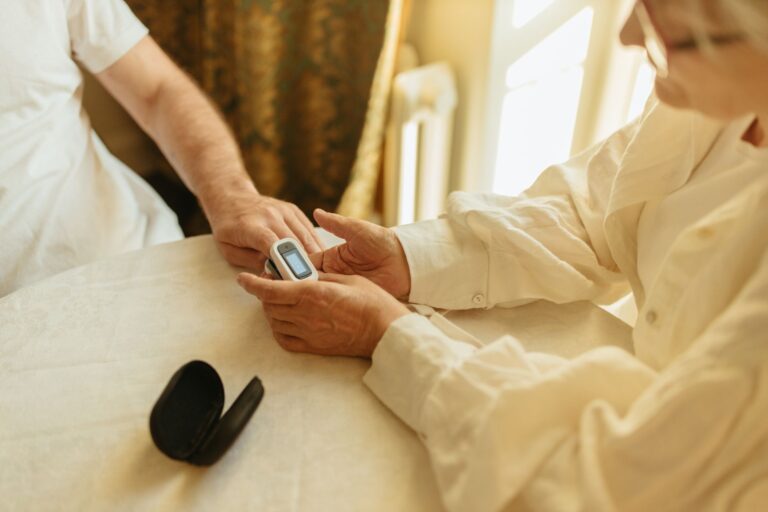
Heart rate variability has emerged as one of the most practical and scientifically validated biomarkers for detecting mental stress. HRV measures the variation in time intervals between heartbeats and is controlled by the autonomic nervous system—the same system that shifts into fight-or-flight mode during stress. When someone is chronically stressed, their HRV typically decreases, reflecting a nervous system locked in a heightened alert state. Wearable devices like smartwatches and specialized heart-rate monitors can now measure HRV continuously and flag patterns indicative of stress or anxiety. The advantage of wearable-based detection is immediacy and personalization. Instead of waiting for an annual doctor’s visit or relying on memory of “how stressed I’ve been,” someone can see real-time feedback about their physiological stress level throughout the day.
A person might discover that their HRV drops significantly during certain work meetings, after skipping sleep, or following caffeine consumption. This granular data enables pattern recognition that leads to behavioral change—choosing to skip that meeting, protecting sleep, or moderating stimulants. The limitation, however, is that wearables measure the body’s response to stress but don’t prevent stress itself. Someone wearing an HRV monitor will know they’re stressed, but knowing alone doesn’t reduce cortisol or protect the brain. Additionally, the technology requires consistent use, personal interpretation of data, and usually integration with a smartphone app—creating friction that many people abandon after weeks. Not everyone finds this technology useful or accessible.
Mind-Body Practices and Reversing Stress at the Genetic Level
What distinguishes timely detection from actual intervention is what comes next. recent research on long-term practitioners of mind-body techniques such as Transcendental Meditation reveals something striking: these practices don’t just reduce subjective stress—they measurably lower the expression of stress-related and age-associated genes. In other words, certain practices can actually change which genes are “turned on” in your cells, with measurable differences in cognitive function and reduced chronic stress hormone levels. This finding is significant because it suggests that detecting stress is only half the equation; the other half is using practices that directly counteract stress’s biological effects. Someone who detects elevated HRV through a wearable but then does nothing is in a worse position than someone who never detected it—they have awareness of a problem they’re not solving.
But someone who detects stress and then engages in consistent meditation, yoga, or other mind-body practice can actually reverse the molecular changes stress created. The challenge is consistency and individual variation. Meditation works powerfully for some people and feels impossible for others. The research shows benefits accumulate over years of practice, not days or weeks. Someone might start tracking HRV, realize they’re stressed, try meditation for two weeks, see minimal improvement in HRV readings, and give up—missing the fact that significant genetic changes require months or years of consistent practice.

Current AI Detection Tools and Their Critical Limitation
The emerging use of artificial intelligence to detect stress represents both promise and a significant gap. AI tools can analyze patterns in wearable data, work schedules, message timing, and other behavioral signals to identify when someone is likely experiencing stress. But here’s the crucial limitation: current AI-driven stress tools predominantly focus on detection rather than prediction, limiting their ability to provide proactive preventive interventions. This distinction matters enormously. Detection means identifying that someone is stressed right now.
Prediction would mean identifying that someone is likely to become significantly stressed in the coming weeks based on rising stressors they haven’t yet fully experienced—allowing intervention before the stress accumulates. An AI system detecting stress is reactive; an AI system predicting stress could be preventive. The research presented at the ACM 2025 International Conference on this topic found that most commercial and academic tools err toward the easier technical problem (detection) rather than the harder and more useful one (prediction). The practical consequence is that even sophisticated AI-enabled stress monitoring still puts the burden on the user to respond. Someone’s app tells them “Your stress is elevated,” but they still must choose what to do about it, when to do it, and whether to sustain that choice. For dementia prevention, this reactive approach misses the opportunity to intervene during the critical window before chronic stress reshapes brain structure.
Why Early Detection Becomes Critical in Middle Age and Beyond
The relationship between stress detection and dementia risk intensifies with age. The same stress level that a 30-year-old’s brain might handle relatively well creates measurable cognitive effects in someone at 55 or 65. Stress-induced inflammation becomes harder to resolve as the brain’s own anti-inflammatory systems weaken with age. Elevated cortisol in midlife and beyond correlates directly with hippocampal volume loss and increased risk for cognitive decline. This means that timely detection takes on even greater urgency in the second half of life.
A 60-year-old with undetected, chronic stress may have years of neural damage already accumulated. That same person, once stress is detected, might reverse some of that damage through intervention—but the window for full recovery narrows with each year of delayed detection. Early detection in this population isn’t about comfort or productivity; it’s about preserving cognitive reserve and reducing dementia risk. One important warning: detecting stress can itself create stress if not handled appropriately. Someone who learns through wearable monitoring that their stress is constantly elevated can spiral into anxiety about that constant stress—a meta-stress effect. This is why detection without a clear action plan, without accessible interventions, and without professional support can sometimes worsen outcomes rather than improve them.

Practical Strategies for Stress Monitoring and Response
Effective stress detection requires both measurement and a clear action protocol. This might look like: wearing a device that tracks HRV daily, noting patterns (stress spikes on Monday mornings, after certain interactions, during certain projects), and then deliberately testing interventions. If HRV drops after 6 p.m. work emails, an intervention might be setting email boundaries. If stress peaks during task-switching, the intervention might be time-blocking.
If HRV is consistently low, the intervention might be starting a mind-body practice. The most actionable approach combines multiple signals rather than relying on a single wearable metric. Someone might track HRV through a smartwatch, subjective stress through a daily journal, and objective stressors through a calendar or task list. The convergence of these signals—”My HRV dropped, I rated my stress 8/10, and I had six meetings and two crisis emails today”—creates a clearer picture than any single measure alone. This requires some effort, but for someone genuinely concerned about cognitive health, it’s less demanding than a formal brain scan and more informative than guessing.
The Future of Stress Detection in Dementia Prevention
As research continues, the expectation is that detection tools will evolve from identifying current stress toward predicting future stress, and from measuring to recommending. Imagine a system that flags not just “your HRV is elevated” but “based on your rising workload, your sleep reduction, and your caffeine intake, you’re on a trajectory toward chronic stress in the next four weeks—here’s the intervention protocol most effective for your profile.” The parallel trajectory involves normalizing stress detection as part of routine cognitive health monitoring, similar to how blood pressure and cholesterol are monitored for cardiovascular health.
Particularly for people in their 50s, 60s, and beyond, regular stress assessment through both subjective screening and objective measurement could become standard practice. The research showing reversibility of stress-related brain changes provides the biological rationale; the technology now exists to make detection feasible.
Conclusion
New findings on stress detection and timely intervention highlight a fundamental truth: stress is not an inevitable cost of modern life that we must simply endure. It is measurable, detectable in early stages, and—most importantly—reversible through evidence-based interventions, particularly mind-body practices that can actually shift gene expression and protect brain structure. The approximately 40% of workers experiencing daily stress represents an enormous public health opportunity: these individuals could benefit from systematic stress detection and intervention before chronic stress becomes entrenched in their neural systems. The next step for anyone concerned about dementia risk is to move from passive stress awareness to active stress measurement.
This might involve a wearable device to track physiological markers, a simple daily practice to detect patterns, or consultation with a healthcare provider who understands stress’s role in cognitive decline. The science is clear: catching stress early works. The technology to detect it exists. What remains is the individual and collective choice to use detection not as an endpoint, but as the beginning of meaningful intervention.