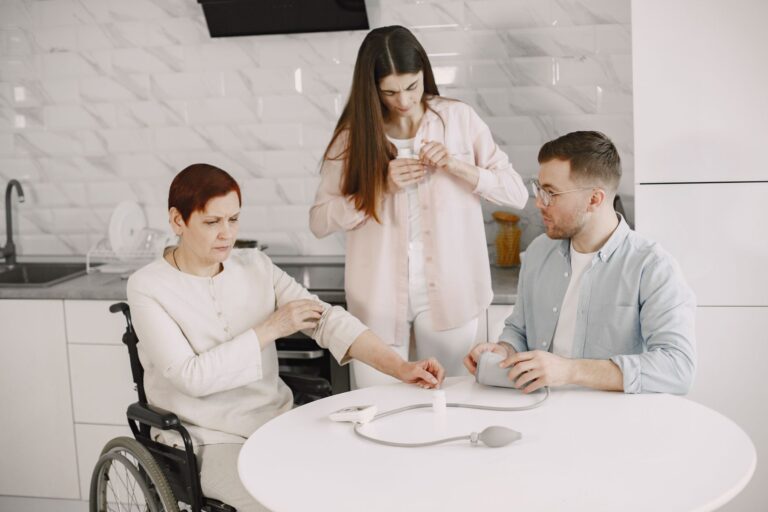
Pauses matter when talking to someone with dementia because they give the brain time to process what was just said. When someone has dementia, the neural pathways that handle language comprehension slow down. A sentence that took two seconds to process before may now take five, ten, or twenty seconds. If you keep talking while the person is still working on understanding your previous sentence, they fall further behind. The gap between what you’re saying and what they’re able to track widens until communication breaks down entirely.
Real-world example: A daughter sits with her mother, who has mid-stage Alzheimer’s disease. She says, “Mom, I brought your favorite soup for lunch.” Then she immediately continues: “It’s tomato basil, the kind you always loved. I made it fresh this morning.” By the time the mother’s brain has processed “soup,” three more pieces of information have arrived. She catches none of it and feels confused and frustrated. If the daughter had stopped after “favorite soup” and waited seven seconds—looking at her mother’s face to see if recognition was happening—the mother would have processed the thought completely. A pause creates space for understanding.
Table of Contents
- What Happens in the Brain When You Pause
- How Dementia-Related Language Changes Make Pausing Essential
- Pauses Create Space for Emotion and Relatedness
- How to Actually Build Pauses Into Your Daily Conversations
- What Happens When People Don’t Pause
- Different Types of Pauses and When to Use Them
- Pauses and Memory: Why This Matters More Than You Might Think
- Frequently Asked Questions
What Happens in the Brain When You Pause
dementia changes how the brain accesses and processes language. In healthy aging and dementia, the speed of cognitive processing decreases. The parts of the brain that connect ideas, retrieve words, and construct meaning all work more slowly. This isn’t laziness or lack of effort—it’s a physical change in how signals travel through damaged or aging neural tissue. A pause isn’t wasted time. It’s working time. When you pause after speaking, you give several things a chance to happen. First, the person’s brain continues working on understanding your words. Second, they have time to formulate a response. Third, they can notice and respond to your facial expression or body language, which provides important context.
Someone with dementia often relies more heavily on tone of voice and non-verbal cues than on the words themselves, especially as language comprehension declines. A pause allows them to take in the full picture. There’s a specific kind of pause that works better than others. After you finish a sentence or complete thought, pause for a full three to five seconds before speaking again. Don’t just stop for a breath and restart. Look at the person. Notice if their eyes are tracking yours, if their mouth is starting to move, if they seem to be working internally. Some people need ten seconds. Others need only three. But almost nobody with dementia needs you to continue talking immediately.
How Dementia-Related Language Changes Make Pausing Essential
Dementia doesn’t just slow down processing—it also disrupts how people store and retrieve language. A person may understand individual words but struggle to connect them into a sentence. They might hear “Would you like coffee?” and grasp “coffee” but lose the “would you like” part, leaving them unsure if this is a question, an offer, or a statement. Adding more words—”I’m asking if you’d like some coffee”—makes it worse, not better. The most common limitation people face when trying to pause is their own anxiety. Silence feels awkward. Many caregivers find silence stressful and fill it with more talking, more explaining, or more repetition. They worry the silence means the person didn’t understand.
Actually, the silence means the person’s brain is still working. Filling silence with more words is like interrupting someone mid-thought. The person never completes their processing because a new task has landed on top. Some caregivers also worry that pausing will make the person feel abandoned or ignored. This concern comes from a good place, but pausing actually strengthens connection. When you pause and wait, you’re signaling: “I’m here. I care about whether you understood. I’m interested in what you think.” This is fundamentally different from rushing ahead, which signals: “I need this to move faster. Your processing speed is a problem.”.
Pauses Create Space for Emotion and Relatedness
Beyond processing, pauses are where emotional connection happens in dementia conversations. When someone is struggling to find words or understand language, they’re often anxious. Their body might tense. Their eyes might search your face. A pause, filled with your calm presence, is reassuring. You’re saying without words: this is not an emergency, we have time, you’re safe. Specific example: A man with vascular dementia is trying to remember the name of his grandchild. He can see her face in his mind but can’t access her name. His caregiver usually fills in the name immediately, trying to be helpful. One day, the caregiver pauses instead. They wait ten seconds while the man searches.
During those ten seconds, the man keeps trying. His face shows concentration, not panic. At eight seconds, he says, “Sarah.” He remembered. The pause didn’t cause the problem—it allowed the person to solve the problem. His dignity and sense of agency improved dramatically in that moment, not because the outcome changed, but because he did the work himself. Pausing also gives you time to read the person’s emotional state. Dementia often disconnects the ability to speak from the ability to feel. Someone might struggle for ten seconds to say “I’m scared,” but their face and body have been communicating fear the whole time. If you pause, you see the fear. You can acknowledge it. You can adjust your approach based on what you observe, not just on what you hear.
How to Actually Build Pauses Into Your Daily Conversations
Start by picking one conversation type and practicing there. Many caregivers do well if they choose mealtimes or getting-ready routines. These are repetitive, lower-pressure situations where you can focus on technique. Say something simple: “Let’s get dressed now.” Then pause for five seconds. Don’t move, don’t repeat, don’t add information. Look at the person’s face. If they show signs of understanding—a nod, eye contact, standing up—you’re done. If they show confusion, try a different approach: maybe show them the clothes, or offer a choice between two outfits. The tradeoff here is speed. If you’re in a hurry, pausing makes conversations take longer. An interaction that usually takes five minutes might take eight or ten.
This is worth understanding clearly. You can’t have both speed and comprehension if the person has dementia. You have to choose. If you choose speed, comprehension suffers and frustration follows. If you choose comprehension, some tasks take longer. Most caregivers find that when they allow time for pauses, the overall emotional quality of the day improves enough that the time investment feels worthwhile. Some also find that rushing actually takes longer because it generates confusion, resistance, and repeated explanations. A practical step: Set a timer on your phone for three seconds when you start. After you speak, don’t talk again until the timer goes off. Do this for one week during one specific interaction. Your brain will start to internalize the rhythm. After a week, you often won’t need the timer because the pause will feel more natural.
What Happens When People Don’t Pause
The most common mistake is repeating the same sentence over and over, louder. If someone doesn’t respond to “Would you like juice?” after one second, many people will immediately say “JUICE? WOULD YOU LIKE JUICE?” This is based on a misunderstanding. The person didn’t understand because they didn’t have time to process, not because they didn’t hear. Speaking louder doesn’t solve a processing problem. It makes it worse because now the person is startled and their processing ability actually decreases under stress. A warning: If you’re a very talkative person or someone who naturally speaks quickly, this will be hard to change. You will feel like you’re over-performing the pause. You might feel like you’re being weird or unnatural. You probably are, at first. This feeling passes after two weeks of practice. But if you ignore the feeling and revert to your fast, continuous-talking style, the person will notice. Their anxiety will return.
Their comprehension will drop. What feels natural to you—filling silence with words—is actually disorienting to them. Another common problem: pause-pausing. This is when caregivers pause but keep their bodies tense, their eyes searching, their expression worried. The person can feel the anxiety. They sense: “This person is impatient. I’m taking too long.” This makes their processing worse because now they’re also managing the caregiver’s emotion. A real pause involves your whole body. Your shoulders drop. Your face becomes neutral or calm. You breathe normally. You genuinely wait instead of performing the action of waiting.
Different Types of Pauses and When to Use Them
There are several different pauses that serve different purposes. The most common is the processing pause, which happens after you finish a statement. You wait while the person’s brain works on what you just said. A second type is the response pause, which happens after a question. You’ve asked something, and now you wait to see if the person will answer. This can take much longer than a processing pause—sometimes fifteen or twenty seconds.
Resist the urge to repeat the question or rephrase it. If they’re going to answer, they need that full time. A third type is the observation pause, which happens when you notice the person is struggling emotionally but hasn’t said anything. You pause your own talking and just witness them. This is powerful but requires confidence. Many caregivers rush to fix or comfort in these moments because the silence feels painful. Sometimes the most helpful thing is to sit with the person without trying to solve anything.
Pauses and Memory: Why This Matters More Than You Might Think
One reason pauses matter so much is that people with dementia often store information better when they have adequate processing time. If you give someone time to fully understand what you’re saying, they’re more likely to retain it, even temporarily. Someone might not remember the conversation five minutes later, but they’ll remember the feeling of being respected and understood. They’ll remember that you were patient. These emotional memories persist longer than factual memories in many dementia conditions. Example: A woman with Alzheimer’s disease lives with her son. They do a morning routine: the son helps her get dressed, eat breakfast, brush her teeth. For three months, he rushed through each step, giving rapid-fire instructions.
One day, out of frustration (both of theirs), he slows down. He puts her shirt on the bed, waits five seconds, then gestures to it. She dresses herself. At breakfast, he sets down toast and pauses before continuing. She picks it up and eats. Nothing about the facts changed—same shirt, same toast—but her ability to follow along increased because processing time made understanding possible. The next morning, she seemed calmer before they even started. She was remembering, on some level, that this interaction felt manageable.
Frequently Asked Questions
How long should I pause?
Start with five seconds. This feels long at first but is often the minimum someone with dementia needs to process a simple sentence. Some people need ten or fifteen seconds. Watch their face and body language—if they’re still thinking, wait longer.
What should I do during the pause?
Stay present. Look at the person. Don’t rehearse what you’ll say next or check your phone. Your calm presence is part of the communication.
What if they don’t respond even after a long pause?
Pausing doesn’t guarantee a response. It guarantees that if they can respond, they’ll have the time to do it. Sometimes the answer is still no or silent. That’s not failure—that’s just where they are that moment.
Will pausing make me seem impatient?
The opposite. Pausing signals you have time and you’re not rushed. Talking continuously signals urgency and impatience. Your pauses show respect.
Can you pause too long?
Rarely. If you’ve paused for thirty seconds and nothing is happening, you can gently check in: “Are you thinking about it?” or suggest a different approach. But most people benefit from longer pauses than feels comfortable.
Does pausing work the same way for all types of dementia?
Pausing helps across dementia types, but the timing varies. Vascular dementia and Lewy body dementia often need longer pauses than Alzheimer’s at the same stage. As the disease progresses, processing time needs increase. Pay attention to what works for the individual person, not just the diagnosis.