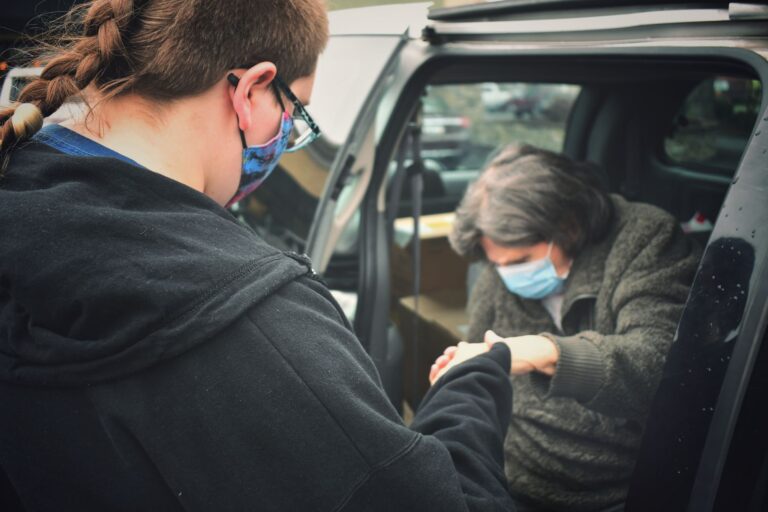
When someone with dementia can’t follow your verbal instructions, the problem isn’t stupidity or stubbornness—it’s that the brain’s language processing center has been damaged by the disease. Showing works better than telling because it bypasses the broken language circuits and speaks directly to the motor and visual memory systems that often remain functional much longer. If you tell your mother to “put on your shoes,” her brain may not translate those words into an understanding of what you’re asking or how to execute the steps. But if you sit down, pick up the shoe, and slowly guide her foot into it while she watches, you’re using systems in her brain that may still work: visual processing, motor imitation, and procedural memory. Dementia disrupts semantic memory—the knowledge of what words mean—before it disrupts the ability to mimic actions or follow a visual sequence.
A person who can’t tell you what a fork is might still be able to pick one up and use it if they watch someone else do it first. This shift from language-dependent to action-dependent learning is one of the most practical insights in dementia care, and it changes everything about how you communicate. The power of showing over telling isn’t just anecdotal. It reflects how the disease progresses through different parts of the brain. The areas that control language and abstract thought deteriorate while the visual cortex, motor cortex, and procedural memory systems hold on longer. You’re not working around the person’s intelligence—you’re working with the parts of their brain that still function.
Table of Contents
- How Does Dementia Affect the Brain’s Ability to Understand Words?
- The Critical Difference Between Verbal Instruction and Physical Demonstration
- How the Brain Processes Visual and Motor Learning Differently in Dementia
- Practical Strategies for Showing Instead of Telling
- Common Barriers and What Goes Wrong When Showing Isn’t Enough
- When Showing Still Needs Verbal Backup
- Real Caregiving Scenarios: When Showing Changes Everything
How Does Dementia Affect the Brain’s Ability to Understand Words?
dementia damages the temporal lobe, the region responsible for comprehending language and recalling the meaning of words. Early on, the person might forget uncommon words, then gradually lose everyday vocabulary. But the loss isn’t uniform—they might understand “eat” before they understand “meal.” They might respond to “sit” but not “please have a seat.” Because language processing is so fragile, long sentences and abstract instructions create cognitive noise. “Can you go upstairs and bring down your glasses and your phone?” requires the person to hold multiple steps in working memory, translate them into action, and execute a sequence—a task that demands intact language centers. In contrast, the visual system and the motor system are supported by different neural networks.
The occipital lobe (back of the brain) processes vision, and the primary motor cortex (top back of the brain) processes movement. These areas often remain relatively preserved longer than the language centers. When you show someone how to do something—especially if you do it slowly and let them watch your hands—you’re tapping into intact systems. The brain doesn’t have to decode words; it just has to observe and mirror. A practical example: An older woman with mid-stage Alzheimer’s can no longer reliably understand the verbal instruction “wash your hands.” She might nod, but when she gets to the bathroom, she may not know what to do or may do it incorrectly (washing only her palms, not between her fingers). But if her caregiver stands next to her, turns on the water, wets their hands, and soap-up slowly while the woman watches, she often successfully mirrors the action.
The Critical Difference Between Verbal Instruction and Physical Demonstration
Verbal instruction is a two-step process: the listener must (1) decode the words and (2) translate them into motor action. In dementia, step one breaks down early and often. demonstration is more direct—the brain’s mirror neuron system can fire up and initiate the observed action without translating language. This doesn’t mean the person with dementia has perfect motor control or perfect memory—it means they can access a simpler, more direct pathway. However, there’s an important limitation: showing only works if the person is paying attention and if the task isn’t too complex. If you demonstrate tying a shoe but do it quickly, the person may not process the sequence. If you demonstrate a five-step task, they might remember steps one and three but forget step two.
Showing is powerful but not infallible. It works best for concrete, short sequences and for tasks that the person may have done hundreds of times in their life (even if they can’t now execute it without prompting). Another limitation is that showing doesn’t always transfer to independence. A woman might successfully wash her hands when her caregiver demonstrates it, but she may not initiate hand-washing on her own or remember to do it later. Demonstration solves the comprehension problem—the person understands what you want—but it doesn’t solve the initiation problem (they forget why they should do it) or the memory problem (they can’t remember to do it unprompted). You might need to demonstrate every time. This is why showing is a cornerstone of dementia care, not a cure.
How the Brain Processes Visual and Motor Learning Differently in Dementia
The procedural memory system—the brain’s library of how to do things—lives in structures like the cerebellum and basal ganglia, which are relatively preserved in many dementia patients, especially in earlier stages. This is why a person with advanced Alzheimer’s might not remember their spouse’s name but can still play a familiar song on piano, or walk through the layout of their old house. The body remembers. Visual memory—the ability to hold and use a picture in your mind—also tends to be more robust than semantic memory (the meaning of words).
Show someone a picture of a fork and a spoon, and ask them to pick the spoon, and many people with moderate dementia can do it. Ask them to describe the difference between a spoon and a fork, and they may struggle. The visual cortex is taking information in; the language system is struggling to output it. When you combine these two systems—showing someone how to do something (visual) and letting them try to do it (motor/procedural)—you’re engaging the most resilient memory systems the person has left. A man with dementia might be able to hold a comb and stroke it through his hair because his visual system sees you doing it and his motor system remembers the action, even though he couldn’t explain the purpose of a comb or follow an oral instruction to groom himself.
Practical Strategies for Showing Instead of Telling
Replace announcements with action. Instead of saying “time for lunch,” walk to the kitchen and open the refrigerator so the person sees the food. Instead of saying “let’s get you dressed,” gather the clothes and sit down to dress. Instead of saying “it’s time for your medicine,” place the pill and water in front of them, show them how to take it, and guide them if needed. This shift from narrating to doing requires patience—you move slower, you stay present—but it dramatically improves compliance and reduces resistance. Break tasks into single steps and demonstrate each one. If the task is getting ready for bed, don’t say “get your pajamas, brush your teeth, and get into bed.” Instead, hold up the pajamas, put one arm through the sleeve, then guide their arm through. Wait.
Do the same for the other arm. Then move to the next step. Each small demonstration is a separate chunk of information, not a confusing barrage. One key tradeoff: showing takes more time than telling. If you tell someone to get their coat, that’s five seconds. If you show them where the coat is, walk them to it, and help them put it on, that’s two or three minutes. In advanced dementia, showing often can’t be skipped without a meltdown or a safety problem. In early dementia, the person might still respond to telling, so you might use verbal instructions with a demonstration as backup. The question is whether you’re willing to invest the time upfront to avoid confusion, resistance, and repeated requests.
Common Barriers and What Goes Wrong When Showing Isn’t Enough
Even with perfect demonstration, some actions won’t stick. A person with dementia might watch you put on shoes, then try to put them on the wrong feet or forget what they’re for and set them aside. If the person’s motor skills are also declining (as in later-stage dementia), they might not be able to physically execute what they’ve visually seen. Showing assumes that the person can see clearly and can move their body—assumptions that don’t always hold. Another barrier is environmental distraction. If the TV is on, if there’s noise, if the person is anxious or in pain, they may not attend to your demonstration.
Showing only works if the person’s attention is engaged. This is why it’s critical to reduce noise, minimize competing stimuli, and choose calm moments. If your father is agitated, showing him how to put on his jacket while he’s pacing and muttering may accomplish nothing. There’s also the problem of inconsistency. If Monday’s caregiver shows the person how to use the bathroom door differently than Tuesday’s caregiver, the person becomes confused. All caregivers need to use the same approach, the same language (if any), and the same demonstration sequence. Inconsistency undermines the whole strategy and forces the person to decode and relearn every time.
When Showing Still Needs Verbal Backup
Some people with dementia benefit from a combination of showing and very simple narration. A single key word—”shoes”—paired with showing the shoe might work better than either alone. The word anchors the visual image. But the word must be concrete, familiar, and used consistently.
Abstract explanations or multi-step instructions layered on top of the demonstration often backfire, adding noise instead of clarity. Touch can also accompany showing. Gently guiding someone’s hand while they perform the action (what’s called hand-over-hand guidance) combines visual demonstration, motor memory, and tactile feedback. This is especially powerful for tasks the person has done thousands of times—their body may remember even when their mind doesn’t. A woman who spent forty years cooking might be able to stir a pot and follow a simple sequence if you’re guiding her hand, even if she can’t explain what she’s doing.
Real Caregiving Scenarios: When Showing Changes Everything
Consider a man with moderate dementia who refuses to take his medication. Verbal reminders don’t work—he argues, forgets why he should take it, or simply doesn’t understand what you’re asking. But when his daughter shows him the pill in her palm, puts water in a cup in front of him, takes a pill and water herself, and hands him his pill, he often watches her, mirrors her action, and takes his medicine. He’s not thinking it through; he’s imitating. Or a woman who stops bathing because she no longer understands why or how. Her caregiver gets nowhere with “You need to wash up.” But if the caregiver turns on the shower, steps in and washes, and then guides the woman to the shower with her hand, the woman often follows and washes herself, at least partially.
The demonstration cuts through the logic that’s no longer there and speaks to the embodied memory of what a shower is. A final scenario: An older man puts his shirt on inside-out. A verbal correction—”No, that’s inside out, turn it around”—often leads to argument or confusion. But if his caregiver gently takes the shirt, shows him the tag on the inside, shows him the outside, and slowly turns it right-side-out while he watches, he understands. He’s seen the difference. On the next day, he may still put it inside-out, but he’s not confused about what inside-out means—he just forgot. That’s a different problem, one that showing addresses by making the action automatic rather than language-dependent.