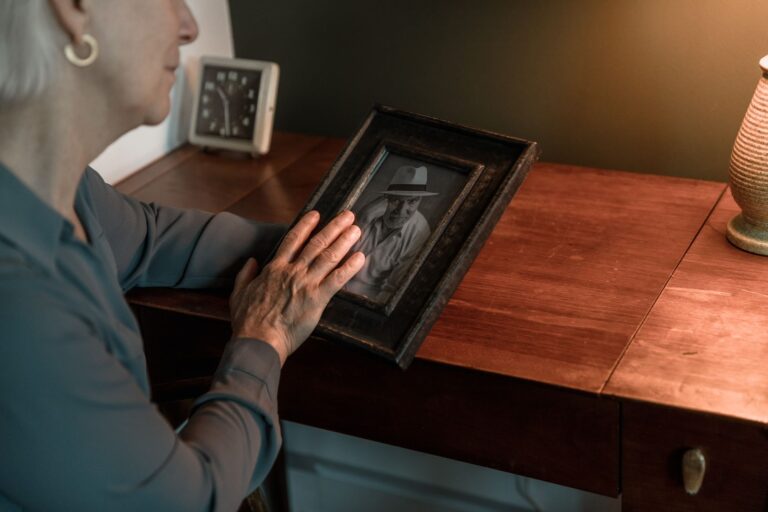
Old voicemails can mean everything because they preserve a loved one's familiar voice when dementia changes how that person communicates. Their value is deeply personal, but they do not preserve identity, reverse dementia, or provide a proven treatment. Dementia is cognitive and behavioral decline severe enough to disrupt daily life; Alzheimer's disease is its most common cause in older adults. A saved message can offer comfort, prompt memories, or help relatives feel connected to the person behind the illness.
Medical information disclaimer: This article is for general educational purposes only and does not provide medical advice, diagnosis, or treatment. Always consult a physician or other qualified health professional about symptoms, medications, tests, or treatment decisions.
Table of Contents
- Why can a familiar voice matter so much?
- Can recordings help a person with dementia?
- How should families replay a voicemail?
- What should families save—and what should they avoid assuming?
Why can a familiar voice matter so much?
Dementia can change word-finding, comprehension, attention, organization, and clear speech. These changes may make everyday conversation difficult even when affection and family bonds remain important. A voicemail captures more than words.
It may preserve a laugh, nickname, accent, family story, or ordinary reminder delivered in the person's own rhythm. That small detail can become precious when spontaneous conversation changes. recordings may also help relatives remember the person before severe communication problems developed. The National Institute on Aging's communication guidance explains the communication changes families may encounter and offers practical ways to adjust.
Can recordings help a person with dementia?
Possibly, but the evidence is limited. "Simulated presence therapy" is a structured intervention in which personalized family audio or video is played to a distressed person with dementia. It resembles replaying a voicemail, although simply saving or occasionally sharing a message is not the same intervention. A 2020 Cochrane review found only three nursing-home trials involving 144 participants.
Results for behavior were mixed, the evidence was judged very uncertain, and the studies did not measure quality of life or caregiver burden. Researchers could not conclude that the therapy works. A newer randomized nursing-home study involved 107 people with Alzheimer's disease. Those who received family audio had lower depression scores after the intervention, according to the 2025 Journal of Gerontological Nursing study. That single study does not prove that old voicemails benefit families or every person with dementia.
How should families replay a voicemail?
Treat the recording as a personal connection, not a treatment that must produce a particular response. A person might smile, speak, listen quietly, show no visible reaction, or want it turned off.
Use a simple, low-pressure approach: Do not test the person by asking, "Do you remember who this is?" A gentler introduction—"This is a message from your daughter, Maya"—removes the pressure to identify the speaker. If the recording repeatedly causes distress, set it aside rather than insisting that it should help.
- Choose a calm moment with few distractions.
- Explain whose voice is on the recording before playing it.
- Start with one short, clear message at a comfortable volume.
- Watch the person's expression, posture, and words.
- Stop if the person appears frightened, agitated, confused, or asks you to stop.
What should families save—and what should they avoid assuming?
Save messages that reveal the speaker's personality or relationship with the family. A birthday greeting, favorite story, affectionate sign-off, or mundane check-in may carry more meaning than a formal recording. Keep copies in more than one dependable location, label the speaker and approximate date, and note any context relatives may later forget.
Before widely sharing an intimate message, consider the speaker's privacy and whether other people named in it would expect distribution. Never use old voicemails to diagnose dementia or pinpoint when it began. Voice-based detection remains experimental: a Framingham proof-of-concept study analyzed recorded neuropsychological tests, not consumer voicemails. Changes noticed in a message should be discussed with a clinician in the context of daily functioning, not treated as a diagnosis.