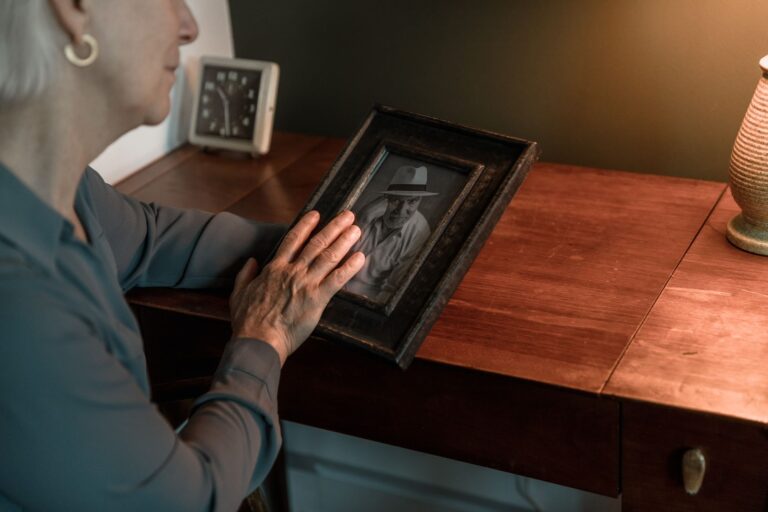
A final handwritten note can mean everything because it preserves a loved one's words, choices, and familiar hand as dementia makes communication harder. For a family, the page may become both a message and a tangible record of connection at a particular moment.
Dementia is cognitive loss severe enough to disrupt daily life. It can affect speech, reading, writing, and the ability to express thoughts, according to the National Institute on Aging's dementia overview. A note's importance comes from the relationship behind it, not from its length or neatness.
Medical information disclaimer: This article is for general educational purposes only and does not provide medical advice, diagnosis, or treatment. Always consult a physician or other qualified health professional about symptoms, medications, tests, or treatment decisions.
Table of Contents
- What can a handwritten page preserve?
- Why might writing help when speech becomes difficult?
- Can anyone know which note will be the last?
- How can families invite writing without creating pressure?
- How should a meaningful note be preserved?
What can a handwritten page preserve?
A handwritten page carries two kinds of information. Its words may express affection, a preference, a memory, or an everyday request. Its spelling, spacing, signature, and corrections also preserve how the person communicated at that moment.
The note does not need to be a formal farewell. A signed card, labeled photograph, household reminder, or brief "I love you" may later feel important because the person chose and formed the words. Evidence cannot measure what one page will mean to a particular family. A randomized study found that expressive writing improved meaning-making among dementia caregivers, but it studied caregivers doing the writing—not receiving or preserving a loved one's note, as the University of Iowa researchers reported.
Why might writing help when speech becomes difficult?
Conversation requires a person to hear, interpret, respond, and keep pace. Writing can slow that exchange and leave the message visible. The Alzheimer's Association says written notes may help when spoken words become confusing, particularly during moderate Alzheimer's disease, in its communication guidance for families. Writing ability can still change substantially.
A 2023 systematic review of 91 studies found Alzheimer's-related difficulties across motor and cognitive aspects of handwriting. Text showed especially clear impairment, while signatures tended to remain more preserved, according to the review in the Journal of Alzheimer's Disease. That difference helps explain why someone might sign a card after composing a long letter has become difficult. It does not mean every person follows the same pattern.
Can anyone know which note will be the last?
No one can reliably identify a "final" note in advance. Communication changes gradually and differently for each person. Moderate disease may last for years, while later communication may depend more on gestures, facial expressions, and other nonverbal signals.
The handwriting review also found conflicting results for several measures and called for more research. Handwriting changes cannot diagnose dementia on their own, establish a disease stage, or predict when someone will stop writing. Families often recognize a last note only in hindsight. Calling it "final" describes its place in the family's history, not a medically identifiable event.
How can families invite writing without creating pressure?
Treat writing as an available way to communicate, not as a test. Offer enough support to make the task easier while leaving the person free to participate, change methods, or stop.
Pay attention to what the person appears comfortable doing. A dictated message, typed sentence, drawing, signature, or mark may serve the same immediate purpose: helping that person communicate in an accessible way.
- Keep plain paper and an easy-to-hold pen nearby.
- Ask for one short message instead of a full letter.
- Offer simple choices, such as signing a card or labeling a photograph.
- Accept spelling mistakes, crossed-out words, and unfinished sentences.
- Avoid repeated requests to produce a "better" or more legible version.
How should a meaningful note be preserved?
Preserve the context as well as the paper. A short factual record can prevent later uncertainty without changing the original.
Do not treat changes in handwriting as proof of a diagnosis, a timetable, or the meaning of unclear words. If a note could affect an important family decision, confirm the message through the person's other familiar communication methods whenever possible.
- Photograph or scan both sides of the page.
- Record the approximate date and circumstances separately.
- Keep the original flat, dry, and protected from repeated handling.
- Save copies in more than one location.
- Identify any assistance given, such as spelling a word aloud or holding the paper steady.