Iran war sits at the center of this dementia and brain health question.
The Iran war, which began on February 28, 2026, has sent natural gas prices in Europe soaring to levels not seen in years. Since the conflict started, natural gas prices have doubled, with the Dutch TTF benchmark—Europe’s key price indicator—reaching over €60 per megawatt-hour in mid-March, and hitting peaks near €70/MWh on March 9. This surge translates directly to higher heating bills, electricity costs, and expenses for goods and services across the continent.
The conflict’s impact extends beyond immediate price spikes; it has exposed Europe’s vulnerability to supply disruptions, challenged winter energy planning, and created economic ripple effects that will likely persist regardless of how quickly the conflict resolves. Europe’s energy crisis stems from two critical vulnerabilities: disruptions to oil passing through the Strait of Hormuz, and direct attacks on the world’s largest liquefied natural gas facilities in Qatar. This article examines how a regional conflict has transformed into a global energy emergency, why Europe is particularly exposed, and what the outlook holds for households and economies relying on natural gas for heating, power generation, and industry.
Table of Contents
- How Has the Iran War Directly Affected Natural Gas Prices in Europe?
- What’s Happening at the Strait of Hormuz and Why Does It Matter?
- The Qatar LNG Attack and Its Global Impact
- Europe’s Vulnerable Gas Storage Situation
- Market Volatility and Economic Consequences
- What’s Next? Outlook and Potential De-Escalation
- Broader Implications for Energy Security and Winter Preparedness
- Conclusion
How Has the Iran War Directly Affected Natural Gas Prices in Europe?
European natural gas prices have experienced unprecedented volatility since February 28, 2026. The most dramatic spike occurred on March 19, when Iran attacked Qatar’s Ras Laffan Industrial City complex—the world’s largest LNG production facility. Within days, benchmark futures jumped 35%, and prices climbed further to nearly €70/MWh. To put this in perspective, these levels represent roughly a 60% increase from pre-conflict prices just weeks earlier. For comparison, when Russia invaded Ukraine in 2022, European energy markets faced similar shocks, but many analysts believe the current crisis is more severe because it directly threatens liquefied natural gas supplies, whereas the Ukraine conflict primarily threatened pipeline gas from Russia. The price increase reflects two distinct mechanisms.
First, the immediate perception of supply risk—whenever a major facility is attacked, markets assume supplies will be cut off. Second, the actual damage: Qatar’s national oil company, QatarEnergy, declared force majeure (a legal acknowledgment that it cannot fulfill its commitments) just two days after the strike. This wasn’t a temporary closure for inspection; it was a declaration that damage was serious enough to suspend shipments. Qatar supplies approximately 20% of the world’s LNG, making this not merely a European problem but a global energy emergency. Petrol and diesel prices have also climbed sharply as a consequence. By mid-March 2026, European petrol prices had risen 15% and diesel prices 26% from earlier levels. These increases, driven by the broader energy crisis and disruptions to oil supplies, compound the pain for households and businesses already struggling with elevated energy costs.

What’s Happening at the Strait of Hormuz and Why Does It Matter?
The strait of Hormuz is a narrow waterway between Iran and Oman through which roughly 20 million barrels of oil and petroleum products pass daily—approximately 20% of global oil supplies. When conflict erupts in the region, this chokepoint becomes a flashpoint for energy markets. Tankers transiting the strait face increased insurance costs, delays, and perceived risk, even if vessels aren’t directly attacked. Approximately 20% of global LNG trade also passes through or near this region, meaning Qatar’s exports—critical to Europe, Asia, and other markets—must navigate waters now considered unstable. The disruption to the Strait of Hormuz creates a compounding problem. Even if physical damage to shipping is minimal, the uncertainty drives markets higher.
Traders and energy companies, unable to predict whether supplies will reach their destinations on schedule, factor in higher risk premiums. This amplifies price increases beyond what actual physical supply losses would justify. However, if conflict remains contained to specific facilities and doesn’t escalate to widespread attacks on shipping, the Strait itself may remain passable—but the psychological impact on energy traders is nearly as powerful as physical disruption. Europe’s dependence on LNG from the Middle East and Africa makes it particularly exposed to these disruptions. Unlike the US or Russia, which have domestic natural gas production, Europe must import most of its LNG. This dependency, which seemed manageable in recent years, has now become a strategic vulnerability. Markets are pricing in the assumption that supplies will remain constrained, potentially for months or longer.
The Qatar LNG Attack and Its Global Impact
On March 19, 2026, Iran targeted Qatar’s Ras Laffan Industrial City, where the vast majority of Qatar’s LNG production occurs. This facility is not just important to Europe—it’s one of the few truly global suppliers. Qatar Energy, the state-owned company operating the facility, supplies customers across Europe, Asia, and beyond. When the company declared force majeure, it essentially told every customer worldwide that it could not guarantee shipments. Japan, south Korea, India, and other Asian economies that depend on Qatari LNG faced the same shock as Europe. The timing made the crisis worse.
March is when energy markets shift focus to summer demand, and LNG prices are typically lower because heating demand drops. However, the attack triggered fears that the facility would remain offline for extended periods, potentially into winter—when European and Asian demand for heating gas spikes dramatically. If the Ras Laffan complex remains damaged through fall 2026, Europe’s ability to refill gas storage before cold weather arrives is severely compromised. This creates a two-layer crisis: immediate price spikes now, and potential shortages later if the facility’s recovery is slow. For context, Qatar’s LNG production represents about 20% of global supplies. No other single facility on Earth is this critical to the world’s energy security. The destruction of comparable infrastructure in any other sector—a major oil refinery, a semiconductor fabrication plant, a major port—would trigger similar global crises.
Europe’s Vulnerable Gas Storage Situation
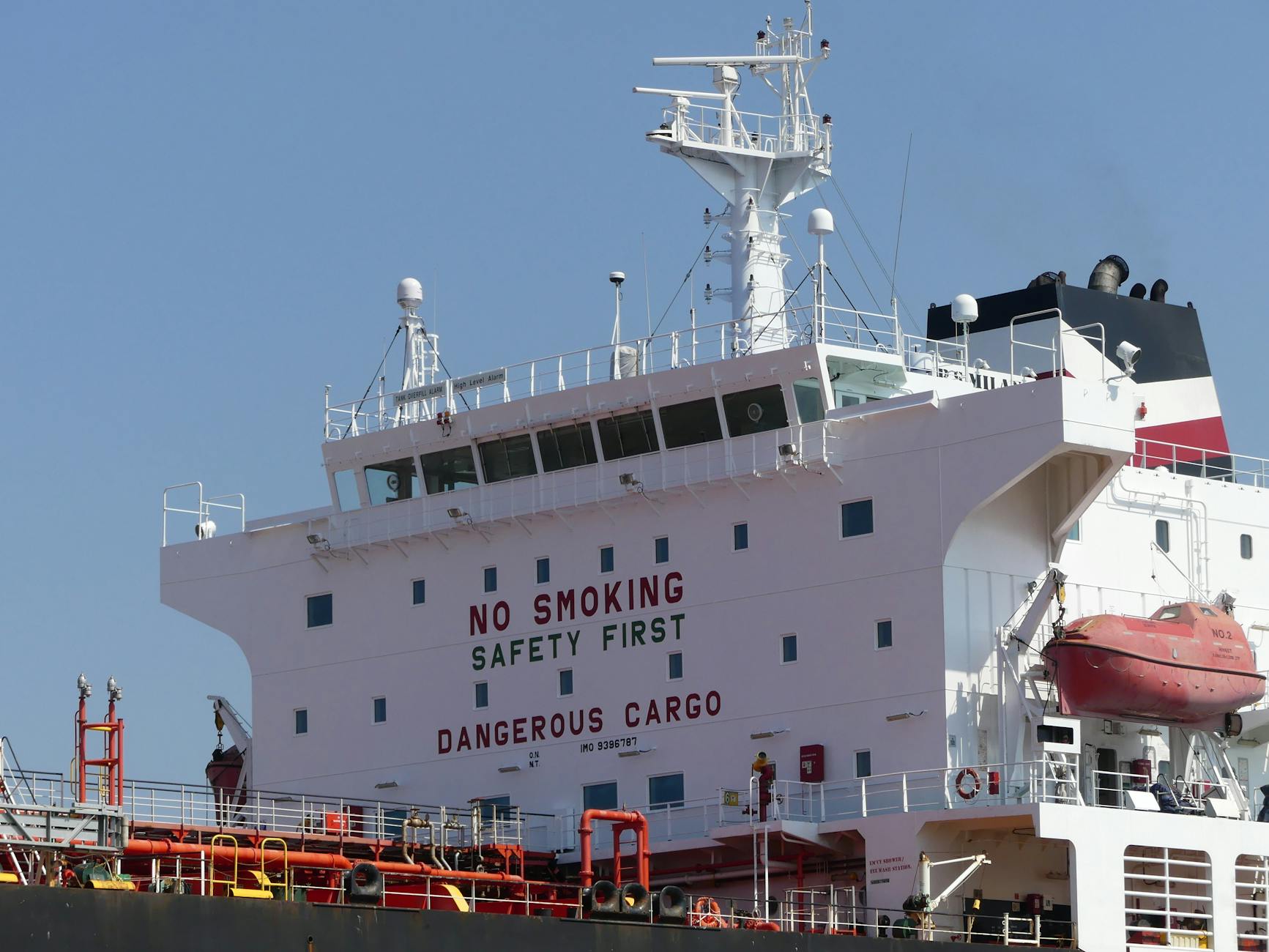
Europe’s natural gas storage tanks tell a stark story. At the end of February 2026, just as the conflict began, European gas storage held 46 billion cubic metres. Compare that to 60 billion cubic metres at the same time in 2025, and 77 billion cubic metres in 2024. Storage levels have been declining year over year, and by late March 2026, storage had fallen below 30% capacity—a five-year low. This means Europe is entering the critical spring and summer months when it must refill these storage tanks ahead of winter heating demand, but with global LNG supplies disrupted and prices at crisis levels. The math is unforgiving. Europe typically requires storage of 80-90 billion cubic metres to safely meet demand throughout a winter without supply shocks.
At the current trajectory, even if the conflict ended today and Qatar’s facility came back online within weeks, Europe would struggle to reach safe storage levels by November. Every month of continued supply disruption makes the winter outlook more precarious. However, if energy consumption patterns shift—if businesses reduce industrial gas use, if households conserve more aggressively—the required storage levels could theoretically be lower. But this isn’t a scenario Europe wants to count on. The storage crisis is also a financial crisis. Filling storage at €60-70 per megawatt-hour is vastly more expensive than the €20-30 per megawatt-hour prices many European countries paid in late 2023. Meeting the same storage targets will cost billions of euros more, a burden that governments and energy companies will have to absorb.
Market Volatility and Economic Consequences
Energy markets have proven volatile throughout this crisis, but a modest sign of hope emerged on March 23, 2026, when prices declined up to 9.5% after U.S. President Trump signaled potential de-escalation in the conflict. This sudden drop illustrates how dependent energy markets are on geopolitical perception. A single diplomatic signal triggered the largest single-day price decline since the conflict began. Nevertheless, prices remained far above pre-conflict levels, and a return to earlier stability would require sustained peace and substantial progress in repairing damaged infrastructure. The broader economic consequence of sustained high energy prices extends beyond utility bills. European manufacturers using natural gas as a raw material—fertilizer plants, chemical producers, steel makers—face sharply higher production costs.
Some have already signaled they may reduce output or relocate production. Electricity generators, which often use natural gas to produce power, are passing along higher costs to consumers in the form of increased electricity bills. For households, the combined effect of higher gas, electricity, and fuel costs creates significant strain, particularly for lower-income families already stretched thin by previous years of inflation. One critical limitation to remember: energy price shocks, while painful in the short term, often drive innovation and behavioral change. High prices incentivize investment in renewable energy, efficiency improvements, and alternative fuel sources. Europe’s renewable energy capacity has grown substantially; however, the transition isn’t instant. For the next 12-24 months, Europe will likely depend on either resolution of the conflict or on conserving its way through potential winter shortages.
What’s Next? Outlook and Potential De-Escalation
The March 23 price decline following Trump’s de-escalation signal provides a template for how this crisis might resolve. If Iran and the regional powers engaged in this conflict can negotiate a ceasefire, and if damage assessments show that Qatar’s LNG facility can be repaired within weeks rather than months, energy prices could decline substantially. Some analysts believe that even a credible announcement of damage repair timelines could trigger significant price drops, because much of the current pricing reflects worst-case assumptions about facility downtime.
However, even if the conflict ends tomorrow, Europe faces a structural challenge this summer: refilling storage tanks to safe winter levels at elevated prices. This is achievable but expensive and will require discipline in avoiding demand spikes during the refilling period. Governments and energy companies are increasingly focused on maximizing LNG imports from sources unaffected by the conflict—the U.S., Australia, and other non-Middle Eastern suppliers—though these alternatives have higher transportation costs and may already have long-term contracts that limit available supply.
Broader Implications for Energy Security and Winter Preparedness
The Iran conflict has exposed a fundamental truth: Europe’s energy security depends on global stability and the integrity of a handful of critical facilities. The concentration of LNG production in Qatar, combined with Europe’s limited domestic gas production and storage capacity, creates structural vulnerability. This crisis will likely accelerate European investments in liquefied natural gas infrastructure expansion, renewable energy deployment, and energy efficiency programs.
For the immediate winter ahead (late 2026 and into early 2027), the EU has already urged member states to begin actively storing winter gas and to prepare contingency plans. This messaging, once routine, now carries urgency. Households in Europe should expect elevated heating and energy bills throughout the heating season, unless and until the conflict resolves and supply chains stabilize. The experience of the past month has fundamentally altered long-term European energy planning and geopolitical calculations about the risks of depending on distant suppliers.
Conclusion
The Iran war has delivered a sharp reminder that global energy markets remain vulnerable to regional conflicts and infrastructure attacks. Natural gas prices in Europe have doubled since February 28, 2026, driven by disruptions to the Strait of Hormuz and—most critically—the attack on Qatar’s Ras Laffan LNG facility, which supplies 20% of the world’s liquefied natural gas. This surge has exposed Europe’s weak position: declining gas storage, limited domestic production, and heavy reliance on global LNG supplies that now face geopolitical risk.
For households and businesses, the outlook depends on two factors: how quickly the conflict resolves, and how effectively Europe manages demand and refills storage ahead of winter. While a diplomatic breakthrough on March 23 offered a glimpse of a potential off-ramp, the crisis is far from over. Energy costs will likely remain elevated through the refilling season and into winter, making this an extended challenge rather than a crisis measured in weeks. Governments, energy companies, and households should prepare for sustained pressure on budgets while remaining attentive to any signals that the conflict might be moving toward resolution.
You Might Also Like
- What Is the Impact of the Iran War on the S&P 500 and Nasdaq
- Why Is the Stock Market Ignoring the Iran War and Continuing to Rise
- Why Is the Iran War Being Fought Mostly From the Air With Almost No Ground Troops
For more, see CDC — Alzheimer’s and Dementia.