Iran war sits at the center of this dementia and brain health question.
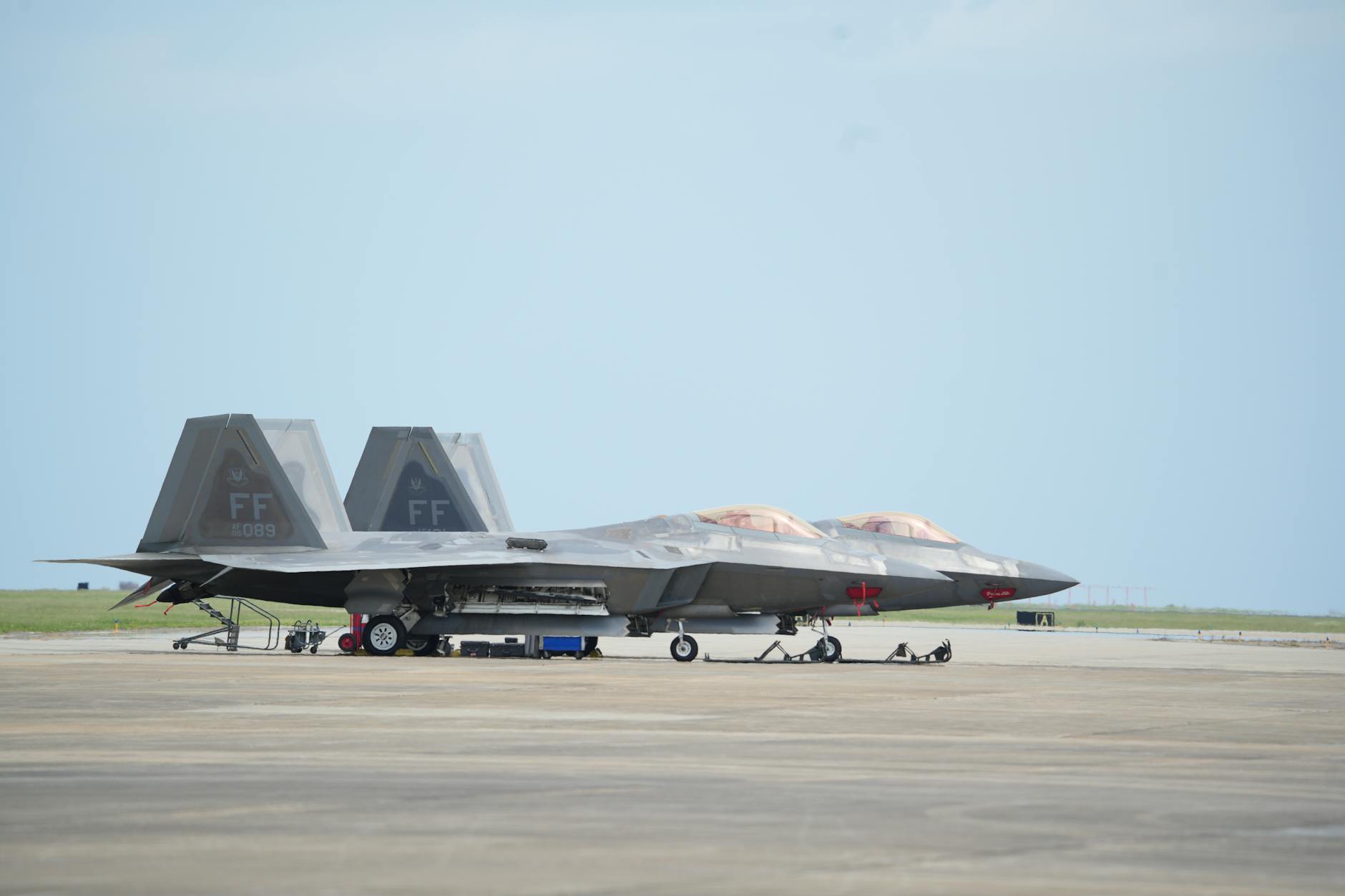
The Iran War is being fought predominantly from the air with minimal ground troops because both the United States and Israel have prioritized air campaigns to achieve their strategic objectives without the massive deployment of ground forces that would be required to occupy or conduct extended operations across Iranian territory. As of March 25, 2026—now in its fourth week since the February 28 airstrikes that killed Supreme Leader Ali Khamenei—the military strategy has focused on suppressing Iranian air defenses, disabling command and control centers, and targeting the nation’s ability to launch ballistic missiles and drones. Only about 3,500 U.S. military personnel (2,500 Marines and approximately 1,000 Army troops from the 82nd Airborne) have been deployed to the Middle East for contingency purposes, far below what a sustained ground campaign would require.
The reasoning behind this air-centric approach reflects both practical military doctrine and political calculation. Ground troops would only be deployed if airstrikes, naval power, and diplomatic efforts prove insufficient to achieve the stated objectives. According to military analysts, establishing air superiority in the first hours of conflict is a prerequisite for the rest of any air campaign, including attacks on command centers and supply routes. Meanwhile, the air campaign has already inflicted significant damage: over 82,000 civilian structures have been damaged or destroyed according to the Iranian Red Crescent Society. This article explains why air power has become the dominant tool in this conflict, what the strategy actually entails, and what might trigger a shift toward ground operations.
Table of Contents
- What Does an Air-Focused Military Campaign Actually Target?
- Why Ground Troops Aren’t Being Used to Occupy Territory
- What Happens When Air Power Reaches Its Limits?
- How Military Strategy Balances Risk and Objectives
- Why Initial Air Superiority Determines Everything That Follows
- The Role of Naval Power and Diplomacy Alongside Air Strikes
- What Would Trigger Ground Operations?
- Conclusion
What Does an Air-Focused Military Campaign Actually Target?
The first phase of the iran conflict concentrated on air defense suppression and disabling Iran’s ability to retaliate. Fighter jets and missiles struck radar systems, air defense batteries, and command and control centers—the infrastructure that allows a nation to coordinate its military response. Without degrading these systems first, any subsequent air campaign would face enormous losses. This sequencing is standard military doctrine: control the skies before executing deeper strikes.
The second phase, currently underway, targets Iran’s defense industrial base directly. The U.S. and Israel are systematically attacking missile production facilities, weapons manufacturing plants, and military-industrial complexes. The Times of Israel reported that the IDF is planning three more weeks of operations specifically focused on degrading Iran’s defense industry. This approach aims to cripple Iran’s ability to manufacture the weapons systems it has historically relied upon for deterrence—particularly ballistic missiles and drones. However, if Iran’s military infrastructure survives this phase intact or if new manufacturing facilities come online in neutral or allied nations, the campaign’s long-term effectiveness could be severely compromised.

Why Ground Troops Aren’t Being Used to Occupy Territory
Ground invasions require a fundamentally different logistical and personnel commitment than air campaigns. To occupy Iranian territory, the U.S. would need to deploy hundreds of thousands of troops, establish supply lines across hostile terrain, and prepare for urban warfare in a country of roughly 90 million people. The Vietnam and Iraq Wars demonstrated the enormous human and financial costs of extended ground campaigns. Iran’s terrain—mountainous in many regions with urban population centers—would make ground operations particularly difficult and costly.
Political constraints also matter significantly. Trump administration officials have publicly stated they are not putting troops into Iran, though Trump has “frequently changed his position” on military matters according to reporting. This hesitation reflects both public war fatigue in the U.S. and the political cost of visible American casualties. Conversely, Israeli Prime Minister Netanyahu suggested a ground component “will eventually be necessary” because “you can’t do it only from the air.” This disagreement between the two main allied powers hints at potential strategic tensions if the air campaign alone fails to neutralize Iran’s military capabilities. If Iran’s nuclear facilities or advanced weapons production continues despite airstrikes, pressure for ground operations could intensify.
What Happens When Air Power Reaches Its Limits?
Air campaigns excel at destroying visible, stationary targets like military bases, weapons factories, and command centers. They struggle against dispersed, hidden, or mobile targets—particularly if an adversary has prepared for air attacks by dispersing forces, using tunnels, or moving critical equipment to civilian areas. Iran has decades of experience preparing for aerial bombardment, having faced Iraqi air attacks during the 1980s Iran-Iraq War. The country has invested heavily in air defense systems, underground facilities, and dispersed military command structures specifically designed to survive air campaigns.
This limitation becomes critical when considering Iran’s nuclear program, which reportedly extends underground and across multiple sites. While air power can damage visible facilities, completely eliminating a determined adversary’s nuclear capability through airstrikes alone is extremely difficult. Historical examples like the Israeli strike on Iraq’s Osirak reactor in 1981 showed that air power can set back a program significantly—but sustained containment often requires sustained intelligence gathering, international pressure, and sometimes boots on the ground to verify compliance. If the Iran conflict’s objectives include permanent nuclear disarmament, air power alone may prove insufficient no matter how many weeks of strikes continue.
How Military Strategy Balances Risk and Objectives
The decision to rely on air power reflects a calculus about acceptable losses and achievable goals. Deploying 3,500 additional personnel is primarily a contingency measure—keeping troops ready to respond if the air campaign destabilizes the region in unexpected ways or if rapid humanitarian intervention becomes necessary. However, this deployment level is far below what would be required for sustained ground operations. A full-scale invasion of Iran would require 300,000 to 500,000 troops based on military planning standards, plus massive logistical support, causing enormous strain on U.S. military readiness elsewhere globally.
The tradeoff is clear: air campaigns can achieve certain objectives (destroying weapons facilities, degrading air defenses, demonstrating military capability) without the human and financial costs of ground wars. However, they cannot achieve objectives that require holding territory, verifying compliance through on-the-ground inspections, or eliminating every element of a distributed military force. As of March 2026, four weeks into the conflict, neither the U.S. nor Israel has publicly committed to ground operations, suggesting their stated objectives remain within what air power alone can achieve. If objectives shift—such as demands for unconditional surrender or complete nuclear disarmament—that calculation would change.
Why Initial Air Superiority Determines Everything That Follows
Military strategists emphasize that “establishing air superiority in the first hours is a precondition for the rest of the air campaign.” This principle has held since World War II but became especially critical after the rise of sophisticated air defense systems. If Iran’s air defenses had successfully shot down numerous coalition aircraft in the opening hours, the entire campaign would have become far more costly and difficult to sustain. Instead, the initial strikes appear to have achieved significant air defense suppression, allowing subsequent waves of aircraft to operate with reduced threat. However, this advantage degrades over time if Iran can repair, relocate, or reactivate air defense systems.
Iran’s military has survived decades of international isolation and sanctions by developing unconventional tactics, including heavy reliance on asymmetric warfare through proxy forces, cyber operations, and low-cost drone swarms. A limitation of the current air campaign is that it targets Iran’s formal military infrastructure but may be less effective against distributed, decentralized networks of proxy militias and terrorist organizations that Iran has cultivated across the Middle East. If these non-state actors intensify attacks on U.S. interests in Iraq, Syria, or the Gulf, the air campaign’s apparent success in controlling Iranian airspace may prove less relevant to regional stability.

The Role of Naval Power and Diplomacy Alongside Air Strikes
The air campaign does not operate in isolation. U.S. naval forces in the Persian Gulf and Arabian Sea provide additional strike capability, air defense systems to protect allied shipping, and logistical support for air operations. Israel’s military also contributes air power and intelligence gathering. Beyond kinetic operations, diplomacy continues—though at a reduced level given the intensity of military operations.
The strategy assumes that some combination of air strikes, naval presence, economic pressure, and eventual negotiations can achieve the stated objectives without ground invasion. This multipronged approach has historical precedent. During the NATO air campaign against Yugoslavia in 1999, air power combined with diplomatic pressure eventually led to Serbian withdrawal from Kosovo without a major ground invasion. However, that campaign lasted 78 days with continuous bombing and operated against a much smaller, weaker military. Iran’s population, territory, and military capability are vastly larger, making analogies to past conflicts imperfect at best.
What Would Trigger Ground Operations?
Netanyahu’s comment that “you can’t do it only from the air” and Trump’s contrasting position that he’s “not putting troops” in Iran reflect genuine uncertainty about the campaign’s trajectory. Ground operations would likely be triggered by one of several scenarios: Iran’s military capacity surviving the air campaign largely intact, Iranian retaliatory strikes causing substantial damage to U.S. or Israeli assets, or a shift in political objectives that requires territorial control or on-the-ground verification of compliance. Currently, neither condition appears to be driving decision-making, but the deployment of Marines and 82nd Airborne units signals that contingency planning for ground operations is actively underway.
The conflict’s evolution over the coming weeks will likely determine whether air power alone proves sufficient. If Iran’s military can be degraded below a certain threshold, air dominance may be maintained indefinitely through naval presence and periodic strikes. Conversely, if Iran’s forces regenerate faster than they can be destroyed from the air, or if regional stability deteriorates due to proxy attacks, pressure for ground operations could intensify despite Trump’s stated opposition. At present, the strategy appears to be: air power first, ground troops only if air power fails.
Conclusion
The Iran War is being fought primarily from the air because air campaigns offer a way to degrade an adversary’s military capability without the enormous personnel, financial, and political costs of ground invasion. The initial air strikes achieved their primary objectives of suppressing air defenses and disabling command structures, and the second phase is systematically targeting Iran’s defense industrial base. However, air power has inherent limitations—it cannot easily eliminate dispersed, hidden, or mobile targets, cannot provide the sustained occupation needed for some objectives, and cannot verify compliance with agreements without on-the-ground presence.
The deployment of 3,500 additional U.S. personnel represents contingency planning rather than commitment to ground operations, though this posture could change if circumstances shift. Netanyahu’s suggestion that ground forces will “eventually” be necessary suggests Israeli skepticism about air power’s sufficiency, while Trump’s stated opposition to ground troops reflects American war fatigue and political constraints. The coming weeks will reveal whether air superiority and sustained bombing can achieve the campaign’s objectives, or whether the conflict evolves toward the larger ground commitment that ground operations would require.
You Might Also Like
- How Did the U.S. Economy Survive a War With Iran Without Going Into Recession
- Why Is the Stock Market Ignoring the Iran War and Continuing to Rise
- Why Is the Iran War Focused Only on Nuclear Weapons and Not on Regime Change
For more, see Alzheimer’s Association — clinical trials.