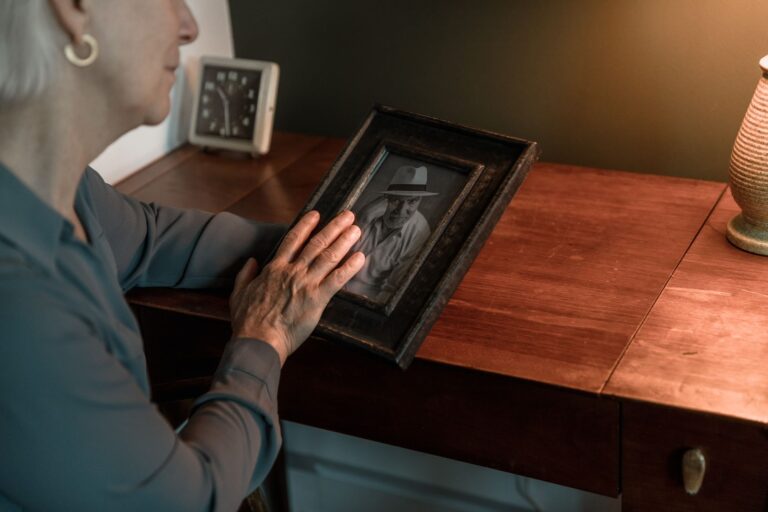
An old voicemail can comfort a family by preserving a loved one's familiar voice, but that comfort is personal—not a proven medical effect. When played to someone with dementia, it resembles simulated presence therapy (SPT), which uses personalized family recordings during distress or agitation. Dementia describes memory, language, and thinking problems severe enough to disrupt daily life; Alzheimer's disease is its most common cause, according to the CDC's communication guide. A recording cannot treat the underlying disease, but it may offer a moment of familiarity.
Medical information disclaimer: This article is for general educational purposes only and does not provide medical advice, diagnosis, or treatment. Always consult a physician or other qualified health professional about symptoms, medications, tests, or treatment decisions.
Table of Contents
- What can an old voicemail provide?
- What does the evidence show?
- Could the recording make distress worse?
- How can families try a recording carefully?
- When a voicemail is not enough
What can an old voicemail provide?
For relatives, a saved message can preserve details that memory cannot: a laugh, a favorite expression, or the way someone once said a name. Families do not need clinical evidence to decide that such a recording has personal meaning. Playing the message to the person with dementia is a different use.
It becomes a supportive intervention intended to ease distress, not merely a keepsake for relatives. The content matters as much as the voice. A warm greeting or familiar story may be easier to receive than a message involving conflict, confusing plans, or a person the listener no longer recognizes.
What does the evidence show?
The strongest review found only three varied nursing-home trials involving 144 participants, mostly women over 80 with severe dementia. Results were mixed, and the evidence was rated "very low" quality in the Cochrane review of simulated presence therapy. Those trials did not measure caregiver burden, quality of life, daily activities, or participant dropouts.
They therefore cannot establish that recordings comfort families or improve everyday functioning. A later trial randomized 85 patients to routine nursing or routine nursing plus SPT. It reported lower agitation, anxiety, and caregiver-burden scores with SPT, but one small study does not settle the question, as shown in the 2024 PubMed record.
Could the recording make distress worse?
Yes. Older federal evidence reviews found inconsistent benefits and reported increased agitation or disruptive behavior in some participants. A once-beloved voice can become confusing, especially if the listener cannot understand why that person is absent.
Judge the response you can observe rather than assuming familiarity must feel reassuring. Possible warning signs include a tense expression, repeated searching, calling out, crying, anger, or greater restlessness. Stop the recording if distress appears. Do not replay it repeatedly in hopes that the person will eventually understand or respond differently.
How can families try a recording carefully?
Keep the first attempt brief and easy to stop. If possible, involve someone who knows the person's usual behavior and can notice subtle changes.
A helpful response on one day does not guarantee the same response later. Dementia symptoms and the meaning of a recording can change, so each playback requires fresh observation.
- Choose a calm message without complicated instructions or upsetting news.
- Preserve the original file and test a duplicate.
- Use a comfortable volume in a quiet setting.
- Explain simply whose voice will be heard, without testing the person's memory.
- Watch facial expression, movement, and speech during and after playback.
When a voicemail is not enough
A recording is a non-drug supportive measure, not a treatment for dementia or a substitute for medical assessment. New, severe, or rapidly worsening agitation may require a clinician's evaluation rather than another attempt at reassurance.
If anyone faces immediate danger, prioritize safety and emergency assistance. The National Institute on Aging provides practical direction on evaluation, agitation, aggression, and emergency precautions in its guidance for families and caregivers.