Reading a saved love letter together during Alzheimer's can create moments of genuine connection and emotional resonance even as the person's memory fades. This works because emotional memory and long-term autobiographical memories persist longer in Alzheimer's disease than short-term recall, allowing patients to access and respond to deeply meaningful personal content like love letters, particularly in early-to-moderate stages of the disease. For spouse-caregivers managing the progressive loss of shared history and communication, reading a love letter together offers more than nostalgia—it activates preserved brain regions and reinforces relational bonds during a time when those connections are increasingly tested.
Medical information disclaimer: This article is for general educational purposes only and does not provide medical advice, diagnosis, or treatment. Always consult a physician or other qualified health professional about symptoms, medications, tests, or treatment decisions.
Table of Contents
- Why Love Letters Can Still Reach Someone with Alzheimer's
- What Happens When You Read It Together
- The Evidence for Reminiscence Therapy
- Realistic Expectations and Limitations
- Practical Steps for Reading Together
- Frequently Asked Questions
Why Love Letters Can Still Reach Someone with Alzheimer's
Long-term autobiographical memories—such as significant relationships and emotionally charged past events—persist longer than recent memory because Alzheimer's initially affects short-term memory regions while older memories are stored in different brain areas. A love letter accesses these preserved layers of memory, not the recent events the person has begun to forget.
Critically, emotional memory remains intact in early-to-moderate Alzheimer's stages, enabling patients to retain and respond to emotionally significant content like love letters even as short-term recall deteriorates. Your spouse may not remember what happened yesterday, but the emotional resonance of your commitment to them—carried in the handwriting, tone, and content of a saved letter—can still land. Sensory and emotional cues from personal letters (handwriting, familiar language, emotional tone) can reactivate embedded memories and trigger positive affect even in moderate-to-advanced stages; emotional recognition often outlasts factual memory recall..
What Happens When You Read It Together
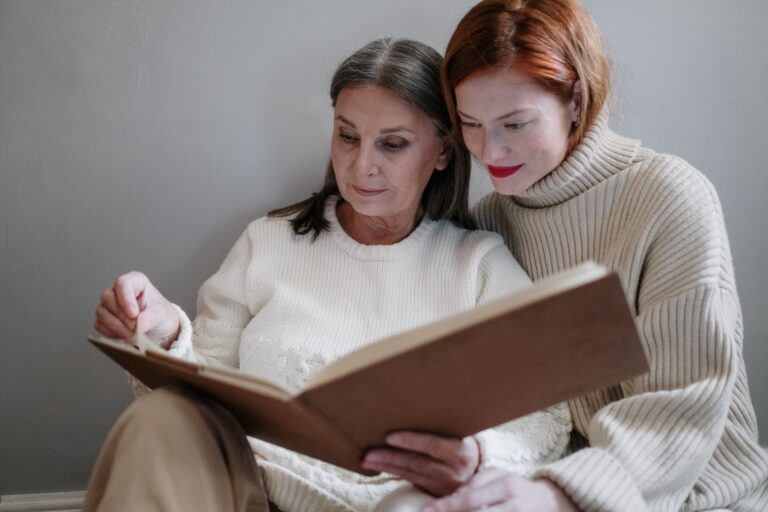
Reading a saved love letter together is not a one-way reminiscence—it becomes an interactive activity that strengthens the caregiver-patient connection. Shared nostalgic conversations—co-created between patient and caregiver around meaningful past experiences—improve mood, reduce behavioral symptoms, and reinforce continuity of identity more effectively than one-directional reminiscence; the interactive element strengthens relational bonds. Enhanced caregiver-patient emotional engagement and shared reminiscence activities correlate with improved quality of life measures for both patients and spouse-caregivers, who experience reduced burden through positive interactions despite overall caregiving stress. Additionally, nostalgia and personal meaningful objects reduce agitation, isolation, and anxiety while enhancing self-esteem and sense of identity in dementia care; positive emotional states during reminiscence strengthen caregiver-patient bonds and create moments of connection despite memory loss..
The Evidence for Reminiscence Therapy
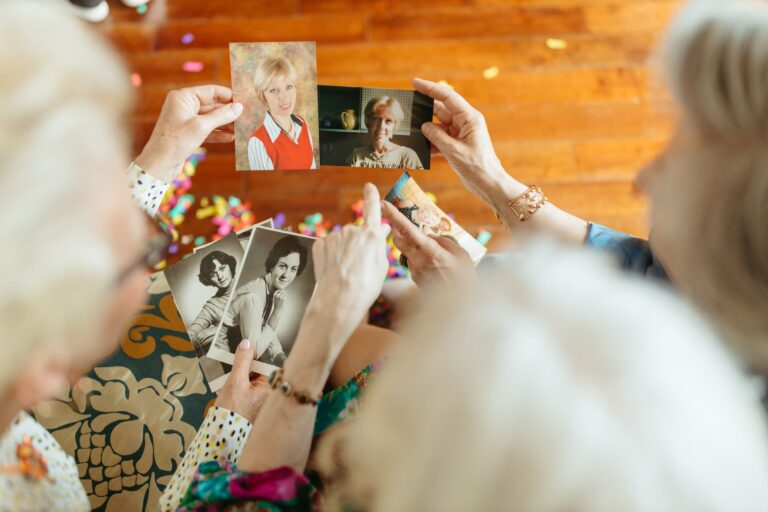
The structure of reading a letter together falls under reminiscence therapy, which has measurable research support. Reminiscence therapy—engaging patients with personal memorabilia and past memories—demonstrated measurable cognitive engagement and reduced depression and anxiety in dementia patients across 26 studies involving 2,766 participants, though cognitive score improvements were modest.
The modest gains in cognitive scores are important to note: this is not a treatment that reverses memory loss or slows disease progression, but rather a practice that improves mood and engagement during the time a person has left. Reading aloud activates frontal cortex regions involved in language, memory recall, and executive function, providing cognitive stimulation that helps maintain neural pathways in Alzheimer's patients; brain activation occurs even when comprehension is limited. The physical act of hearing your voice reading familiar words creates a form of shared presence, regardless of whether your spouse can recall the letter afterward.
Realistic Expectations and Limitations
Do not expect your spouse to remember reading the letter with you, or to retain its content after the moment passes. The benefit lives in the emotional experience during the reading, not in lasting memory formation. Some people respond with tears or visible emotion; others respond quietly or not at all.
Response varies based on disease stage, individual temperament, and how well the letter's content resonates with preserved emotional memory. Timing matters: read the letter during a window when your spouse is most alert, calm, and present—typically morning or mid-morning for many people. If your spouse becomes agitated, confused, or distressed, set the letter aside; the goal is connection, not forcing reminiscence. A single shared moment of genuine presence, even a brief one, is the realistic win here.
Practical Steps for Reading Together
.
- **Choose a quiet, comfortable setting** with minimal distractions.
- **Read in your own voice, slowly**, pausing to let emotion and meaning land.
- **Be open to silence or non-verbal response**—a squeeze of the hand counts.
- **If your spouse shows distress or confusion, stop without judgment** and try another time.
- **Read it more than once over time**—each reading is a fresh moment, not a repeat.
Frequently Asked Questions
Will this slow or reverse my spouse's memory loss?
No. Reminiscence therapy improves mood and cognitive engagement but does not slow disease progression or restore lost memory. The benefit is emotional connection during the moment, not lasting cognitive gain.
What if my spouse doesn't recognize the letter or forgets reading it afterward?
That is normal and expected. The value exists in the emotional experience while reading—the tone of your voice, the meaning in your presence—not in memory retention. Each reading is a new moment.
When should I stop doing this?
You can read a love letter at any disease stage, but response and engagement vary. In advanced stages, focus on tone and physical presence rather than comprehension. If the activity causes agitation, pause and consult your care team.