Singing can reach a parent with Alzheimer's when ordinary conversation no longer can. As Alzheimer's disease progressively destroys speech capacity, word-finding difficulty gives way to fragmented sentences and eventually near-total silence—yet singing ability remains remarkably preserved, even after spontaneous speech is lost. This gap exists because singing uses different brain pathways than spoken language, offering an alternative route to connection when the primary path is blocked.
For caregivers searching for ways to communicate with a parent who no longer responds to questions or conversation, singing is not a cure or a way to restore lost speech. It is a practical tool that can spark recognition, encourage two-way exchange, ease agitation, and—in some cases—temporarily improve memory function. The evidence shows that meaningful songs from a parent's past work better than generic music, and that singing together produces stronger benefits than singing alone.
Medical information disclaimer: This article is for general educational purposes only and does not provide medical advice, diagnosis, or treatment. Always consult a physician or other qualified health professional about symptoms, medications, tests, or treatment decisions.
Table of Contents
- How Singing Bypasses Speech Loss in Alzheimer's
- What Singing Can Actually Change
- Personalization Matters: Why Your Songs Work Better Than Generic Ones
- What Singing Will Not Do: The Reality of Temporary Gains
- Formal Programs and Where to Start
- Frequently Asked Questions
How Singing Bypasses Speech Loss in Alzheimer's
Singing familiar songs directly activates different neural pathways than spoken speech, enabling people with Alzheimer's to access language through melody when conventional verbal communication fails. This alternative route bypasses damaged speech centers. The result is striking: a parent who cannot answer "How are you today?" may sing an entire verse of a song from their youth, word-perfect and with emotion.
This does not mean the damage to speech is reversed. Rather, the musical and melodic structure of a song provides a scaffold that guides memory and vocalization along a path the disease has not yet destroyed. Rhythm and rhyme anchor language in a way that spoken words alone do not. The melody carries the words, and the motor memory of singing—built and reinforced over decades—remains intact even when the ability to construct new sentences crumbles.
What Singing Can Actually Change
The research identifies three distinct benefits. First, group singing significantly increased conversation and social communication among people with middle to late-stage Alzheimer's disease, with personally meaningful songs from participants' past eliciting memories and encouraging dialogue when unstructured conversation was limited. A parent may sing along, hum, make eye contact, or offer a word or phrase they had not spoken in weeks. This is communication—not the same as before, but real. Second, singing improved mood and reduced distress.
Music and singing reduced anxiety, depression symptoms, and agitation in dementia patients while improving caregiver relationships and reported quality of life. A parent who resists bathing or becomes upset during transitions may settle or cooperate more readily if singing fills the moment. The emotional benefit often lasted longer than cognitive improvements. Third, participants in active singing programs for 4–40 weeks scored significantly higher on memory and cognitive tests than non-participating peers with equivalent dementia severity. Even moderate-to-severe patients showed measurable gains—though this brings us to the critical caveat: these improvements were often temporary.
Personalization Matters: Why Your Songs Work Better Than Generic Ones
Not all music produces equal results. Personalized music—songs selected from an individual's biographical past—proved more effective than generic music for triggering autobiographical memory and slowing cognitive decline. A song your parent loved in 1985, or one they sang in their childhood, opens doors that a playlist of "dementia-friendly" songs does not.
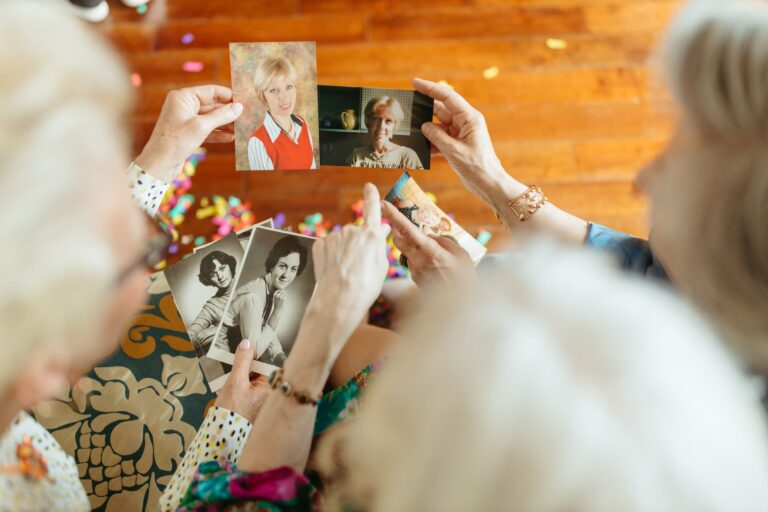
To use this finding in practice, gather songs tied to your parent's life. Ask: What did they sing in the car? What played at their wedding? What did they teach you? What music defined their youth? These songs carry autobiographical weight—they are woven into identity, not just pleasant sounds. Autobiographical memory recall improved after music exposure, becoming more emotionally specific and faster to retrieve than memories recalled in silence. That specificity—remembering not just a song but the moment attached to it—is what reconnects your parent to their own life even as language fails.
What Singing Will Not Do: The Reality of Temporary Gains
Before singing becomes a routine part of your caregiving, understand the boundary. Short-term cognitive improvements from singing often did not persist after interventions ended. While emotional and communication benefits remained, memory and cognition gains were typically temporary rather than disease-modifying. Your parent may score better on a memory test immediately after a singing session, but that gain does not slow or reverse the underlying disease.
This is not a reason to avoid singing. It is a reason to frame it correctly in your mind: singing is not treatment. It is a bridge—a moment of connection, a reduction in suffering, a way to reach someone when words alone cannot. The parent who improves in mood, engages more socially, or is less agitated for an afternoon has gained something real, even if a brain scan would not show it.
Formal Programs and Where to Start
You do not need to design singing interventions alone. The Alzheimer's Association and other dementia organizations offer formal singing programs specifically designed for people with early-to-moderate memory loss, providing supervised, socially supportive environments where singing's benefits are optimized. These programs pair you with trained facilitators, connect you with other caregivers, and build structure around something you can also do at home. Start by contacting your local Alzheimer's Association chapter. Ask about singing groups, music therapy referrals, or caregiver workshops on music and communication.
If formal programs are not accessible, begin at home with songs you and your parent share. Sing during transitions (getting dressed, meals), during routine moments when interaction typically stalls, or whenever you notice your parent seems present enough to engage. You need no training, no special equipment, and no musical skill. You need only a song and willingness to sing it again.
Frequently Asked Questions
Will singing teach my parent to speak again?
No. Singing does not reverse Alzheimer's-related speech loss or restore language. It is a way to communicate despite the loss and, in some cases, to temporarily improve memory and mood. The benefit is connection and reduced agitation, not recovered speech.
Does my parent have to participate actively, or can I just sing to them?
Both count. Singing together produces stronger benefits, but singing to a parent—even if they sit quietly—can still reduce agitation and improve their mood. Some parents will eventually join in or hum along as they become more familiar with the song.
How often should we sing together?
Research shows benefits from programs of 4 to 40 weeks of regular participation. Start with a few songs several times a week. Even brief, regular singing is more effective than occasional, longer sessions. If your parent enjoys it and becomes calmer, consistency matters more than duration.
What if my parent used to love music but seems indifferent now?
Indifference is common in late-stage Alzheimer's. Begin with highly autobiographical songs (ones tied to specific moments in their life) rather than general favorites. Sing from a close position, use eye contact, and allow time for response. Some parents will respond to familiar melodies even when they appear withdrawn.