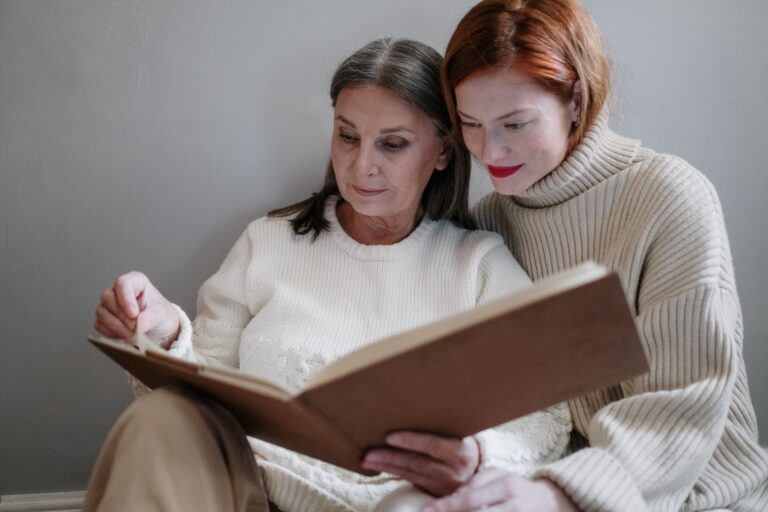
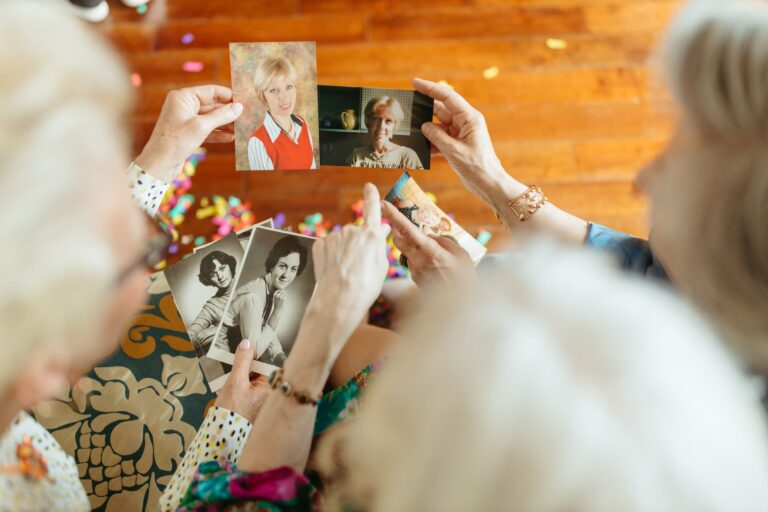
Looking through family albums with a loved one who has Alzheimer's can meaningfully improve mood, communication, and emotional connection—a benefit backed by clinical research showing that long-term memories from earlier life are typically preserved longer than the short-term memory loss that emerges first in the disease. This approach, called reminiscence therapy, works with how the brain changes rather than against it, making shared photo review a practical and evidence-based part of dementia care. The emotional and cognitive rewards are measurable. Research shows that family photo conversations don't just feel good; they can reduce stress, improve medication adherence, and decrease isolation during a progression that often leaves people feeling disconnected.
Medical information disclaimer: This article is for general educational purposes only and does not provide medical advice, diagnosis, or treatment. Always consult a physician or other qualified health professional about symptoms, medications, tests, or treatment decisions.
Table of Contents
- Why Family Photos Work When Other Memories Fade
- What Clinical Research Documents
- How to Structure Photo Sessions for Best Results
- When This Approach Has Limits
- Hidden Benefits Beyond Memory
- Frequently Asked Questions
Why Family Photos Work When Other Memories Fade
Alzheimer's doesn't erase your loved one's past uniformly. Short-term memory loss emerges first in Alzheimer's disease, while long-term memories from earlier life are typically preserved longer, making reminiscence therapy with family photos therapeutically viable during cognitive decline, according to the Alzheimer's Association. This creates an unexpected window of opportunity.
A person who struggles to recall what they had for breakfast may light up at a photo of a childhood home or wedding day. That difference isn't a glitch in the disease—it's the predictable way memory systems deteriorate. Family albums become a reliable touchpoint for connection when newer memories fade.
- —
What Clinical Research Documents
The benefits aren't anecdotal. A trial involving 225 patients with dementia receiving reminiscence therapy documented significant improvements in communication, depression, cognition, and positive mood outcomes compared to control groups, per research reviewed by the Elder Care Alliance.
In a separate study of 62 participants with Alzheimer's disease in residential facilities, reminiscence therapy sessions led to increased self-confidence and measurable decreases in reported loneliness. Photo reminiscence therapy can enhance social interaction and feelings of closeness between people with dementia and caregivers through emotional responses elicited by familiar images, according to a review in PMC. The effect isn't limited to the person with dementia—caregivers report deeper connection and a clearer sense of their loved one's inner life when photo-based conversations replace silence or frustration.
- —
How to Structure Photo Sessions for Best Results
Reminiscence therapy works better with structure. Research shows that reminiscence therapy is most clinically effective when conducted regularly in small groups for approximately 45 minutes over 8–12 weeks, with mild-to-moderate Alzheimer's patients showing the strongest positive outcomes, according to the Elder Care Alliance.
In practice, this means: Patience matters more than perfect conversations. Some visits will yield detailed stories; others will be quiet moments where a smile says everything.
- Choose a consistent time when your loved one is most alert
- Limit sessions to 45 minutes to avoid fatigue
- Use high-quality or printed photos (digital screens can cause confusion)
- Encourage speaking about the memories, but don't push if words don't come
- Plan for 8–12 weeks of regular sessions to see lasting benefit
When This Approach Has Limits
The effectiveness window narrows as disease progresses. Reminiscence therapy's benefits diminish in advanced Alzheimer's stages when memory retrieval becomes severely impaired, restricting the window of maximum therapeutic effectiveness to earlier disease progression, according to research consensus cited by the Elder Care Alliance. This is important context for caregivers.
If your loved one is in early or mild-to-moderate stages, photo reminiscence is well-timed and likely to yield visible benefit. In advanced stages, the approach may still offer comfort through tone and presence, but don't expect the documented cognitive gains. Starting early—when memory loss is noticeable but recent history is still accessible—captures the period when this intervention works best.
- —
Hidden Benefits Beyond Memory
Photo conversations unlock practical advantages that extend beyond emotional warmth. Photo-based reminiscence conversations between caregivers and patients improved medication compliance by approximately 50%, according to research cited by 2000 Paces—a shift that can profoundly affect treatment outcomes.
Stress reduction is measurable and real. During reminiscence therapy sessions, physiological measurements showed decreased salivary amylase levels, a biochemical marker of stress, per research in the Journal of Clinical Nursing. Both the person with Alzheimer's and the caregiver experience a genuine physiological shift toward calm when past joy becomes present connection.
- —
Frequently Asked Questions
What if my loved one doesn't remember who is in the photos?
Memory of identities matters less than emotional response. If a photo evokes a smile or feeling of warmth, the therapeutic benefit occurs even without recall of the person's name.
Can we do this with digital photos on a tablet or phone?
Printed photos are preferable because screens can cause confusion or eye strain. If digital viewing is necessary, use a large screen and keep sessions brief.
Is it too late to start if my loved one is in late-stage Alzheimer's?
The documented cognitive and mood improvements are strongest in early-to-moderate stages. Late-stage benefit is less certain, but gentle presence with familiar images may still provide comfort.
How often should we look through albums?
Research supports regular sessions—ideally 2–3 times per week for 45 minutes each over 8–12 weeks. Consistency matters more than frequency beyond this baseline.