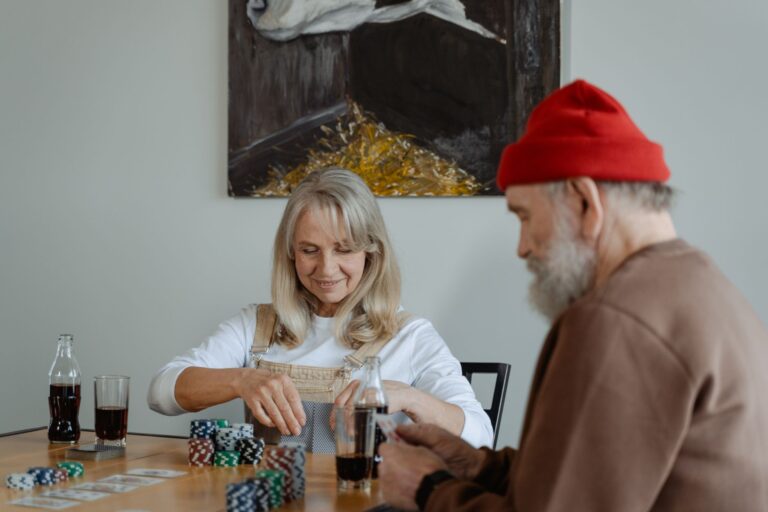
Pharmacies sell memory-care game sets for $7.99 at the low end to $34.99 at the high end. Memory-care game sets are simple card games, puzzles, and brain-teasers used to encourage attention, memory, and conversation. CVS Pharmacy lists card assortments at $7.99 each in the CVS product listing. Walgreens Photo sells larger custom photo puzzles at $34.99 each in the Walgreens Photo catalog.
Medical information disclaimer: This article is for general educational purposes only and does not provide medical advice, diagnosis, or treatment. Always consult a physician or other qualified health professional about symptoms, medications, tests, or treatment decisions.
Table of Contents
- What Does $7.99 Buy at CVS?
- What Costs More at Walgreens?
- Do These Games Help Memory?
- How to Pick a Set That Fits?
What Does $7.99 Buy at CVS?
CVS Pharmacy lists I Spy assortments with Go Fish, Snap and Match at $7.99 each. These games use matching pairs and simple rules. They fit short attention spans and group play.
CVS Pharmacy also lists the Bicycle Disney Pixar 3-in-1 set with Memory, Go Fish and Old Maid at $7.99. Familiar characters can prompt talk and recognition. Choose clear images and simple rules when vision and hand skill are limited.
What Costs More at Walgreens?
Walgreens Photo sells a 10×14-inch custom photo puzzle and kids puzzles at $34.99 each. It also sells an 8×10 puzzle at $22.99 each. Family photos can make the task personal and calm.
Walgreens lists Educational Insights Kanoodle at $12.99 and Rubik's Mini 2×2 at $9.99. These brain-teasers demand planning and finger skill. They suit early-stage players more than late-stage players.
Do These Games Help Memory?
Healthline reports brain-stimulating games may support memory, reasoning and communication in dementia, but evidence is mixed and not a guaranteed treatment in the Healthline overview. Games aid engagement, mood, and daily interaction. They do not replace medical care.
A 2025 preliminary study of 36 older adults with dementia tested board games as group-based cognitive stimulation, according to Frontiers in Psychology in the study summary. The work looked at cognition and well-being in a small group. Treat the findings as early, not proof for every player.
How to Pick a Set That Fits?
Match the game to current ability, not past hobby. Simple matching helps when recall is low.
Puzzles with fewer, larger pieces reduce frustration. Use three quick checks before you buy. Bring the game to the person's level.
- Choose familiar themes and clear pictures.
- Plan short sessions with one helper.
- Stop if fatigue, confusion, or distress grows.