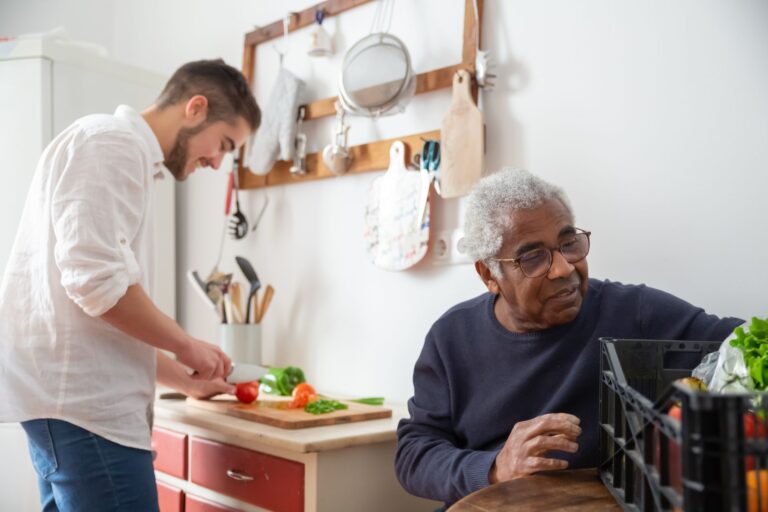
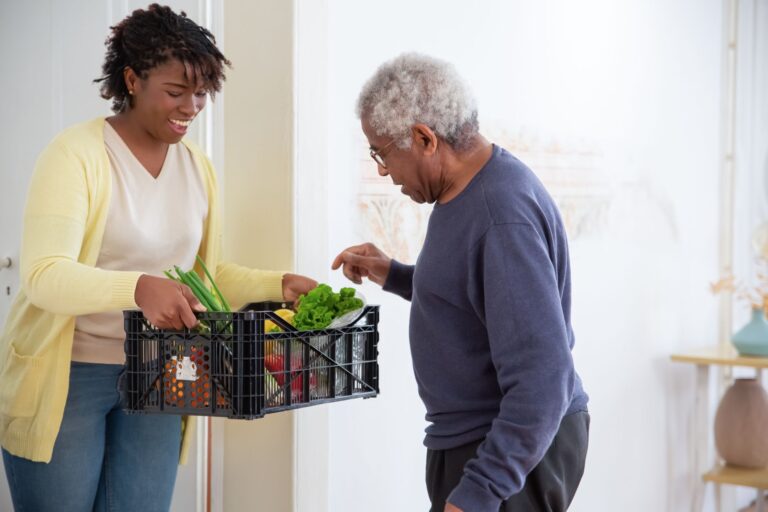
Meal delivery for dementia families gives a parent living alone regular nutritious meals plus a daily human safety check at the door. Staffing screening, kitchen safety steps, and food-handling checks make that visit reliable for middle- and late-stage dementia. Home-delivered meals are prepared meals brought to a homebound older adult on a schedule. For dementia households, the value is both nutrition and contact, because memory loss can disrupt cooking, eating, and asking for help.
Medical information disclaimer: This article is for general educational purposes only and does not provide medical advice, diagnosis, or treatment. Always consult a physician or other qualified health professional about symptoms, medications, tests, or treatment decisions.
Table of Contents
- Why eating alone becomes risky
- What each delivery visit covers
- How to vet drivers and staff
- How to make reheating safe
- What to set up in the first week
Why eating alone becomes risky
People with middle- and late-stage dementia may forget to eat, think they already ate, or feel overwhelmed by choices, according to the Alzheimer's Association in its guidance on food and eating. Poor nutrition can then increase behavioral symptoms and weight loss.
A parent alone may also skip steps, leave food out, or use the stove unsafely. The Alzheimer's Association advises auto-shutoff appliances and controls such as knob covers, knob removal, or shutting off gas when not in use. Families should treat missed meals and unsafe cooking as signals to add support.
What each delivery visit covers
Federally supported home-delivered meals under Older Americans Act Title III-C serve mainly adults 60 and older who are homebound, according to the Administration for Community Living in its description of nutrition services. Those meals must follow the Dietary Guidelines for Americans and supply at least one-third of Dietary Reference Intakes.
Meals on Wheels America defines its core service as a nutritious meal plus companionship and a watchful safety check, according to the group in its explanation of the home visit. The volunteer or staffer who delivers the meal can call medics and family if something looks wrong. Ask a local program how it records missed answers, confusion, falls, or spoiled food.
How to vet drivers and staff
Ask who enters the home area and what screening they pass. Strong programs use criminal background screening, and one example requires four checks plus a driving-record check for drivers.
Get the policy in writing before enrollment. Use these checks during the first call: Also ask about training for dementia, privacy, and emergencies. Confirm the check-in rule: who they call first, and how fast they notify family.
- Who delivers meals: employee, volunteer, or contractor.
- What background and registry checks apply, and how often they repeat.
- What driver screening applies, including license and driving record.
- How substitutes are screened when the regular deliverer is absent.
How to make reheating safe
Many programs deliver one hot meal Monday through Friday and leave frozen meals for weekends. That schedule leaves gaps, so families need a reheating and weekend-coverage plan. Memory loss can cause missed meals or unsafe stove use.
Reduce stove use by favoring microwave reheating with simple labels. Keep the fridge at 40°F or below and the freezer at 0°F or below, and refrigerate perishables within 2 hours, according to FoodSafety.gov in its four steps to food safety. Bacteria multiply fastest between 40 and 140°F. Post a one-line card: eat now, refrigerate now, or throw out.
What to set up in the first week
Watch two deliveries and one reheating before leaving the routine alone. Check that portions match appetite, tastes, chewing needs, and medical limits. Tell the program about allergies, diabetes needs, choking risk, and foods the parent refuses.
Keep a small log on the fridge: date, meal eaten, mood, and concerns. Share weekend coverage with a neighbor, aide, or family caller. Replace knob covers, timers, and fridge thermometers before they fail.