Meal delivery for a parent living alone with dementia means food that is safe without cooking plus a contract a family member can stop easily. Auto-renewal, a "negative option" where silence counts as consent to keep billing, is the central contract term to check before you sign. Small print and porch boxes create the two main risks. Families need clear consent terms, simple cancellation, cold-chain safety, and a daily human check when memory slips.
Medical information disclaimer: This article is for general educational purposes only and does not provide medical advice, diagnosis, or treatment. Always consult a physician or other qualified health professional about symptoms, medications, tests, or treatment decisions.
Table of Contents
- What contract terms matter most?
- Can you cancel as easily as you joined?
- Is shipped food safe when no one is watching?
- What adds both meals and a safety check?
What contract terms matter most?
Read the offer as a recurring bill, not a one-time box. Federal law treats meal-box auto-renewal as a negative option, so the seller must disclose key terms before charging and get express consent. According to Federal Trade Commission consumer guidance, families also have a right to a simple way to stop recurring charges how to exit auto-renewals and negative-option subscriptions.
Look for trial length, billing date, renewal price, and fee-change notice in plain language. Save screenshots of the checkout, consent box, and cancellation page. Red flags include forced phone-only cancel for online signup, extra steps after you click cancel, and vague free-trial language.
Can you cancel as easily as you joined?
The Federal Trade Commission issued a 2024 final click-to-cancel rule to make cancellation as easy as enrollment, but courts vacated the rule in July 2025. That history leaves families relying on federal ROSCA law and state laws, an important limit noted in the Commission announcement final click-to-cancel announcement.
In practice, test cancellation before your parent depends on the meals. Enroll online, then find cancel in the account menu within two clicks. Prefer contracts that allow online cancellation for online enrollment without obstruction.
- Cancel in the same session you enroll to test the path
- Remove saved payment after cancellation and watch for one more charge
- Put the renewal date and support link on a shared family calendar
Is shipped food safe when no one is watching?
Cold food must stay cold in transit. The USDA Food Safety and Inspection Service warns that mailed meals must arrive frozen, partly frozen with ice crystals, or refrigerator-cold below 40 degrees measured by thermometer mail-order food safety guide. Do not let your parent eat a box that arrives warm.
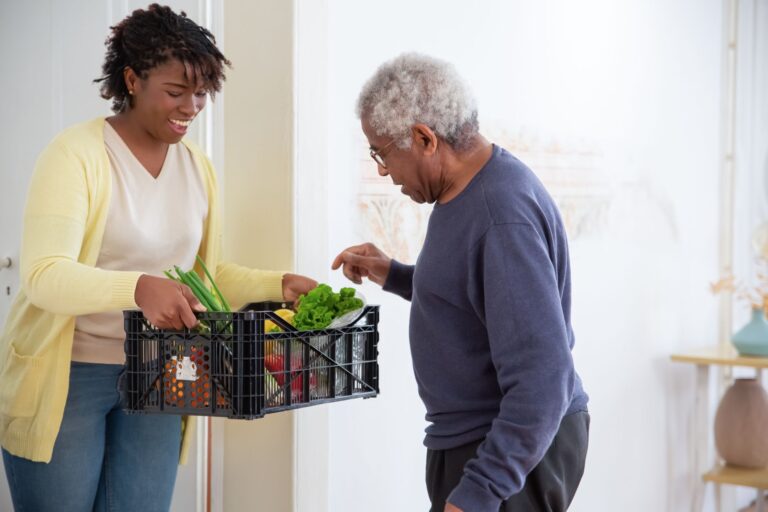
Bacteria grow between 40 and 140 degrees, so tell the company and throw out food above 40 degrees. A bigger red flag is porch dwell time: perishables need refrigeration within 2 hours of delivery, within 1 hour above 90 degrees, with hot food kept at or above 140 degrees. Choose microwave-ready foods that need no stove and no knife. Ask a neighbor to move boxes inside, check ice packs, and refrigerate food right away.
What adds both meals and a safety check?
The National Institute on Aging advises grocery delivery for a fee, ordering fresh or frozen meals online or by phone, or calling Meals on Wheels America at 888-998-6325 for free or low-cost meals that sometimes include a short visit and safety check tips for living alone with early-stage dementia. That visit matters because forgetting to eat or forgetting how to eat is common. When the person still lives alone, buy foods needing no cooking and call to remind them to eat.
Local Meals on Wheels programs can pair weekday meals with a friendly visit, missed-answer follow-up, and notice to family or medics. For early-stage dementia alone, favor witnessed weekday delivery over unsupervised shipped boxes. Keep backup no-cook foods on hand: fruit cups, yogurt, peanut butter, canned tuna, and frozen microwave meals.