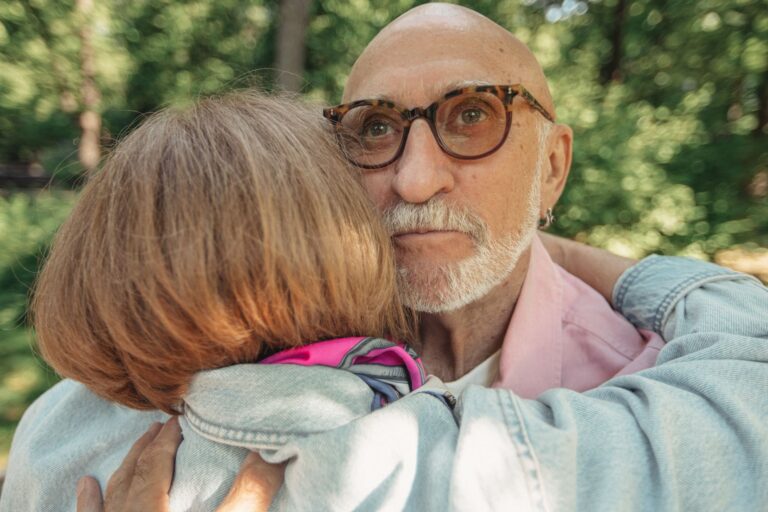
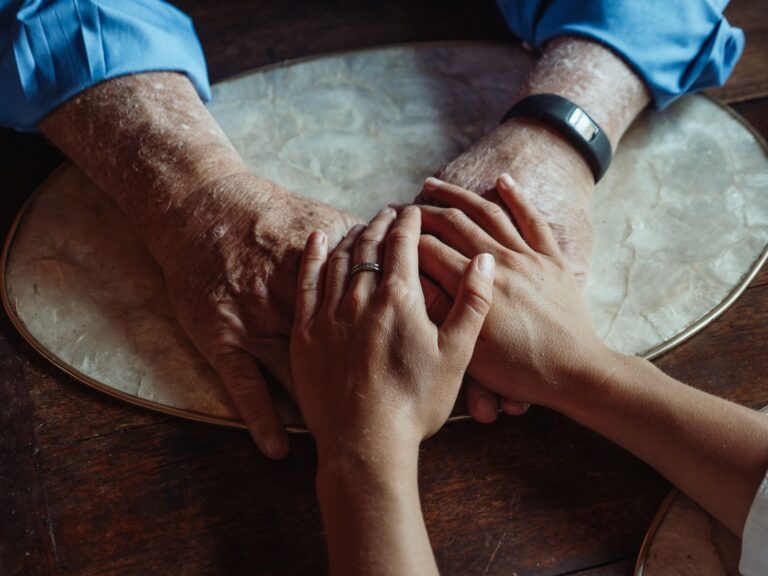
Yes, sharing a wedding song can help your loved one recall meaningful moments and feel connected during Alzheimer's progression—even as other memories fade. This works because musical memory uses separate brain networks that remain largely intact until advanced disease stages, allowing patients to recognize and respond to personally meaningful songs decades after hearing them, including wedding songs from their own past. Music's ability to preserve memory and create connection is supported by neuroscience, not sentiment. Families can use this insight to maintain emotional bonds and reduce behavioral symptoms like agitation and anxiety as communication becomes more difficult.
Medical information disclaimer: This article is for general educational purposes only and does not provide medical advice, diagnosis, or treatment. Always consult a physician or other qualified health professional about symptoms, medications, tests, or treatment decisions.
Table of Contents
- How Meaningful Songs Survive Memory Loss
- Why Your Loved One Can Still Sing Along
- Music as a Bridge When Words Fail
- Behavioral and Emotional Benefits for Both of You
- Practical Steps for Using Music With Your Loved One
- Frequently Asked Questions
How Meaningful Songs Survive Memory Loss
Alzheimer's damage episodic memory—facts and recent events—first and most severely. Musical memory networks utilize separate neural pathways than episodic systems, allowing patients to recognize and recall songs even as other memories disappear.
The salience network, which processes emotional and meaningful associations, remains spared until advanced disease stages. This region specifically encodes songs linked to significant life events—such as wedding ceremonies—which is why your loved one may remember their wedding song while forgetting what they ate yesterday. Familiar songs trigger autobiographical memory recall, enabling patients to access memories of the life event itself when they hear the associated music, even in mild Alzheimer's stages.
Why Your Loved One Can Still Sing Along
Procedural memory—the brain's system for skills and repeated actions—sits in different neural regions than episodic memory and remains largely intact despite Alzheimer's pathology. This is why patients unable to recall facts can often sing along to familiar melodies or recognize a song within the first few notes.
Wedding songs specifically benefit from this preservation because they combine emotional salience with procedural practice. Your loved one may not remember the reception or wedding day details, but the melody itself remains accessible and can unlock emotional recall.
Music as a Bridge When Words Fail
As verbal communication becomes difficult in mid and late stages, music becomes a language your loved one still understands. Patients unable to communicate verbally can connect with partners through music, and caregivers can share meaningful experiences together despite progressive language decline. Playing a wedding song creates a moment of mutual recognition—your loved one responds emotionally or physically even when they cannot speak—and this nonverbal connection sustains relationship and dignity when conversation is no longer possible.
Behavioral and Emotional Benefits for Both of You
Music interventions significantly decrease agitation, anxiety, and depression in Alzheimer's patients—behavioral symptoms occurring in up to 50% of patients. Beyond symptom reduction, music therapy improves both patient and caregiver emotional outcomes, with research documenting reduced agitation and anxiety simultaneously in both parties while improving the quality of interactions between them.
Sharing music is not primarily a memory exercise; it is a way to reduce suffering and restore moments of calm connection. Families report that playing meaningful songs can settle an agitated evening or create a window of presence and peace.
Practical Steps for Using Music With Your Loved One
Start with songs tied to significant life moments—your wedding song, songs from their era of young adulthood, music they heard frequently. Play the full songs at consistent times (morning coffee, evening wind-down) so your loved one encounters them repeatedly. Music therapy resources are available through many dementia care organizations and senior centers; professional guidance is not required but can help families identify songs and timing that work best for their loved one's specific needs and stage.
- Observe their response: Do they hum, tap, move, or make eye contact? Not all patients respond visibly, but emotional engagement often registers without obvious behavioral change.
- Avoid forced participation. Simply having the music present allows recognition to occur naturally.
- Adapt as the disease progresses. Quieter music works better in later stages when overstimulation increases agitation.
- Notice if specific songs settle particular behaviors—some families find one song reliably calms evening agitation or anxiety.
Frequently Asked Questions
Will my loved one remember the actual wedding if I play our wedding song?
Not necessarily the event itself, but the song may trigger autobiographical memory fragments associated with that day, and will definitely evoke the emotional significance of the song regardless. The goal is emotional resonance and connection, not full recall.
What if my loved one doesn't respond when I play the song?
Emotional engagement does not always show as visible response. Absence of obvious reaction does not mean the music is not having an effect at the neural level; some patients process music internally.
At what stage of Alzheimer's does this stop working?
Music remains meaningful across all disease stages, though the way patients engage changes. In very advanced stages, live singing or familiar melodies may still calm or soothe even when other forms of connection are no longer possible.