As Alzheimer's—the most common dementia, a progressive brain disorder affecting memory, thinking, behavior, and daily function—changes communication, a knitted blanket can become a meaningful family touchpoint. It may invite recognition, stories, or simple shared attention, but it cannot preserve memories or slow the disease. A blanket made for a wedding, baby, or holiday can carry meaning even when conversation becomes difficult. Its value lies in the connection it may support, not in any guaranteed therapeutic effect.
Medical information disclaimer: This article is for general educational purposes only and does not provide medical advice, diagnosis, or treatment. Always consult a physician or other qualified health professional about symptoms, medications, tests, or treatment decisions.
Table of Contents
- Why does communication change?
- What can a knitted blanket offer?
- What does the evidence actually show?
- How should families use the blanket?
- When should you put it away?
Why does communication change?
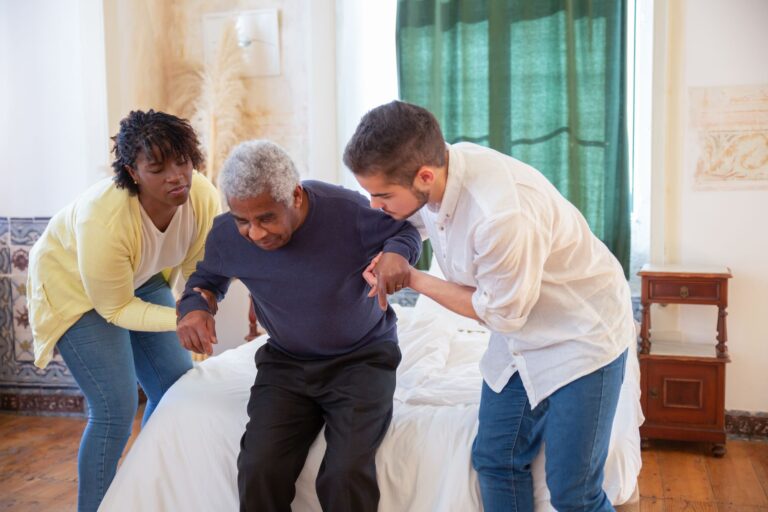
Alzheimer's can make it harder to find words, understand speech, follow long conversations, organize thoughts, or stay on topic. Facial expressions and other nonverbal signals may become increasingly important, according to the National Institute on Aging.
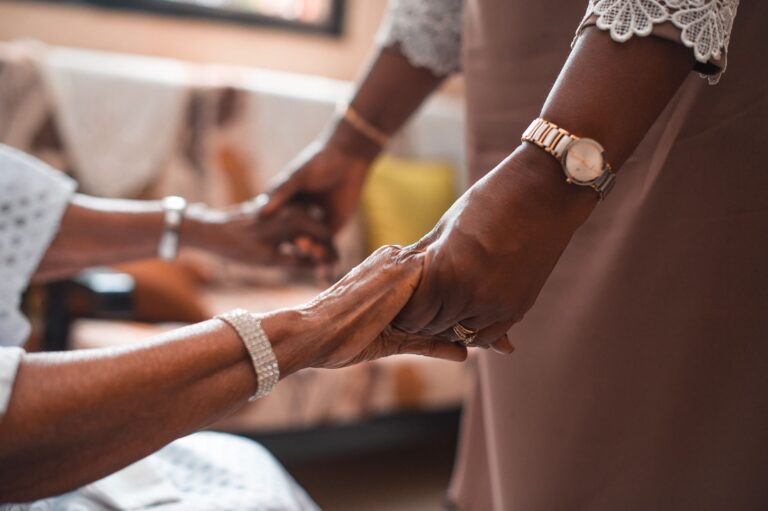
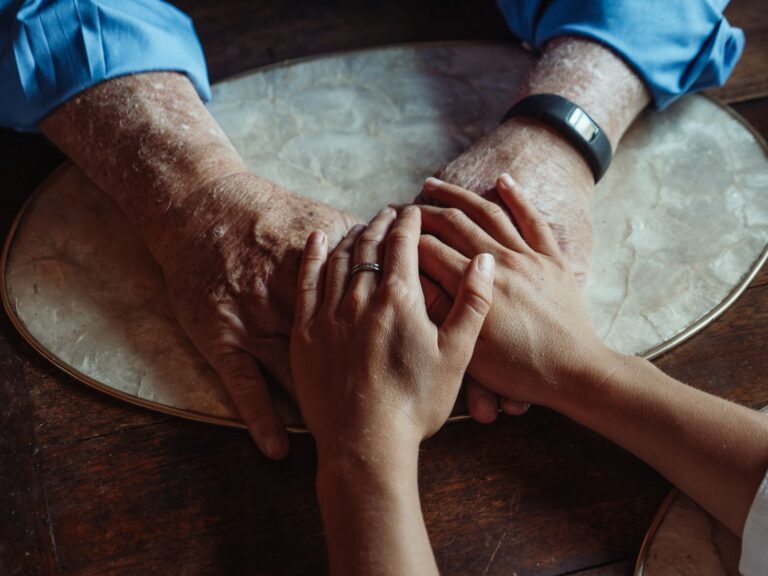
These changes can leave families unsure whether a loved one recognizes a person, story, or object. A missing name or incomplete sentence does not reveal everything the person feels. Connection may appear through a smile, touch, gesture, or willingness to remain engaged.
What can a knitted blanket offer?
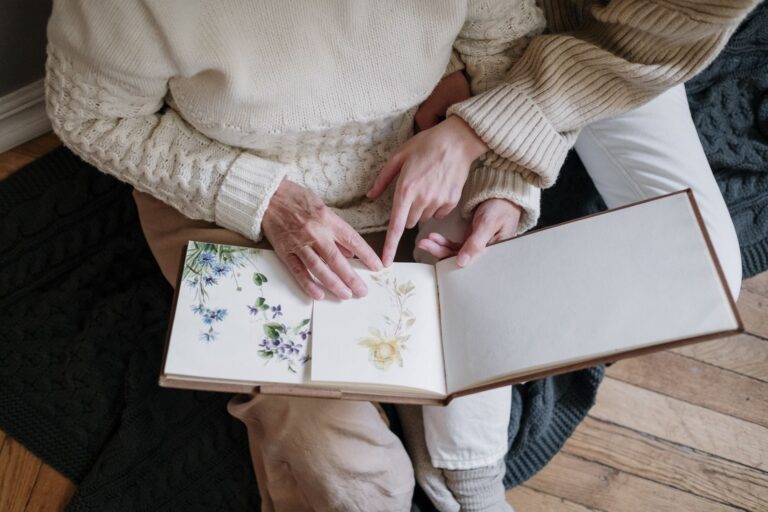
A familiar blanket is a tangible prompt: an object that may help bring past experiences into the present. Its colors, texture, pattern, or maker can provide an easy starting point without requiring the person to recall facts on demand.
Try observations and gentle invitations: Accept whatever follows. A detailed story, a single word, a smile, or quiet attention can all make the moment worthwhile.
- "This blue feels soft."
- "I remember seeing this on your chair."
- "Did someone make this for you?"
- "Would you like it over your knees?"
- "Do you like the red squares or the green ones?"
What does the evidence actually show?
Reminiscence therapy uses past experiences and prompts such as pictures, music, and objects to encourage memory and conversation. A Cochrane review of 22 trials found small communication benefits that varied by setting and format, with more promising results in group and community approaches. That evidence does not prove a knitted blanket will restore memories or reliably improve communication.
Study methods varied, results were inconsistent, and most participants had mild or moderate dementia. Knitting-specific research is narrower still. A qualitative Norwegian study found that knitting-group participation helped conversation and sociability among women with mild dementia, but it did not test blankets or establish clinical benefit.
How should families use the blanket?
Choose a calm time and reduce competing noise. Sit where the person can see your face, say their name, and place the blanket within easy reach rather than insisting they hold it.
Keep the exchange simple: Follow the person's lead. If they want to fold, touch, wear, discuss, or simply look at the blanket, that activity can shape the visit.
- Offer one thought or question at a time.
- Allow extra time for a response.
- Use a yes-or-no choice if an open question feels difficult.
- Rephrase a question instead of correcting the answer.
- Avoid testing memory with questions such as, "Don't you remember?"
When should you put it away?
A treasured object may also bring confusion, sadness, irritation, or no visible response. Do not press for a particular memory or tell the person what they "should" recognize.
Pause if the person turns away, pushes the blanket aside, becomes tense, or asks to stop. Try another familiar object or activity later; the goal is comfortable contact, not successful recall.