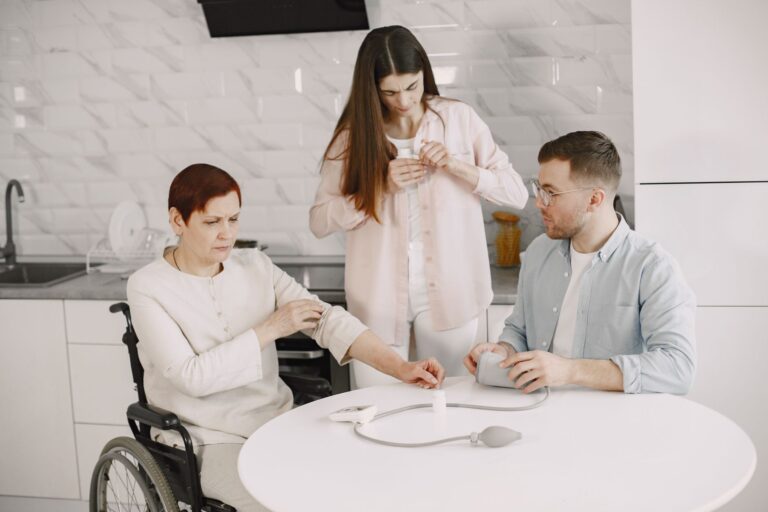
Simplify chair yoga—yoga-inspired breathing and movement done while seated—by shortening the session, offering one movement at a time, and demonstrating each cue. Match the routine to the person's abilities that day, and stop or scale back when attention fades or frustration appears. Dementia can affect starting, organizing, and completing activities. A familiar routine may therefore become difficult even when the person still enjoys moving.
Medical information disclaimer: This article is for general educational purposes only and does not provide medical advice, diagnosis, or treatment. Always consult a physician or other qualified health professional about symptoms, medications, tests, or treatment decisions.
Table of Contents
- Let current ability set the routine
- Make every cue easier to follow
- Use a simplification ladder
- Keep safety separate from performance
Let current ability set the routine
Do not judge participation against what the person managed last month. The Alzheimer's Association recommends adjusting activities to current abilities and simplifying them when attention wanes or frustration rises in its guidance for dementia caregivers.
Watch what happens after the first cue. Can the person begin, imitate, and continue comfortably? Fatigue, trouble seeing or hearing, and difficulty with simple movements may change what is manageable. Treat these signs as information, not failure:.
- The person stops following the movement.
- Repeated cues cause irritation or worry.
- Their attention shifts away.
- A once-simple motion now appears confusing.
- Fatigue makes posture or movement harder to maintain.
Make every cue easier to follow
Use one brief instruction, then pause. The Alzheimer's Association advises giving information step by step and using visual cues as communication abilities change in its communication guidance. For example, replace "Lift your arms, breathe in, then lower them as you breathe out" with three separate cues: "Watch me." "Lift your hands." "Lower your hands." Demonstrate while speaking and allow time for a response.
Avoid offering several choices at once. Instead of asking which pose comes next, begin one familiar movement and invite the person to copy it. If words are no longer effective, slow demonstration and shared movement may be easier to follow.
Use a simplification ladder
Change only as much as needed. Start with the familiar version, then remove demands until participation becomes comfortable again.
A practical progression might look like this: Several short "mini workouts" may be more manageable than one long session, and the National Institute on Aging suggests exercising together when a person with dementia needs assistance. A session can be worthwhile without completing a planned sequence.
- Shorten a full routine to two or three familiar movements.
- Reduce a repeated sequence to one movement.
- Replace several verbal instructions with one cue and a demonstration.
- Perform the movement together rather than expecting independent recall.
- Reduce the range of motion or pause while remaining seated.
Keep safety separate from performance
Check the space before beginning. Move nearby trip hazards and place the chair where a caregiver can assist without reaching across furniture. The CDC advises discussing safe strength or balance exercise with the person's health-care provider because falls in older adults can cause serious injury, disability, lost mobility, or death in its caregiver fall-prevention guidance.
Stop if the person becomes dizzy or cannot perform the movement safely. New or concerning physical difficulty calls for guidance from the person's health-care provider, not a harder attempt or more forceful cueing. Chair yoga is promising, but it is not a proven dementia treatment. A 2023 systematic review covered 10 yoga studies involving 421 people with mild cognitive impairment or dementia, including four chair-yoga studies; high risk of bias weakened the reported benefits, and one dizziness event occurred according to the published review.