Chair yoga—gentle yoga-style movement performed while seated—should be adapted to the person's current abilities, not a fixed dementia-stage protocol. In early dementia, preserve familiar exercises; in middle dementia, shorten and simplify them; in later dementia, prioritize supported movement and sensory comfort. Stages are useful planning guides, not precise exercise prescriptions. The Alzheimer's Society says suitability depends on both dementia stage and physical ability, and no authoritative "chair yoga by stage" protocol has been established in current guidance on exercise for people with dementia.
Medical information disclaimer: This article is for general educational purposes only and does not provide medical advice, diagnosis, or treatment. Always consult a physician or other qualified health professional about symptoms, medications, tests, or treatment decisions.
Table of Contents
- Start with ability, not the stage label
- Early-stage dementia—preserve familiar movement
- Middle-stage dementia—make sessions brief and repeatable
- Later-stage dementia—focus on support and comfort
- A simple menu of seated movements
- Safety and limits of the evidence
Start with ability, not the stage label
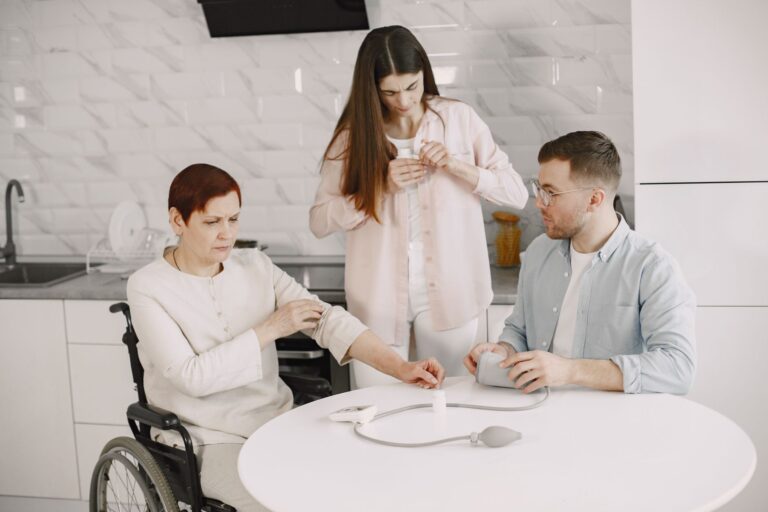
Before choosing movements, consider what the person can understand, initiate, and complete comfortably. Also note whether standing is difficult and whether a caregiver must guide the activity. Someone with early cognitive impairment may exercise much like a peer without impairment.
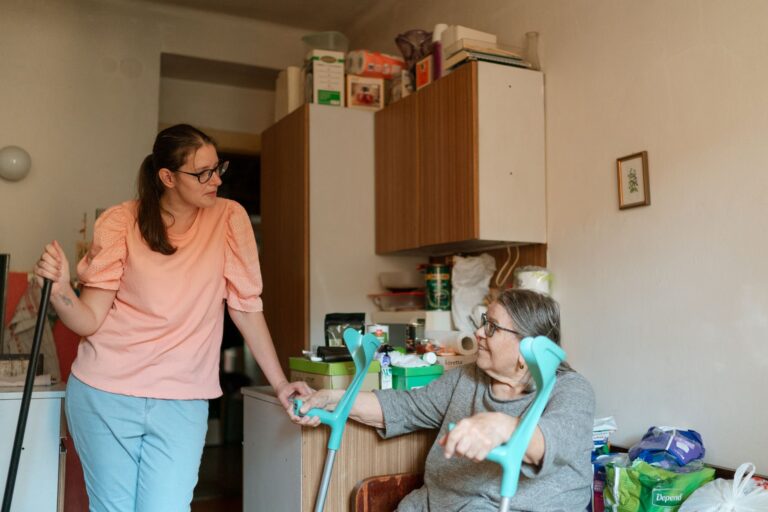
The National Institute on Aging notes that once dementia is present, caregiver assistance, adaptations, and several short sessions may become necessary. Choose the least restrictive version the person can manage. Use stage-based adaptations when memory, concentration, planning, mobility, or endurance make the previous routine difficult.
Early-stage dementia—preserve familiar movement
Keep enjoyable exercises that the person already recognizes. Familiarity can preserve participation while selected movements are slowed, simplified, or performed seated. The person may still follow a short sequence and make choices.
Offer a small selection, such as arm raises or gentle foot marching, instead of introducing a long routine with many transitions. If a movement becomes confusing, reduce it to one clear action. The aim is to maintain comfortable activity without demanding more coordination or concentration than the person currently has.
Middle-stage dementia—make sessions brief and repeatable
As care needs increase, shift toward caregiver-led movements with a predictable structure. Present one movement at a time, repeat it briefly, and allow frequent rest breaks. A practical session might alternate among foot marching, arm raises, and rest.
The caregiver can perform each movement at the same time, reducing the need to remember a sequence. Several short sessions may work better than one long session. Varying simple arm and leg movements can also prevent the activity from becoming an extended, demanding task.
Later-stage dementia—focus on support and comfort
Later-stage dementia can affect concentration, planning, organization, and mobility. Replace complex sequences with a few brief, supported movements that the person appears comfortable completing. Words may become less effective than sensory cues.
Rather than asking the person to remember a pose, guide attention toward the immediate movement and watch their response. Chair-based movement may remain relevant as mobility declines, but support and equipment should be discussed with a GP, community nurse, physiotherapist, or occupational therapist. Reduced mobility is associated with risks that include pressure ulcers, infections, and blood clots.
A simple menu of seated movements
Seated exercise is a reasonable option when standing is difficult. Depending on current ability, a session can draw from: Do not treat this list as a sequence that must be completed. Early-stage participants may combine several movements, while someone in a later stage may manage only one or two supported actions.
- Gentle foot marching
- Heel and toe raises
- Arm raises
- Alternating arm-and-leg lifts
- Leg straightening
Safety and limits of the evidence
Evidence specific to chair yoga remains promising but limited. A 2019 pilot cluster trial enrolled 31 community-dwelling adults, mostly with moderate-to-severe dementia. Twenty-seven completed 12 weeks safely, and chair yoga improved quality of life compared with music, but not physical function or behavioral and psychological symptoms between groups.
A 2014 uncontrolled feasibility study involved nine older adults with moderate-to-severe Alzheimer-type dementia. All completed eight weeks and improved on physical measures, but the absence of a control group means the study cannot establish that chair yoga caused those improvements. Seek clinical advice before starting or advancing chair yoga if the person has heart problems, unexplained chest pain, dizziness or fainting, bone or joint disease, breathing or balance problems, or frequent falls. The Alzheimer's Society advises stopping activity if it causes pain, feeling unwell, dizziness, or shortness of breath in its exercise safety guidance.