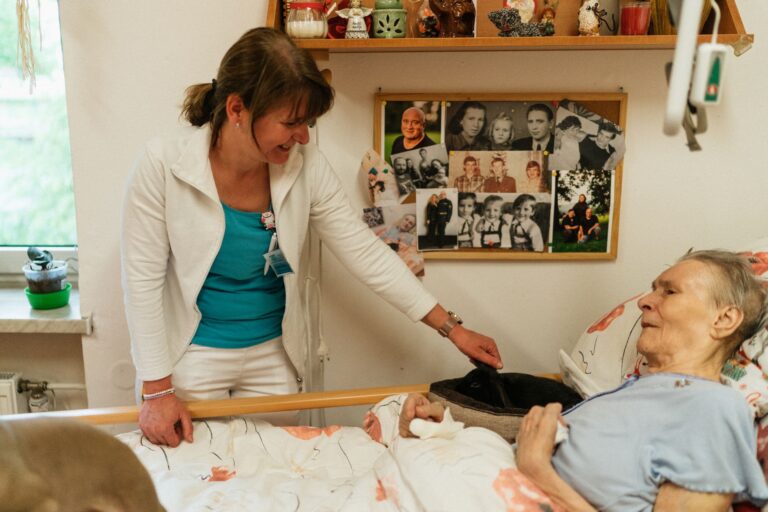
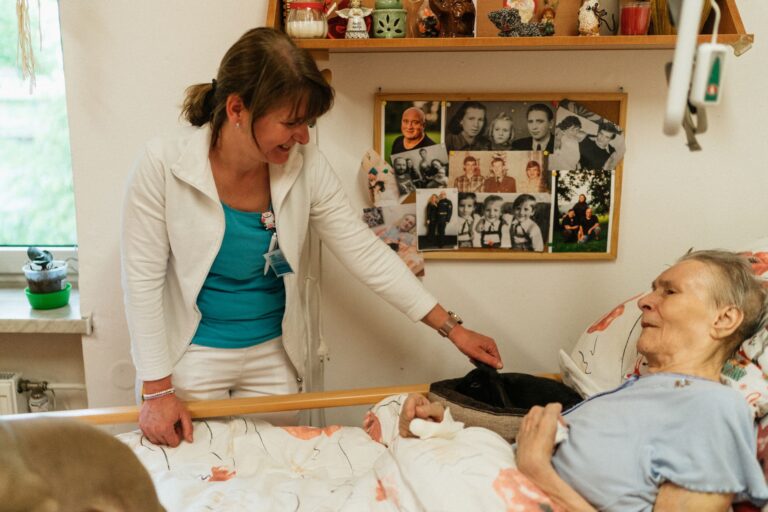
Yes, you should apologize even when you did nothing wrong. In dementia care, an apology isn’t a confession of guilt—it’s a tool to defuse a false accusation, restore emotional safety, and move past a moment of distress. A family member with dementia may accuse you of stealing money that’s sitting in the drawer, or claim you skipped her medication when you just gave it to her an hour ago. If you argue the facts, you trigger defensiveness, escalate the confrontation, and leave her feeling unheard and more agitated. A simple “I’m sorry you’re upset” or “I understand why this feels upsetting” acknowledges her emotional reality without endorsing her false premise.
The shift in mindset is crucial: your goal is not to win an argument or prove you’re right. Your goal is to preserve the relationship, reduce her anxiety, and prevent the moment from spiraling into an hour of repeated accusations. People with dementia are not lying deliberately—they genuinely believe what they’re saying in that moment. Their brain is misfiring, not their character. An apology in these situations is an act of compassion, not a cover-up.
Table of Contents
- Why Factual Corrections Fail in Dementia Care
- The Mechanics of Apologizing Without Admitting Fault
- Recognizing When an Apology is Needed Over Other Responses
- Practical Techniques for Delivering These Apologies
- The Emotional Toll on Caregivers—and Why It’s Real
- When Apologies Aren’t Enough—Redirection and When to Use It
- Building Resilience as a Dementia Caregiver
- The Long-Term Relationship Cost and How to Protect It
- Frequently Asked Questions
Why Factual Corrections Fail in Dementia Care
When someone with advanced dementia accuses you of something you didn’t do, your instinct is to correct them immediately. “Mom, I did give you your pills. Look, here’s the bottle with the date I marked.” This approach almost never works and often makes things worse. The person’s short-term memory may not retain the correction even five minutes later—you’ll have the same argument again tomorrow. More immediately, corrections feel like contradiction and dismissal to them, which triggers shame, anger, or increased agitation.
Dementia rewires how the brain processes and stores information. False memories don’t feel false from the inside; they feel like real memories. A person who has lost trust in their own cognition will often double down when confronted with evidence they’re wrong—it’s an emotional survival mechanism. If you say “That didn’t happen,” she hears “You’re wrong” or “You’re losing it,” which compounds her distress. The factual record matters far less than her immediate emotional state.
The Mechanics of Apologizing Without Admitting Fault
An effective dementia-appropriate apology has a specific structure: acknowledge the emotion, express regret about her distress, and omit any self-blame. “I’m sorry you’re feeling this way” or “I’m sorry this is upsetting you” validates her emotional experience while remaining factually honest—you are genuinely sorry she’s distressed, and you didn’t claim to have done something you didn’t. Some caregivers struggle with this language, feeling it’s dishonest, but it’s actually precise: you’re apologizing for the suffering, not for a false action. Another phrasing that works well is the redirect-with-regret: “I can see why that would be worrying.
I’m sorry you felt worried. Let’s figure this out together.” This empathizes with the logical consequence of her worry (if she did lose money, that would be bad) without confirming the premise. You’re also signaling partnership, which reduces the adversarial tone. In practice, many family members find that once the emotional charge drops, the person with dementia will often let go of the accusation or forget it entirely—not because they’ve been convinced, but because the distress has passed.
Recognizing When an Apology is Needed Over Other Responses
Not every false statement from someone with dementia requires an apology. If she mentions that her mother visited yesterday (when her mother died 20 years ago), a warm “That sounds nice” is appropriate, not an apology. The difference is emotional intensity and accusation. An apology is most useful when the person is genuinely upset, when they’re accusing you of something, when they’re repeating the concern, or when they’re becoming agitated. Watch for signs: raised voice, insistent repetition, visible anxiety, or accusations directed at you or other caregivers.
A real-world example: an 82-year-old with moderate Alzheimer’s becomes convinced her daughter stole her jewelry box. She mentions it once, her daughter calmly says “I know that jewelry is important to you,” and she moves on. That doesn’t need an apology. But if she’s brought it up five times in an hour, is calling the daughter a thief, is refusing to eat because she’s too upset, and is threatening to call the police—now you have emotional distress that requires de-escalation. An apology (“I’m sorry you’re feeling this scared about your jewelry”) is the right intervention.
Practical Techniques for Delivering These Apologies
Timing and tone matter as much as the words. Wait a moment before responding if you feel defensive—take a breath, lower your voice, and shift your posture to be less confrontational. Sit down if possible. Make eye contact, but not an intense stare. Your body language should say “I’m here to help,” not “You’re wrong and I’m frustrated.” Then name the emotion you observe: “You seem worried” or “I can see this is really bothering you.” Pause.
Then apologize: “I’m sorry this is happening. That must feel really frustrating.” After the apology, offer connection or a distraction, depending on the person’s state. If she’s very agitated, sometimes a simple activity helps: “Would you like some tea while we look for your jewelry together?” If she’s calmer, gentle reassurance might work: “We’ll figure this out. You’re safe.” The goal after the apology is not to convince her she was wrong, but to lower her physiological arousal and restore a sense of safety. Some people need to move on quickly; others need to sit with the emotion for a few minutes. Follow her lead.
The Emotional Toll on Caregivers—and Why It’s Real
One of the hardest parts of this approach is that it requires you to suppress your own legitimate feelings. You’re being falsely accused. You did the right thing. And now you’re apologizing anyway. Many caregivers report feeling invisible, unappreciated, or even guilty despite doing nothing wrong. Over time, repeated false accusations can erode a caregiver’s sense of competence and can contribute to burnout and resentment.
It’s important to acknowledge that this is hard and that your feelings are valid. You are not weak or failing if you feel hurt by an accusation, even a dementia-driven one. The apology strategy is a tool for protecting the person with dementia, not for erasing your own experience. You may need to process your feelings with a therapist, a support group, or a trusted friend—somewhere the person with dementia is not present. Bottling up the hurt while always “taking the high road” eventually backfires. Some caregivers find it helpful to remind themselves that the accusation is not about them; it’s a symptom of brain disease. That doesn’t make it sting less in the moment, but it can help prevent it from becoming a rift in your relationship with the person.
When Apologies Aren’t Enough—Redirection and When to Use It
Sometimes an apology alone won’t settle the situation. The person is too agitated, the accusation keeps returning, or the apology seems to trigger more distress. In these cases, redirection—shifting attention to something else—often works better than continued engagement. If your mom keeps insisting you stole her purse despite your apology, continuing to address the accusation may amplify her distress. Instead: “I hear you. Let’s go find it together,” and then guide her toward an activity that’s meaningful to her, whether that’s helping you cook, looking at old photos, or sitting outside.
A limitation of both apologies and redirection is that neither solves the underlying problem—her memory loss, her confusion, her anxiety. They’re band-aids, not cures. If the false accusations are frequent and severe, and if the person is becoming increasingly paranoid or aggressive, that’s a signal to talk with her doctor. Sometimes these behaviors are a sign of depression, infection, medication side effects, or progression of cognitive decline. An apology can de-escalate a moment, but it won’t address the root cause. You may need to explore whether medication adjustments, environmental changes, or additional support could reduce the frequency of these episodes.
Building Resilience as a Dementia Caregiver
The repeated demand to apologize for things you didn’t do can feel like gaslighting—and in some sense, it is, even though the person isn’t doing it intentionally. Over months and years, that can warp a caregiver’s sense of reality and self-worth. One protective strategy is to keep a private record of what actually happened: a simple log of medications given, meals served, appointments kept, or money you’ve checked on. You’re not keeping this to prove her wrong; you’re keeping it as evidence for yourself that you’re doing the job well. On hard days, when you’re doubting yourself, you can look back and see: “I gave her medication seven days in a row. I haven’t missed once this month.” Another strategy is to detach from the need to be “right” or thanked.
This is perhaps the most difficult mental shift. Many people enter caregiving expecting to be appreciated for their sacrifice. When you’re falsely accused repeatedly, you’re grieving not just the person’s cognitive loss, but also the loss of recognition for your work. That grief is real. Some caregivers find it helps to redefine success: instead of measuring yourself by her gratitude or accuracy, measure yourself by whether she’s safe, clean, fed, and calm at the end of the day. Did you keep her alive and minimize her suffering today? Then you won—regardless of whether she remembers it or credits you for it.
The Long-Term Relationship Cost and How to Protect It
Early-stage dementia often leaves enough intact that the person may retain some awareness of their own memory problems. An apology in this context can actually protect the relationship by preventing an argument that both of you would remember. Later-stage dementia leaves you as the only person who will remember the conflict at all—the person with dementia may forget it entirely within minutes. Paradoxically, this means that in very late-stage dementia, the relationship is in some ways less at risk from accusations because they won’t accumulate in the person’s memory as grievances. The real relationship strain often happens in mid-stage dementia: she has enough memory to hold grudges but not enough to distinguish reality from confusion.
If you argue and “win” a confrontation at this stage, she may carry the feeling of having been wronged long after she’s forgotten the specific facts. Your apology—again, apologizing for her distress, not for a false action—is an investment in preserving what remains of the relationship. You’re choosing the relationship over the argument, again and again. That’s not weakness. That’s the hardest part of dementia caregiving.
Frequently Asked Questions
If I apologize for something I didn’t do, won’t she think I actually did it?
Not necessarily. Phrases like “I’m sorry you’re upset” or “I’m sorry this is worrying you” acknowledge her emotion without admitting fault. Many people with dementia won’t process the apology as a confession; they’ll process it as emotional support, which is what she needed.
How do I apologize if I’m genuinely angry at her for accusing me?
Wait. Step away for a few minutes if you can safely do so. Process your anger where she can’t see it. An apology delivered while you’re seething won’t be effective and may come across as sarcastic or dismissive, which will escalate her further.
Will this approach enable her to keep falsely accusing me?
It might. But your goal isn’t to stop the accusations; it’s to minimize her distress and protect the relationship. If the accusations become severe or frequent, that’s a medical concern worth discussing with her doctor, not a behavioral problem to correct through argument.
What if she accuses me of something dangerous, like poisoning her food?
Take this seriously medically (it can be a sign of paranoia tied to depression or delirium) and contact her doctor. For the immediate moment, a calm “I would never hurt you” combined with an apology for her fear (“I’m sorry you’re scared”) can help. Don’t eat the food in front of her to “prove” it’s safe—this often backfires by looking like you’re performing innocence.
Is apologizing like this the same as giving up my right to be treated fairly?
It’s a strategic choice for a specific relationship at a specific time. You’re not conceding that you should be treated unfairly in general. You’re choosing a tool that works in dementia care because normal conflict resolution doesn’t apply when one person’s brain is no longer processing reality reliably.