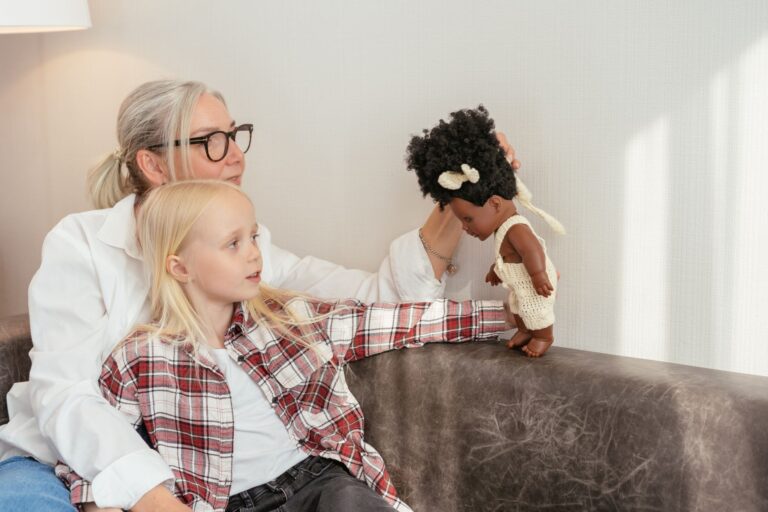
To adapt doll therapy for memory care groups, keep several different-looking dolls on hand, let each resident choose one, and run short sessions of about an hour that support resident-led interaction rather than assigning a doll to everyone. Doll therapy is a non-drug approach in which a person living with dementia cares for a lifelike baby doll, which can ease distress and open up connection. The evidence is promising but still early. A randomized trial found meaningful drops in distress, while reviewers caution that most supporting research is observational, so treat the benefits as real but preliminary and always led by the resident's own choice.
Medical information disclaimer: This article is for general educational purposes only and does not provide medical advice, diagnosis, or treatment. Always consult a physician or other qualified health professional about symptoms, medications, tests, or treatment decisions.
Table of Contents
- What the evidence actually shows
- How a group session differs from one-to-one use
- Setting up dolls and introductions for a group
- The ownership rule you cannot break in a group
- Handling ethics and family concerns
- Frequently Asked Questions
What the evidence actually shows
The strongest single study is a randomized, single-blind trial of 134 women with moderate-to-severe dementia in nursing homes. Researchers assigned 67 to doll therapy and 67 to a sham condition of holding a cube, and the doll group showed significant drops in neuropsychiatric symptoms and distress versus controls (both p<0.001). NPI-NH is a standard scale rating symptoms like agitation, anxiety, and irritability.
A 2024 scoping review in Nursing Reports summarizes the wider picture: reduced behavioral and psychological symptoms, better communication, less wandering, and lower caregiver distress. BPSD is shorthand for those behavioral and psychological symptoms of dementia. Keep expectations grounded. A systematic review in Complementary Therapies in Clinical Practice notes that much of the evidence is observational, anecdotal, or cohort-based with few randomized trials, so the positive effects should be treated as preliminary.
How a group session differs from one-to-one use
Group doll therapy is not a room-wide activity imposed on everyone. It is intended to let residents who share an interest in the dolls communicate and connect with one another, typically in short sessions of about an hour rather than being pushed on a whole day room. That framing matters for facilitators.
Your job is to gather the residents who are drawn to the dolls, then create space for them to talk, reminisce, and interact—with each other, not only with staff. Residents who show no interest are simply not part of that group. A useful reference point for structure comes from the randomized trial, whose protocol ran 30 daily sessions of up to one hour, led by a trained nurse. You do not need to copy it exactly, but it shows that recurring, staff-led, roughly hour-long sessions are a workable template.
Setting up dolls and introductions for a group
offering choice is the core adaptation for groups. UK activity providers advise care homes to keep several dolls that vary in gender, ethnicity, and clothing so each resident can pick one rather than be handed one.
The introduction should be staff-mediated and attachment-informed. A pilot protocol on ClinicalTrials.gov describes trained staff presenting a lifelike doll respectfully and continuously monitoring the resident's assent and dissent—a doll is never forced on anyone. Practical steps for a first group session:.
- Lay out several visibly different dolls and let residents approach them.
- Offer a doll gently; watch for genuine interest, not politeness.
- Follow the resident's lead—some cradle, some just hold, some decline.
- Stop or step back at any sign of distress or refusal.
- Note who engaged, so the group can reconvene with the same people.
The ownership rule you cannot break in a group
Shared storage is the trap in group settings. Once doll therapy begins, ownership of the doll stays with the resident and travels with them if they change rooms, transfer homes, or go to hospital. This can clash with a group format, where it is tempting to collect the dolls into a bin afterward.
Once a resident has bonded with a specific doll, taking it away or swapping it can cause real grief. Facilitators must track which doll belongs to whom and protect that pairing between sessions. The workable model is a mix: a general pool for residents still choosing, plus individually owned dolls for those who have already formed an attachment. The group gives them a place to interact; the doll itself remains personal property.
Handling ethics and family concerns
The main ethical worry is infantilization and possible deception—treating an adult like a child, or letting them believe a doll is a real baby. The 2024 scoping review holds that doll therapy can align with person-centered care when residents choose it themselves, and that staff education helps allay family concerns. For groups, this means briefing families before they walk in on a relative holding a doll.
Explain that the resident chose it, that it soothes distress, and that the approach is supported by care guidance. Frame it as respecting the person's current reality, not deceiving them. Train staff to talk about the dolls the way residents do, without correcting or mocking. A consistent team message keeps the group calm and prevents one skeptical staff member or visitor from undermining a resident's comfort.
Frequently Asked Questions
How many dolls does a group need?
Enough variety that every resident can choose rather than be assigned—vary gender, ethnicity, and clothing, and add individually owned dolls as residents form attachments.
How long should a group session last?
About an hour is the common recommendation, matching both group-therapy guidance and the up-to-one-hour sessions used in the randomized trial.
What if a resident isn't interested?
Don't push. Assent is monitored continuously and a doll is never forced; that resident simply isn't part of the doll group.