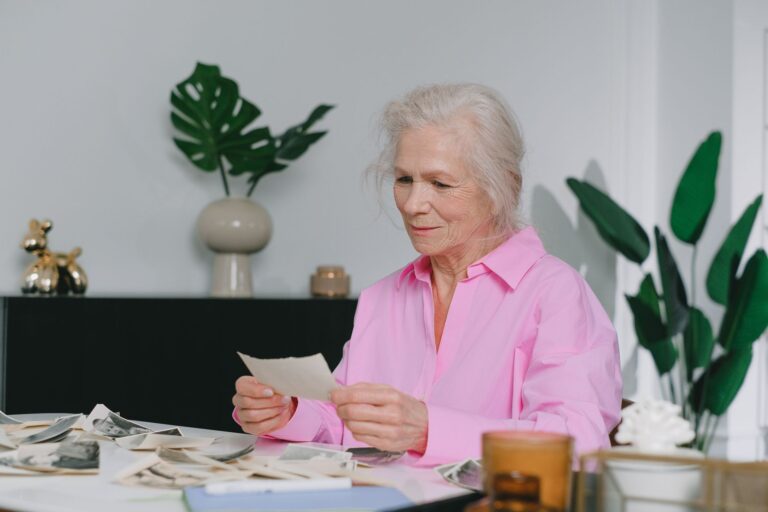
There is no evidence-based schedule for offering life story books in early-stage dementia, but this is an appropriate time to invite a person to create one. A practical starting point is one collaborative session each week for about six to 12 weeks, followed by brief, person-led opportunities to look through the finished book. A life story book is a collection of photographs, postcards, keepsakes, relationships, activities, and personal notes that helps someone share important parts of their life. The aim is connection and conversation, not testing memory.
Medical information disclaimer: This article is for general educational purposes only and does not provide medical advice, diagnosis, or treatment. Always consult a physician or other qualified health professional about symptoms, medications, tests, or treatment decisions.
Table of Contents
- What does the research say about timing and frequency?
- How should families invite someone to create a book?
- How often should the finished book be offered?
- When should the activity pause or change?
- Frequently Asked Questions
What does the research say about timing and frequency?
Research does not establish one standard schedule. A systematic review in *International Psychogeriatrics* found that published life story book programs used three to 16 sessions, with a median of six. Sessions lasted 15 to 120 minutes and took place over nine days to 12 weeks. International Psychogeriatrics systematic review Early-stage dementia is a reasonable time to begin because life story book studies included people with mild cognitive impairment and dementia.
Ten of the 14 studies in that review involved people with mild-to-moderate dementia. For a simple starting plan, schedule one hour each week for six to 12 weeks. A Cochrane review described one trial using weekly sessions for 12 weeks and another using weekly sessions for six weeks. Cochrane review.
How should families invite someone to create a book?
Invite the person to help choose what belongs in the book. Collaboration can take place with a spouse, family member, or care staff, and studies associated this involvement with better communication and relationship quality. Useful material may include: The Alzheimer's Society describes life story books and scrapbooks as flexible projects.
They may focus on important people, memorable events, or other themes that matter to the person. Alzheimer's Society, *The Activities Handbook* Keep each session manageable. The published programs varied widely in length, so the person's attention, interest, and comfort can guide whether a session lasts 15 minutes or closer to an hour.
- Photographs of important people and places
- Postcards, letters, or other keepsakes
- Notes about relationships and enjoyable activities
- Memories organized around important events or themes
How often should the finished book be offered?
offer the completed book in short, person-led moments rather than on a fixed testing schedule. Someone might look at a few photographs during a quiet conversation, listen to familiar music, or talk about a place shown in the book. The Alzheimer's Association recommends using photographs, keepsakes, music, or familiar places to invite pleasant memories and connection.
Follow the person's lead and revisit the book whenever they welcome it. Alzheimer's Association guidance on reminiscence Avoid questions that demand a correct answer, such as asking someone to identify every person or remember an exact date. If the person wants to tell the same story repeatedly, the activity can still support connection without requiring perfect recall.
When should the activity pause or change?
Pause or change the activity if the person becomes distressed, withdrawn, or upset. Life story work can bring up painful memories, and the Alzheimer's Society advises allowing the person to express feelings and asking whether they want to continue or do something else. Alzheimer's Society, *The Activities Handbook* A life story book should not become a required activity.
A person may prefer music, conversation, familiar objects, or a different topic on a particular day. Offer choices and stop when the person signals that they have had enough. Set modest expectations. The studies were generally small and exploratory, so reported changes in memory, mood, depression, or quality of life should be interpreted cautiously rather than treated as a guaranteed clinical benefit.
Frequently Asked Questions
Should a life story book be completed all at once?
No. Published programs ranged from three to 16 sessions, so a weekly series of shorter sessions is a reasonable starting format.
Can someone with early-stage dementia help make the book?
Yes. Research included people with mild cognitive impairment and dementia, and many participants helped create books individually or with another person.
What if a photograph brings up a painful memory?
Pause, acknowledge the person's feelings, and ask whether they want to continue or do something else.