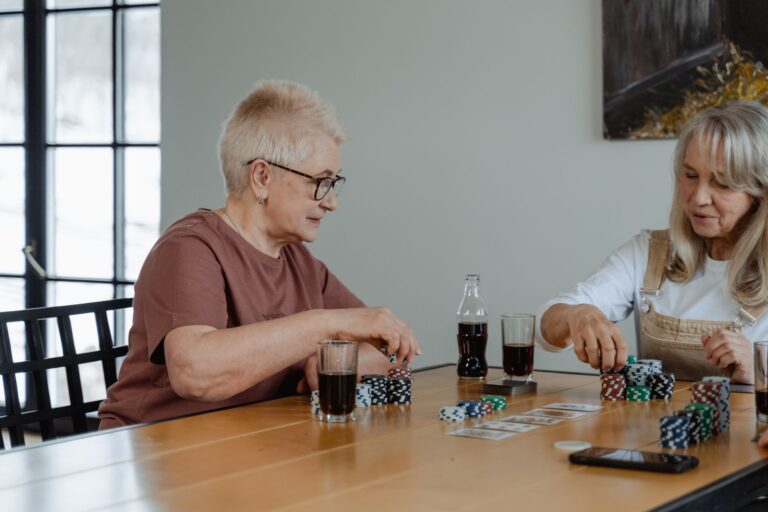
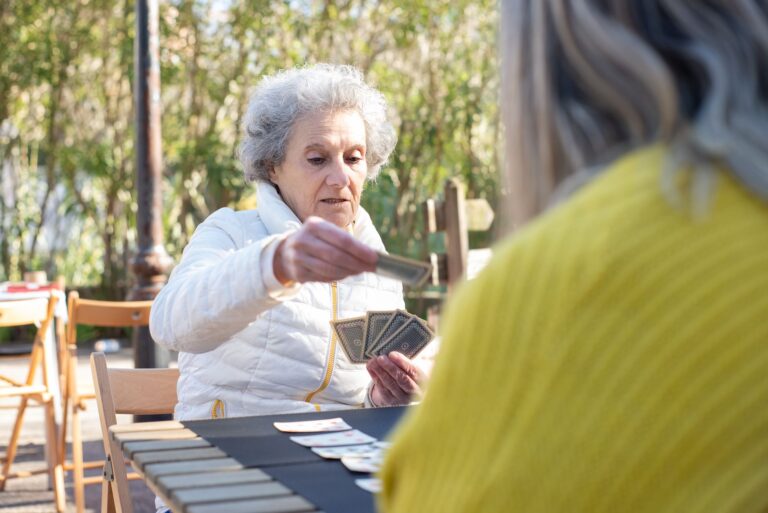
Caregivers use board games during care home visits to give residents short, social mental stimulation and face-to-face contact. They bring familiar games, simplify the rules, and keep sessions calm, brief, and failure-free. Person-centred planning means matching the game to the person's abilities, interests, and mood that day. The goal is engagement, memory practice, and connection, not winning or treatment.
Medical information disclaimer: This article is for general educational purposes only and does not provide medical advice, diagnosis, or treatment. Always consult a physician or other qualified health professional about symptoms, medications, tests, or treatment decisions.
Table of Contents
- Which games do caregivers bring?
- How do caregivers set up a visit?
- How do they adapt rules during play?
- What can families realistically expect?
Which games do caregivers bring?
Caregivers often bring Jenga, chess, dominoes, bingo, and matching cards. Visiting Angels reports these choices provide mental stimulation, practice memory and concentration, and encourage intergenerational interaction in its guide to games for older adults. Familiarity matters more than novelty.
A known game lowers anxiety, speeds starting, and lets the resident use old skills. Many older adults link play with health and family closeness. Visiting Angels cites an AARP study finding that playing board games with grandchildren helps family members bond and create lasting memories.
How do caregivers set up a visit?
Hovi Care advises person-centred planning with clear simple instructions, demonstrated moves, and structured activity sessions. This approach engages memory, problem-solving, and decision-making while fostering social connection.
Timing and setting shape success. Emory Mills memory-care guidance recommends 10-15 minute sessions when the person is most alert, in good light with few distractions, in its guide to adapting games for memory loss.
- Visit when alert, rested, and comfortable
- Use good light and reduce noise and clutter
- Show each move before asking for a turn
- Stop while still fun
How do they adapt rules during play?
Caregivers reduce each game to one goal expressible in one sentence. They remove scoring, penalties, and side rules, enlarge cards and pieces, play as a team, and narrate each step. They do not correct mistakes.
If frustration rises, they redirect calmly, offer a simpler move, or switch to handling pieces and talking. Cooperation replaces competition. Taking turns moving shared pieces, sorting dominoes by color, or rebuilding a Jenga tower together keeps hands busy and conversation flowing.
What can families realistically expect?
Group board games can support stimulation and well-being, but evidence for lasting cognitive gain is limited. A 2025 preliminary study of 36 people with dementia, mean age 86.1, found improvement after the first month but no significant overall cognitive increase over time, according to the authors in Frontiers in Psychology.
Eastleigh Care Homes stresses board games are stimulation, not dementia treatment. They work only when matched to current stage. Choose short, familiar, failure-free games with colourful pieces the resident can actively hold and move.